Martha Stewart's 2024 Political Endorsement and Evolution
Martha Stewart’s 2024 Political Endorsement and Evolution
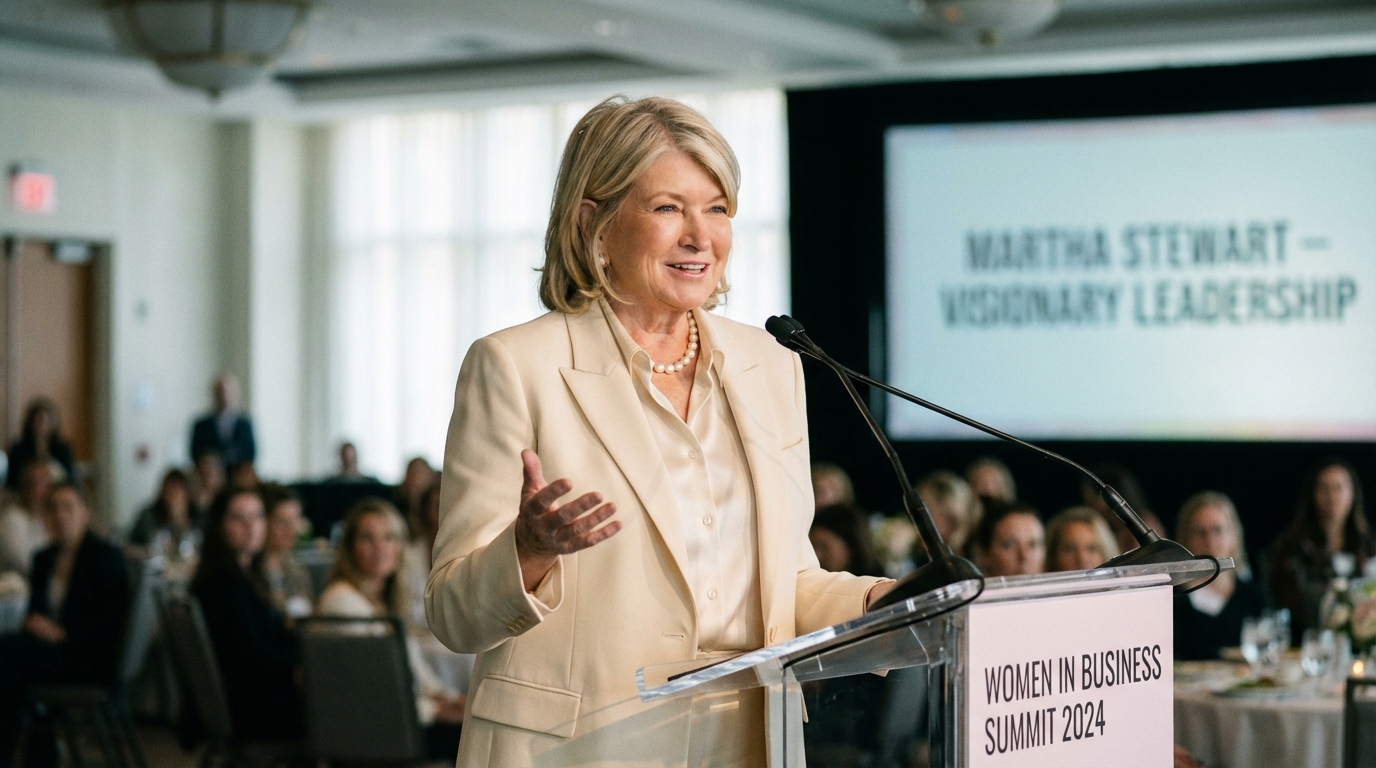
In September 2024, the landscape of celebrity political engagement shifted when Martha Stewart publicly declared her support for Vice President Kamala Harris. Known primarily for her domestic and business empire, Stewart utilized the platform of the Retail Influencer CEO Forum to weigh in on the national political landscape, placing herself among high-profile figures voicing support for the Democratic ticket [The Daily Beast]. This endorsement marked a significant evolution in Stewart’s public persona, moving from a stance of calculated neutrality to one of vocal advocacy regarding democracy and local economics.
This article examines Stewart’s political trajectory from the 2016 election through her specific criticisms of immigration policy in 2018, analyzing the criteria behind her endorsements and the familial influences that compelled her to break her silence.
TL;DR
- 2024 Endorsement: Martha Stewart endorsed Kamala Harris in September 2024, citing the need for a president who supports New York and democracy [The Daily Beast].
- Shift in Strategy: Unlike in 2016, when she “walked back” support for Hillary Clinton to maintain neutrality, Stewart’s recent stances have been steadfast.
- Familial Influence: In 2018, Stewart credited her granddaughter, Jude, for convincing her that silence regarding political issues and immigration policies is “not excusable” [Fox News].
- Direct Criticism: Prior to her 2024 endorsement, Stewart had already moved toward activism in 2018 by criticizing ICE enforcement tactics [Yahoo].
Comparison Table: Stewart’s Political Engagement Strategies
The following table outlines the evolution of Martha Stewart’s approach to public political discourse across three distinct periods.
| Option | Best for | Pros | Cons | Political Risk |
|---|---|---|---|---|
| 2016 Strategy (Tentative Support) | Brand protection and mass market appeal. | Maintained broad audience appeal; avoided long-term friction with the incoming administration. | Perceived as lacking conviction; required “walking back” comments post-election [The Daily Beast]. | Low (Strategic neutrality) |
| 2018 Strategy (Direct Criticism) | Engaging younger generations and addressing humanitarian concerns. | Responded to intergenerational pressure (Granddaughter Jude); addressed specific moral concerns regarding immigration. | High commercial risk; alienated conservative segments supporting ICE tactics [Yahoo]. | High (Brand polarization) |
| 2024 Strategy (Values-Based Endorsement) | Establishing civic standards without detailed policy debate. | Aligned brand with democratic values and New York interests; signaled stability to business leaders. | Risked alienating voters who opposed the Democratic ticket. | Moderate (Audience segmentation) |
The 2024 Endorsement: Defining the Criteria
Martha Stewart’s endorsement of Kamala Harris in September 2024 was driven by a concise set of values rather than a detailed policy platform. Speaking at the Retail Influencer CEO Forum, Stewart revealed that her decision hinged on two primary disqualifiers regarding the opposition. She explicitly stated that she wanted a president “who doesn’t hate New York” and “doesn’t hate democracy” [The Daily Beast].
These comments marked a definitive break from her previous reticence, establishing a baseline standard for executive leadership. By framing her choice through these specific negations, she emphasized the preservation of civic institutions over partisan loyalty.
The “New York” Criterion
The criterion regarding New York reflects Stewart’s deep personal and professional ties to the state as a global business hub. As a figure whose brand was built within the media and retail landscape of the region, her requirement for a leader who respects New York suggests a pragmatic concern for local economic stability.
This comment serves as a critique of political rhetoric that targets urban centers as adversaries. Stewart’s formulation implies that federal leadership should view the country’s cultural and economic capitals as assets to be protected [The Daily Beast].
The “Democracy” Criterion
The second pillar of her decision-making processthe preservation of democracyelevated her endorsement beyond regional interests. By stipulating that a candidate must not “hate democracy,” Stewart aligned herself with voters prioritizing institutional integrity. This criterion suggests a fundamental evaluation of a candidate’s fitness for office based on their adherence to constitutional norms [The Daily Beast].
From Reticence to Resolve: 2016 vs. 2024
To understand the weight of these criteria, it is necessary to examine Stewart’s historical approach to political engagement. She previously endorsed Hillary Clinton in 2016, but following the election results, she notably “walked back” her political commentary to maintain neutrality [The Daily Beast]. For a time, she avoided public political stances to protect her brand’s broad appeal.
Her decision to speak out in 2024 signals that her current criteriaprotecting New York and democracyoutweighed the commercial risks of alienation she previously avoided. This evolution demonstrates a calculation that the stakes of the election surpassed the benefits of silence.
Pros and Cons of Stewart’s Political Advocacy
The decision to transition from a neutral lifestyle figure to a vocal political advocate carries distinct advantages and disadvantages for the Martha Stewart brand.
Pros:
- Intergenerational Relevance: By listening to her granddaughter, Stewart positions her brand as responsive to the concerns of younger generations who prioritize corporate social responsibility [Yahoo].
- Moral Clarity: Framing endorsements around “democracy” and “New York” allows her to stand on broad civic principles rather than getting bogged down in legislative minutiae.
- Brand Authenticity: Defending New York aligns with her history as a business leader in the region, making the endorsement feel personal [The Daily Beast].
Cons:
- Audience Alienation: Publicly opposing ICE tactics and endorsing Democratic candidates risks alienating conservative segments of her audience.
- Commercial Risk: Unlike her 2016 retreat, the emotive nature of her later statements makes it difficult to “walk back” these positions without damaging credibility.
- Polarization: Entering the debate on sensitive topics like immigration enforcement exposes a mass-market lifestyle brand to the friction of a polarized political climate [The Daily Beast].
2018: The Precedent for Activism
Before her 2024 endorsement, Martha Stewart’s vocal opposition to Immigration and Customs Enforcement (ICE) tactics in 2018 marked a significant shift in her public engagement. This period served as a precursor to her later political resolve, driven largely by familial pressure. Stewart credited her granddaughter, Jude, with compelling her to speak out against the “zero tolerance” immigration policies of the time. Stewart shared that Jude argued silence regarding political issues was “not excusable” [The Daily Beast].
The Catalyst for Criticism
The catalyst for this advocacy involved reports of family separations and federal enforcement measures [Fox News].
This direct confrontation with federal policy contrasted with Stewart’s historically cautious approach. Influenced by her granddaughter’s insistence that “things must change,” Stewart adopted a more urgent tone regarding national governance. She argued that the country could not function under leadership she deemed unprepared, signaling a departure from her previous attempts to remain politically neutral [The Daily Beast].
Conclusion
Martha Stewart has navigated a complex journey from the calculated neutrality of the post-2016 era to the vocal advocacy of recent years. What began as a tentative endorsement of Hillary Clinton evolved into a specific critique of immigration enforcement in 2018 and a steadfast defense of democratic values in 2024. This trajectory highlights a shift in priorities, where the preservation of civic institutions and family accountability ultimately superseded the commercial safety of silence. While the long-term impact on her consumer base remains to be seen, Stewart’s actions demonstrate a clear decision to align her legacy with active political engagement.
FAQ
Who did Martha Stewart endorse for president in 2024? Martha Stewart publicly endorsed Vice President Kamala Harris for president in September 2024. She made the announcement while attending the Retail Influencer CEO Forum [The Daily Beast].
What specific criteria did Martha Stewart use to decide her vote? Stewart stated that her decision was based on two primary disqualifiers for the opposing candidate. She explicitly said she wanted a president “who doesn’t hate New York” and “doesn’t hate democracy,” emphasizing the importance of protecting her home state and the stability of the political system [The Daily Beast].
How has Martha Stewart’s political stance changed since 2016? In 2016, Stewart endorsed Hillary Clinton but “walked back” her comments after the election to maintain neutrality. In contrast, her 2024 endorsement was steadfast, following a precedent set in 2018 when she actively criticized federal immigration policies [The Daily Beast].
What comments has Martha Stewart made regarding ICE and immigration? In 2018, Stewart criticized ICE and federal policies regarding immigration enforcement. She expressed that she was “disheartened” by the treatment of immigrants and credited her granddaughter, Jude, for urging her to speak out against these injustices, noting that silence was “not excusable” [Yahoo].