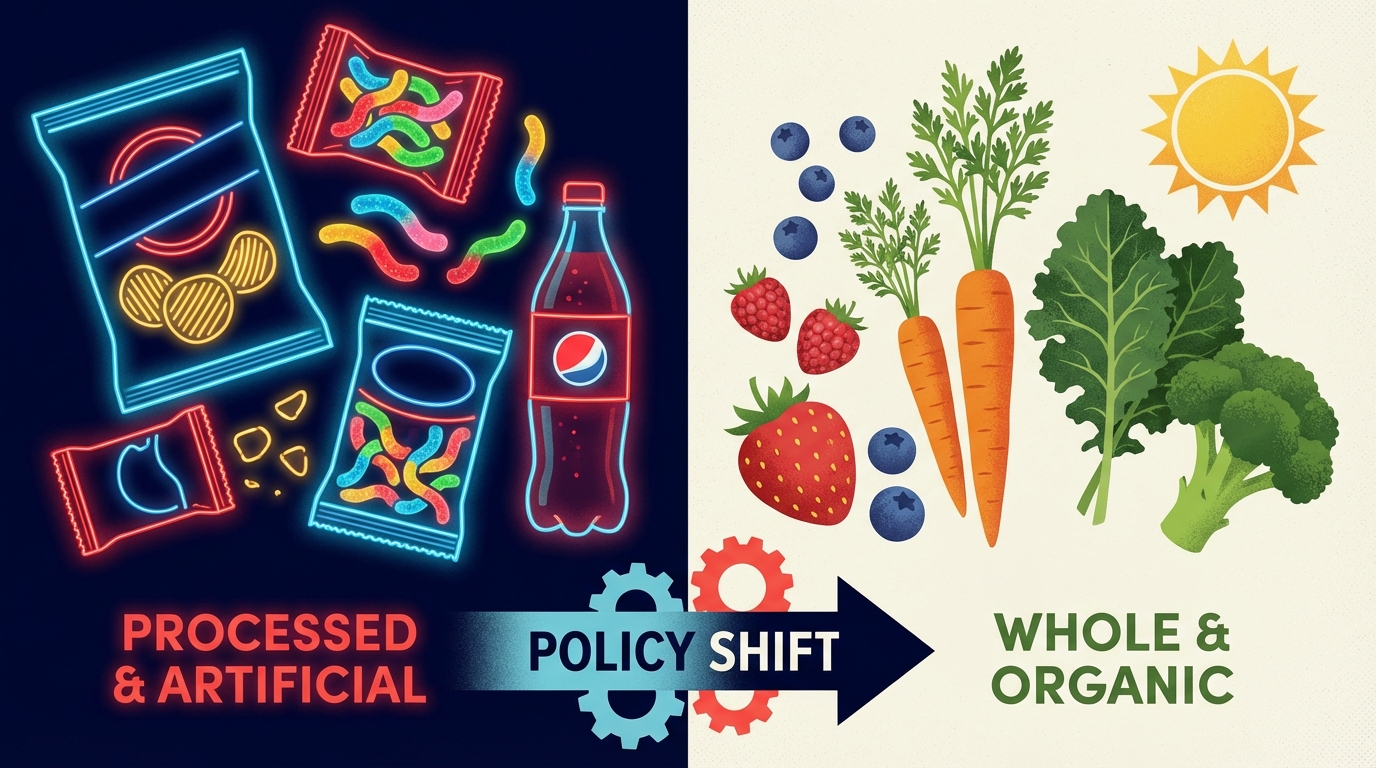
RFK Jr. Health Agenda: Removing Artificial Food Dyes
Proposed Health Policy Shifts Under RFK Jr. and the “Make America Healthy Again” Agenda
The potential influence of RFK Jr. on U.S. Health and Human Services (HHS) priorities marks a distinct shift in federal health policy discussions. His platform signals the formal integration of the “Make America Healthy Again” social movement into executive governance goals. The proposed agenda directs the agency’s focus toward the composition of the American food supply, specifically targeting additives deemed harmful by supporters.
This strategic pivot establishes the elimination of artificial ingredients as a central pillar. The agenda outlines an intent to remove “petroleum-based synthetic” food dyes from the U.S. market. Proponents have outlined a strategy to phase out these ingredients, positioning the move as a critical step in improving public health. While the initiative signals a major policy pivot, implementation strategies often rely on corporate cooperation alongside potential statutory measures.
TL;DR
- Proposed Priorities: The agenda aims to remove petroleum-based synthetic dyes from school foods and the broader food supply within aggressive timelines.
- Industry Trends: Major companies like Nestle and Campbell’s have previously explored removing dyes, setting the stage for broader compliance.
- Retailer Pressure: Retailers like Walmart U.S. have adjusted standards for private label products, creating market-based pressure on the supply chain.
- Technical Hurdles: Manufacturers face challenges in replicating vibrant colors with natural ingredients, striving to avoid aesthetic failures like “gray velvet cake.”
The Federal Push for Dye Removal
Leadership aligned with this movement has articulated a clear desire to eliminate these additives. The push is central to the “Make America Healthy Again” social movement, which emphasizes the reduction of chemical additives in consumer goods. To guide the transition, proponents have proposed aggressive timelines targeting specific sectors of the food supply.
The platform proposes phasing dyes out of school foods to prioritize the diets of children in educational settings. For the broader commercial market, the administration aims for the removal of dyes from all food products. These benchmarks provide a framework for industry adaptation, prompting widespread reformulation efforts across the sector.
Despite the lack of immediate federal mandates, pressure on manufacturers is mounting due to state laws that parallel the federal guidance. Consequently, the industry faces a complex regulatory landscape where federal requests align with fragmented state-level requirements. The Colorful Dilemma: U.S. Food Industry’s Battle with Artificial Dyes | Technology
Industry Response and Reformulation
The pressure campaign has elicited a response from major food manufacturers. Industry observers note that a significant portion of the packaged U.S. food and beverage supply is evaluating the removal of artificial dyes. This aggregate shift suggests that major corporations are opting to preempt potential regulatory enforcement.
Major food manufacturers have released staggered timelines for eliminating artificial colors. Companies like Campbell’s, Nestle, Kraft Heinz, and Conagra Brands have explored compliance deadlines to align with proposed timelines. General Mills has also projected staggered timelines to address its product portfolio.
Retailers Accelerating the Shift
Retail giants have adjusted their procurement strategies in response to the shifting regulatory and consumer landscape. A pivotal factor in this market transformation involves retailers like Walmart U.S. addressing synthetic dyes and other ingredients in in-house private label products.
Industry analysts note that this signals a broader market trend where retailers preemptively address consumer concerns about additives to align with the “Make America Healthy Again” focus on healthy living. This decision reinforces the initiative’s influence, extending its impact beyond federal agencies and directly into the commercial supply chain. As the nation’s largest grocer, Walmart’s adoption of these standards influences upstream changes in supply chains. Solving the Chemical Conundrum: Why the Produce Industry Needs to Respond Positively to Walmarts Additive Ban - Produce Business
Technical Challenges in Reformulation
Transitioning away from synthetic dyes presents technical challenges for manufacturers accustomed to the vibrant aesthetics provided by petroleum-based ingredients. Industry representatives have highlighted the difficulty of replicating specific colors naturally, with sources noting the commercial unviability of selling “gray velvet cake” if red dye is unavailable.
The substitution of synthetic dyes with alternative ingredients presents distinct formulation challenges regarding color stability and vibrancy. This highlights the performance gap between robust synthetic options and their replacements, which often struggle to maintain visual appeal through processing and shelf life. Manufacturers must balance these technical limitations against the growing regulatory and consumer pressure to eliminate artificial additives.
Comparison of Coloring Approaches
| Option | Best for | Pros | Cons | Pricing/Cost |
|---|---|---|---|---|
| Petroleum-Based Synthetic Dyes | Maintaining vibrant, consistent visual appeal in processed foods. | Established manufacturing processes; high color stability; consumer familiarity with bright aesthetics. | Targeted for removal by proposed policies; linked to health concerns by administration; restricted by some major retailers. | Unknown (Implied lower R&D cost) |
| Natural/Alternative Ingredients | Aligning with “Make America Healthy Again” initiative; compliance with new retailer standards. | Meets emerging consumer demand; preempts potential future mandatory bans; aligns with private label policies. | Technical difficulty in replicating specific hues (e.g., Red Velvet); potential for “gray” or dull appearance; stability issues during processing. | Unknown (Implied higher reformulation cost) |
Pros and Cons of the Initiative
Pros
- Public Health Focus: Aligns with the “Make America Healthy Again” movement to reduce chemical additives in the food supply.
- Market Alignment: Major retailers are moving in this direction, creating a unified market standard.
- Preemptive Action: Encourages companies to innovate and reformulate before binding laws are potentially enacted.
- Child Safety: Prioritizes the removal of dyes from school foods, directly impacting children’s diets.
Cons
- Aesthetic Compromise: Natural alternatives may not replicate the vibrant colors consumers expect, leading to products like “gray velvet cake.”
- Technical Complexity: Reformulating products to maintain stability and shelf life without synthetic dyes is scientifically difficult.
- Regulatory Uncertainty: The framework often relies on voluntary compliance, creating a patchwork where some companies move faster than others.
- Cost Uncertainty: It remains unclear if the costs of research, development, and reformulation will be passed on to consumers.
Conclusion
The landscape of the American food industry is undergoing a transformation driven by the priorities championed by RFK Jr. While binding regulations are debated, the combination of federal guidance, state-level legislation, and decisive action by retailers has catalyzed a shift in industry standards. With significant portions of the packaged food supply exploring changes, the momentum appears to be moving toward a dye-free future. However, as manufacturers race to meet these goals, they face significant technical hurdles in maintaining the product consistency and appearance that consumers have come to expect.
FAQ
When will synthetic food dyes be fully removed from grocery stores? The administration has proposed targets for the removal of dyes from food products. Major retailers like Walmart have set their own standards, while manufacturing companies are aiming for various compliance timelines.
Which specific ingredients are being targeted by the initiative? The initiative specifically targets “petroleum-based synthetic” food dyes. Retailer bans often include these synthetic dyes along with other additives. The Colorful Dilemma: U.S. Food Industry’s Battle with Artificial Dyes | Technology
Will food prices go up due to the ban on petroleum-based dyes? The impact on consumer retail prices remains a developing narrative. While reformulation involves research and development hurdles, major conglomerates have not released definitive projections regarding price hikes.
Is the removal of artificial dyes mandatory for all food manufacturers? Federal compliance currently remains a topic of voluntary guidance and proposed goals. However, pressure is mounting due to state laws and mandates from major retailers like Walmart, which effectively force supply chain compliance. The Colorful Dilemma: U.S. Food Industry’s Battle with Artificial Dyes | Technology