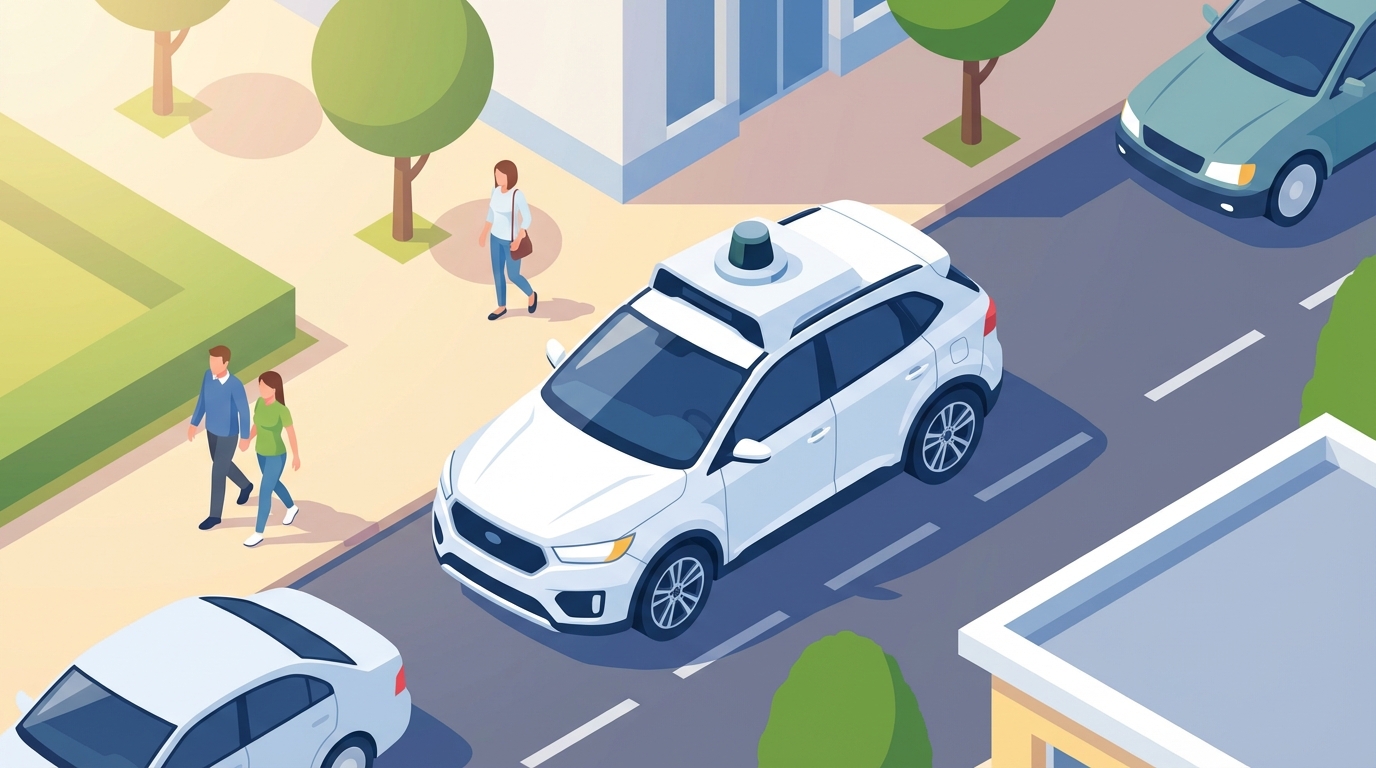
Waymo Robotaxi 2025: Safety Data and Fleet Growth Analysis
Note: The following article presents a future scenario forecast based on projected growth trends and data.
Waymo Robotaxi Growth and Safety Report
Waymo has officially transitioned from experimental pilot programs to a high-volume commercial service, marking a distinct shift in the autonomous vehicle landscape. This Waymo Robotaxi Growth and Safety Report highlights that as of early December 2025, the company surpassed 450,000 weekly paid rides, a figure signaling exponential adoption. Since launching fully autonomous paid rides in 2020, the company has completed over 10 million total trips, with growth velocity increasing disproportionately in the last two years. This surge represents nearly a doubling of weekly volume in just eight months, underscoring the rapid maturation of the robotaxi model in Waymo’s primary operational domains. Source: Robotaxi Tracker Growth Report
TL;DR
- Rapid Growth: Weekly paid rides hit 450,000 in December 2025, nearly doubling in eight months, with over 10 million total trips completed since 2020.
- Fleet Scale: Approximately 2,500 autonomous vehicles are currently deployed, with major concentrations in San Francisco (1,000), Los Angeles (700), and Phoenix (500).
- Safety Record: Data through January 2025 indicates 91% fewer serious injury crashes and 79% fewer airbag deployments compared to human drivers.
- Future Expansion: Plans are in place to expand to at least 17 cities including Miami, Dallas, and Washington D.C. by the end of 2026, targeting 1 million weekly trips.
Exponential Growth and Financial Backing
The inflection point for this growth curve occurred between mid-2023 and late 2024. After reaching 10,000 weekly paid rides in May 2023, the service accelerated significantly, hitting 100,000 weekly rides by August 2024 and 250,000 by April 2025. This trajectory suggests that for the current volume of weekly users, the utility of an autonomous ride justifies the price point, moving the technology from a novelty to a routine transport option. This operational expansion coincided with a $5.6 billion Series C funding round led by Alphabet in October 2024, providing the necessary resources to scale fleet operations and signaling that the paid ride model is a core business strategy. Market Analysis: Waymo Surges to 450k Weekly Rides
Fleet Operations and Geographic Footprint
To support this volume, Waymo has deployed a fleet of approximately 2,500 autonomous vehicles across major metropolitan areas as of late 2025. The distribution of these assets reflects a strategy of density:
- San Francisco: ~1,000 vehicles
- Los Angeles: ~700 vehicles
- Phoenix: ~500 vehicles
- Austin: ~200 vehicles
- Atlanta: ~100 vehicles
This strategic allocation allows the network to handle high demand in established hubs while seeding operations in emerging territories. However, access remains geographically constrained to these dense urban zones rather than offering universal regional coverage. Fleet Distribution Data
Safety Data and Performance Metrics
The regulatory and public confidence required to scale to these levels is underpinned by comparative safety data. Performance metrics released through January 2025 indicate that Waymo vehicles are involved in 91% fewer serious injury crashes and 79% fewer airbag deployment crashes compared to human drivers in similar environments. These statistics suggest the autonomous driving system has achieved a safety margin significantly higher than the human baseline. With over 10 million trips completed, the operational scale indicates that these reported safety margins are consistent across diverse urban environments. Safety Performance Statistics
Case Study: Incident Analysis and Transparency
Beyond aggregate statistics, specific incident reports provide insight into how the autonomous system manages unavoidable collisions. In a review of a pedestrian collision in Santa Monica, Waymo released telemetry data showing the vehicle detected the pedestrian and initiated hard braking, reducing speed from 17 mph to under 6 mph before impact. To contextualize this performance, Waymo utilized a peer-reviewed model which suggested a fully attentive human driver would have impacted the pedestrian at approximately 14 mph. Waymo Blog: A commitment to transparency and road safety
Waymo argues this comparison demonstrates a “material safety benefit,” as the autonomous driver shed significantly more kinetic energy prior to the collision than a human physically could have. Following the collision, Waymo voluntarily contacted the National Highway Traffic Safety Administration (NHTSA) to disclose the event details, illustrating a trend where operators justify safety records based on the physics of harm reduction rather than solely on collision avoidance. Incident Overview and Analysis
Future Expansion and Hardware Evolution
Looking forward, Waymo intends to sustain its momentum by diversifying its vehicle platforms and widening its geographic footprint. The company is retrofitting over 2,000 Jaguar I-PACEs and integrating its sixth-generation autonomous driving system into Hyundai IONIQ 5 and Zeekr RT vehicles. These hardware investments support a planned expansion into at least 17 cities by the end of 2026, including Miami, Dallas, Houston, and Washington D.C. If these targets are met, service capacity is projected to reach 1 million trips per week, testing the adaptability of autonomous systems in the Southern and Eastern United States. Expansion Targets 2026
Comparison Table
| Option | Best for | Pros | Cons | Pricing/Cost |
|---|---|---|---|---|
| Waymo | Safety-conscious riders in specific urban cores (SF, LA, Phoenix). | Safety: 91% fewer serious injury crashes than humans. Source Consistency: Non-human driver eliminates distraction/fatigue. Technology: Advanced kinetic energy management in crashes. Source | Availability: Geographically restricted to specific zones. Coverage: Cannot service regional/long-distance travel outside hubs. Fleet Size: Smaller total vehicle count (~2,500) compared to global giants. | Paid service (Specific rates varying by market/demand) |
| Traditional Rideshare (Human-Driven) | Universal coverage and regional travel. | Availability: Ubiquitous coverage across most cities and suburbs. Volume: Massive global fleet ensures rapid pickup in most areas. | Safety Risk: Higher statistical probability of airbag deployment and injury crashes compared to autonomous systems. Source Variability: Service quality depends on individual human driver behavior. | Market rates (Dynamic pricing) |
Conclusion
Waymo has rapidly scaled its operations to challenge the dominance of traditional human-driven rideshare services in select markets. As detailed in this Waymo Robotaxi Growth and Safety Report, the service grew from a modest 10,000 weekly paid rides in May 2023 to record highs by December 2025. This volume represents a significant shift in consumer adoption, supported by a $5.6 billion Series C funding round and a fleet that has proven to be statistically safer than human drivers. As the company targets 1 million weekly trips and expansion into 17 cities by 2026, the reliability and availability of autonomous rideshare may begin to rival human-driven alternatives in major metropolitan areas, provided that logistical scaling and regulatory trust can be maintained. Waymo Growth Summary
FAQ
Is Waymo statistically safer than a human driver? Yes. According to safety figures analyzed through January 2025, Waymo reports 91% fewer serious injury crashes and 79% fewer airbag deployment crashes compared to human drivers in similar driving environments. Safety Statistics
How does Waymo pricing compare to Uber or Lyft? While specific pricing comparisons are not detailed in the provided reports, the rapid growth to nearly half a million weekly rides suggests that for hundreds of thousands of users, the utility of the autonomous ride justifies the price point. Adoption Rates
In which cities is Waymo currently available for paid rides? As of late 2025, Waymo operates in San Francisco, Los Angeles, Phoenix, Austin, and Atlanta. The company plans to expand to at least 17 cities, including Miami, Dallas, Houston, and Washington D.C., by the end of 2026. Expansion Plans