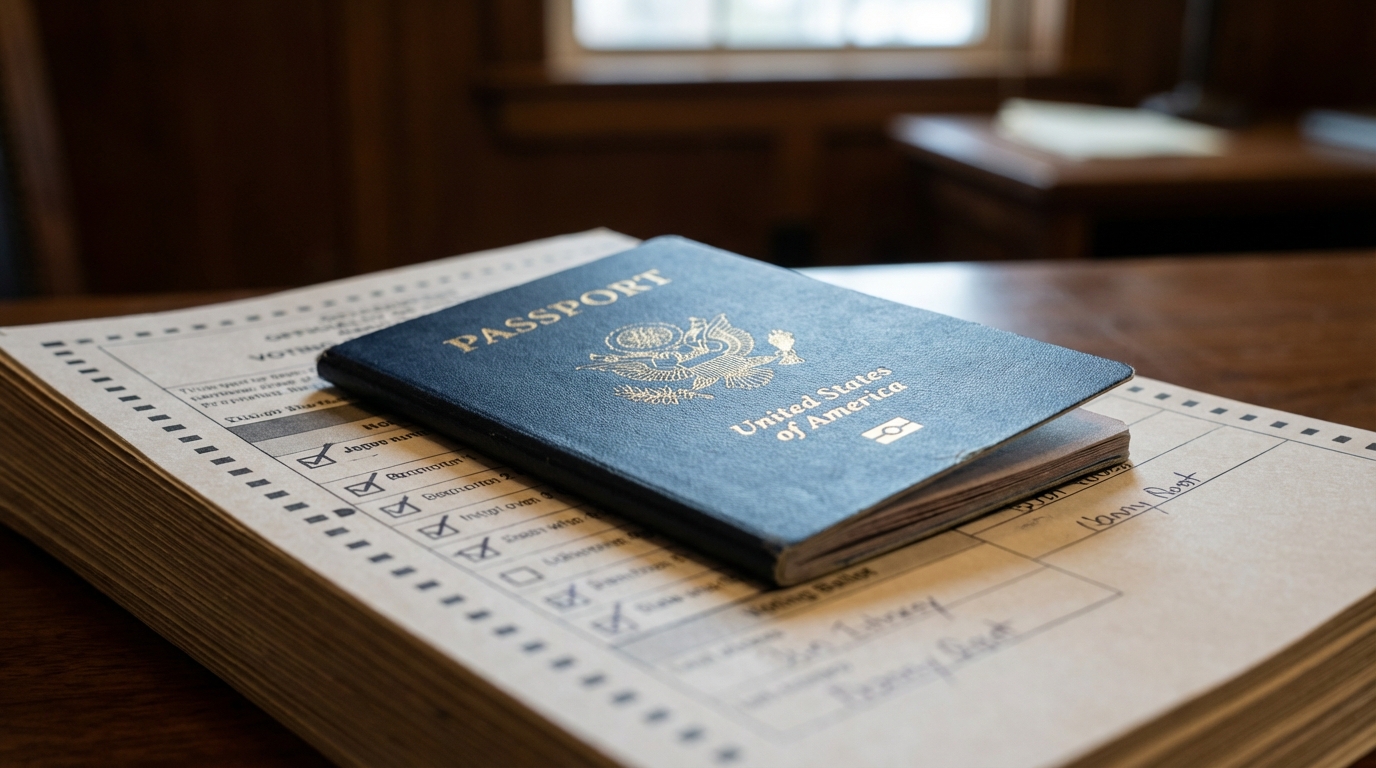
Senate GOP Proposes Stricter Version of the SAVE Act
Senate Republicans Push for Stricter Version of the SAVE Act
The landscape of federal election law has become the focus of renewed intensity as Senate Republicans signal legislative efforts to alter voting regulations. Following a period where Republicans sought to advance election reforms, Senator John Thune indicated plans to introduce a “more restrictive version” of the SAVE Act (Safeguard American Voter Eligibility Act) to the Senate floor.
This announcement marks a strategic pivot after the original bill failed to move forward in the upper chamber, despite passing in the U.S. House of Representatives. The decision to revisit and tighten the legislation suggests GOP leadership is prioritizing strict election integrity measures for the legislative agenda Democracy Docket.
The Evolution of the Legislation
The legislative trajectory of the SAVE Act provides a baseline for understanding Senate dynamics regarding voting regulations. In 2024, the U.S. House of Representatives successfully passed the original legislation, which was designed to require documentary proof of citizenship specifically during the voter registration process Democracy Docket.
According to legal analysis, the House bill focused “almost exclusively” on modifying voter registration protocols. Its primary provision mandated that applicants produce documentary proof of citizenship when registering to vote, a requirement designed to replace standard attestation forms. Currently, federal forms often allow voters to affirm their citizenship status under penalty of perjury without immediately providing physical records. Under the proposed rules, a signature would no longer suffice, compelling applicants to locate and submit specific legal documents to election officials before their registration could be processed Democracy Docket.
Despite its success in the lower chamber, Senate Republicans were unable to advance the measure immediately. Senator Alex Padilla (D-Calif.) characterized the iteration as “dead on arrival,” citing a lack of bipartisan viability Democracy Docket.
Expanding the Scope: Registration and ID Requirements
Legislative discussions have evolved toward an expanded proposal, championed by Senator Mike Lee (R-UT), which broadens the scope of the original text. While the initial SAVE Act was targeted specifically at registration documentation, the “more restrictive version” alluded to by Thune incorporates broader changes to election administration, often referred to in Senate discussions as the “SAVE America Act” Democracy Docket.
Jason Perry, Director of the Hinckley Institute of Politics, explains that this expanded iteration establishes “two checkpoints” for federal elections:
- Registration Phase: The first checkpoint remains the submission of documentary proof of citizenship at the time of registration.
- Ballot Box: The second checkpoint introduces a requirement for government-issued voter identification at the ballot box itself.
This creates a dual-layer verification system for casting a ballot. The proposal explicitly combines registration vetting with in-person identity verification, a structure designed to address potential vulnerabilities at both the entry point of the voter rolls and the physical act of casting a ballot KUTV.
Arguments for Stricter Verification
Senator Mike Lee has positioned these measures as critical for securing federal elections, arguing that consistency in identification requirements is essential for election integrity. Lee defended the legislation by drawing parallels to routine commercial transactions, stating on social media that it “makes no sense to require ID for everyday activities but not to vote” KUTV.
The driving force behind the bill is a push to federalize strict identification standards, overriding the current patchwork of state-level regulations. By mandating specific forms of identification, proponents aim to standardize the verification process across all jurisdictions for federal races. Supporters maintain that Congress possesses the constitutional authority to regulate the “time, place, and manner” of federal elections to ensure security KUTV.
Opposition: Disenfranchisement and Statistical Data
Democratic lawmakers and voting rights advocates have maintained fierce opposition to the legislation. Representative Joe Morelle (D-N.Y.) condemned the SAVE Act as a “severe assault on voting rights,” arguing that the measures are predicated on “baseless conspiracy theories” regarding non-citizen voting Democracy Docket.
Critics argue that requiring specific documentation at multiple stages creates bureaucratic bottlenecks that disproportionately affect voters who lack easy access to government records. Policy analysts warn that these practical hurdles could disenfranchise eligible voters through complex administrative requirements KUTV.
Furthermore, opponents challenge the underlying justification for the bill, arguing that the legislation addresses a statistically nonexistent problem. Former Utah Governor Gary Herbert, a Republican, has publicly questioned the necessity of the bill, emphasizing that instances of noncitizen voting are historically infrequent. Herbert noted, “We’re finding out that the number [of noncitizens voting] is really very small,” suggesting that the legislative response may be disproportionate to the actual occurrence of irregular voting KUTV.
The Federalism Debate
Beyond the statistical and practical debates, the proposal has sparked friction regarding constitutional authority and the role of federalism in election administration. While proponents argue for federal standardization, opponents within the GOP have raised concerns about federal overreach.
Former Governor Herbert has opposed the measure on these grounds, citing states’ rights to manage elections. Herbert emphasized that under the Constitution, states are primarily responsible for running elections, though he acknowledged Congress’s power to regulate “time, place, and manner” KUTV. Opponents argue that federal mandates infringe upon state autonomy to manage their own voter verification processes effectively. Consequently, the debate encompasses not only the integrity of the vote but also the constitutional balance of power between federal oversight and state jurisdiction.
Legislative Outlook
Senator Thune has indicated plans to bring a “more restrictive version” of the act to the Senate floor. It remains unclear whether the new Senate push will amend the SAVE Act directly or subsume its provisions into a larger omnibus package. Legal analysts note that this effort is emerging alongside other sweeping proposals, such as the “Make Elections Great Again” (MEGA) Act, which observers describe as even more extensive than the SAVE Act Democracy Docket.
The path to passage is heavily obstructed by unified Democratic opposition. Senator Padilla previously declared the legislation “dead on arrival in the Senate,” and Representative Morelle has indicated that opposition is deeply entrenched across both chambers. As the Senate prepares to debate the revised proposal, the core dispute remains whether the additional restrictions are necessary for security or serve primarily to disenfranchise eligible voters.
Conclusion
The renewed push for the SAVE Act and its expanded iterations represents a significant escalation in the battle over federal election standards. While proponents like Senator Mike Lee and Senator John Thune argue that dual checkpoints for registration and identification are common-sense security measures, critics view them as historic attacks on voter access rooted in unfounded theories. As leadership signals intent to advance these broader measures, the conflict between ensuring ballot access, enforcing federal mandates, and respecting state sovereignty is likely to intensify.
FAQ
Does the SAVE Act require a passport to register to vote? The legislation mandates that applicants produce “documentary proof of citizenship” when registering to vote, replacing the system of attestation under penalty of perjury. While specific acceptable documents are not exhaustively listed in the provided text, applicants would be compelled to locate and submit specific legal documents to election officials Democracy Docket.
Is noncitizen voting currently illegal in federal elections? Yes, it is already illegal for noncitizens to vote in federal elections. Current federal forms require voters to affirm their citizenship status under penalty of perjury. Critics of the new bill, including former Governor Gary Herbert, emphasize that instances of noncitizen voting are “statistically rare” and that audits show the numbers are “really very small,” implying that such voting is irregular and already subject to verification audits KUTV.
What is the current status of the SAVE Act? After passing the House in 2024 but stalling in the Senate, the legislation is being revived. Senator John Thune indicated plans to introduce a “more restrictive version” of the bill to the Senate floor, potentially expanding it to include voter ID requirements at the ballot box Democracy Docket.