Ken Burns Explores the Dark Reality of The American Revolution
Ken Burns Examines the “Dark and Bloody” Reality of The American Revolution
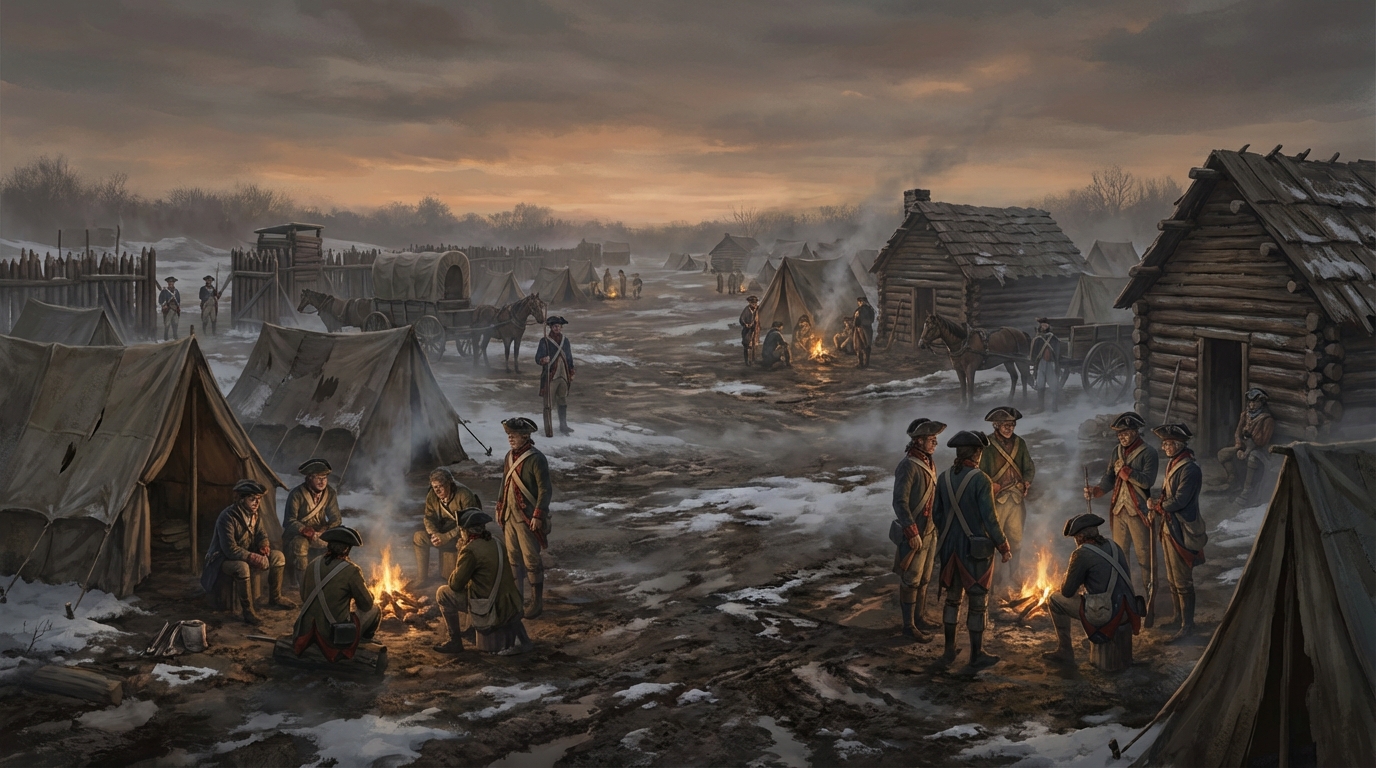
The upcoming release of Ken Burns’s latest documentary series, The American Revolution, marks a significant moment in historical storytelling, arriving over a decade after the project began production in 2015. Discussing the project on Meet the Press, Burns detailed the six-part series, which aims to dismantle the “sanitized” mythology often associated with the nation’s founding. Burns argues that popular history has traditionally avoided the “dark and bloody” realities of the war due to an underlying fear that revealing them might diminish the political ideals established in Philadelphia in 1776. Instead of the polished narrative often taught in schools, the series presents a grittier reality, with Burns contending that avoiding these difficult truths results in a “myopic view of what actually happened” 1 2.
Democracy as an “Unintended Consequence”
A central thesis of the documentary is the assertion that American democracy emerged not as the specific design of the founders, but as an “unintended consequence” of the conflict itself. Burns notes that the original intent of the revolutionary leadership was to establish a “kind of aristocracy” composed principally of white male property owners. This vision of a stratified society stood in sharp contrast to the egalitarian ideals that would eventually characterize the nation’s identity 1.
The documentary posits that the operational realities of the conflict forced a shift in this trajectory. The necessity of securing military victory meant the Continental Army could not rely solely on the propertied class to sustain the fight. To fill the ranks, the leadership was compelled to recruit a much broader demographic. Burns notes that by the end of the war, the fighting force was populated by “teenagers, ne’er-do-wells, felons hoping for a pardon, [and] recent immigrants” 1.
Because the survival of the revolution depended on these non-property owners, the political landscape was forced to accommodate them. This reliance on the disenfranchised created an implicit social contract that expanded the definition of who deserved a stake in the new nation. Consequently, the war effort itself acted as a democratizing force, dismantling the exclusive structure originally envisioned by the leadership and highlighting the deep class divides that functioned as a form of civil war within the broader independence movement 1.
Desanitizing the Historical Record
To correct the historical record, the series deliberately expands the narrative scope beyond traditional battlefield figures to include marginalized perspectives. Burns aims to “desanitize” the history of the war by moving beyond the idealized mythology of the era. The timeline incorporates the voices and experiences of women, Native Americans, and African Americans to provide a more complete picture of the era 1.
Burns asserts that omitting these voices results in a “myopic view” of history, whereas a fuller accounting reveals the complexity of the era. This inclusive approach seeks to reconcile the high ideals of the Revolution with the brutal realities of the war and the marginalized populations affected by it. By integrating these viewpoints, the series attempts to acknowledge the violence and division inherent in the founding, presenting the era not merely as a unified uprising against Britain, but as a complex conflict defined by internal contradictions 1.
Ethical Boundaries in the Age of AI
In constructing this extensive historical analysis, the production team utilized modern technology with strict ethical boundaries. Production for the series began in 2015, spanning over a decade of research and editing. As the project spanned a period of rapid technological advancement, the filmmakers navigated the emergence of artificial intelligence in media. Burns has drawn a distinct boundary regarding the integration of AI in his filmmaking process 1.
Burns clarified that while Artificial Intelligence was employed as a research tool to organize information or uncover data points, he explicitly rejected its use for generating content. He described the concept of AI-generated creative materialsuch as synthetic imagery or voicesas “unacceptable,” emphasizing the importance of human curation in historical documentary filmmaking. This distinction highlights the filmmaker’s commitment to traditional narrative authenticity and archival verification over algorithmic approximations 1.
A Release Amidst Institutional Challenges
The upcoming release of this examination of the country’s founding arrives during a period of significant institutional challenges for public media and broader political polarization. Burns acknowledges the turbulent environment for distributing public media projects, noting that funding structures for educational content face ongoing pressures. However, he suggests that studying the deep divisions of the Revolutionary era offers cause for optimism regarding the country’s future 1.
Burns notes that the historical parallels, or “rhymes to this moment,” are particularly relevant to understanding current political polarization. The documentary’s focus on the resilience of American institutions creates a thematic counterpoint between the expansion of democratic participation depicted in the film and the challenges facing public media access in reality 1 2.
Conclusion
The American Revolution stands as a comprehensive effort to reframe the nation’s origin story, moving away from polished myths toward a complex reality populated by diverse voices. By highlighting how the practical necessities of war forced an aristocratic leadership to accept a more democratic reality, the series underscores the resilience inherent in the country’s foundation. While the documentary’s anticipated debut coincides with a period of uncertainty for the infrastructure of public education, Ken Burns presents a work that not only chronicles the “dark and bloody” birth of the nation but also serves as a testament to the enduring importance of human-curated history in an era of technological and institutional change.
FAQ
How does Ken Burns’ ‘The American Revolution’ differ from traditional history books? Burns argues that traditional narratives have “sanitized the war” to protect political ideals. His series presents a “grittier reality” by including “dark and bloody” elements and marginalized perspectives often omitted from textbooks 1 2.
Did Ken Burns use Artificial Intelligence to create the new documentary? Burns used AI strictly as a research tool to organize information. He explicitly rejected using AI to generate content (such as images or voices), calling such use “unacceptable” and emphasizing the need for human curation 1.
What is the main argument Ken Burns makes about American democracy in the series? The series argues that democracy was an “unintended consequence” of the war. While the founders intended to create a “kind of aristocracy” of property owners, the need to recruit soldiers from the lower classes (teenagers, felons, immigrants) forced a democratization of the nation 1.
When did production begin on Ken Burns’ American Revolution documentary? Production for the six-part documentary series began in 2015, spanning over a decade of work prior to its release 1.