Margot Robbie's Wuthering Heights Style & The Taj Mahal Necklace
Why Margot Robbie’s Wuthering Heights Era Calls for the Taj Mahal Necklace
Margot Robbie is set to star in the upcoming adaptation of Wuthering Heights, a project expected to merge cinematic storytelling with high-stakes aesthetics. As the Emerald Fennell-directed adaptation moves into production, the film offers an opportunity to connect its visual language to high-value historical fashion. A prime candidate for such artistry would be the “Cartier Taj Mahal necklace,” a historic artifact featuring a large, heart-shaped diamond with centuries of provenance.
The film, slated for a Valentine’s Day release, likely in 2026 2, requires a specific visual aesthetic. The potential combination of structural couture and storied jewels could create a “Gothic Romance” aesthetic suited to the adaptation of Emily Bront’s novel. Bridging cinematic history and high fashion would establish a specific atmospheric tone for the project’s eventual launch.
Method Dressing and the “Gothic Romance” Aesthetic
Such styling choices would align with the broader “method dressing” strategy often employed by Robbie’s stylist, Andrew Mukamal. For a project like Wuthering Heights, the goal is often to translate literary passages into outfits, moving beyond literal interpretations to capture the novel’s themes. This approach complements the work of costume designers like Jacqueline Durran, who often utilize an “ahistorical approach” to capture the essence of a narrative.
Visually, the Taj Mahal necklace offers a dramatic aesthetic consistent with the dark, romantic tone of Bront’s work. Integrating a jewelry piece inscribed with themes of imperial history would reinforce the romantic and dramatic elements of the story. The deep red of the rubies and the gold setting provide a stark contrast intended to evoke the passion and intensity inherent in the source material.
The Mughal Origins: A Document in Diamond
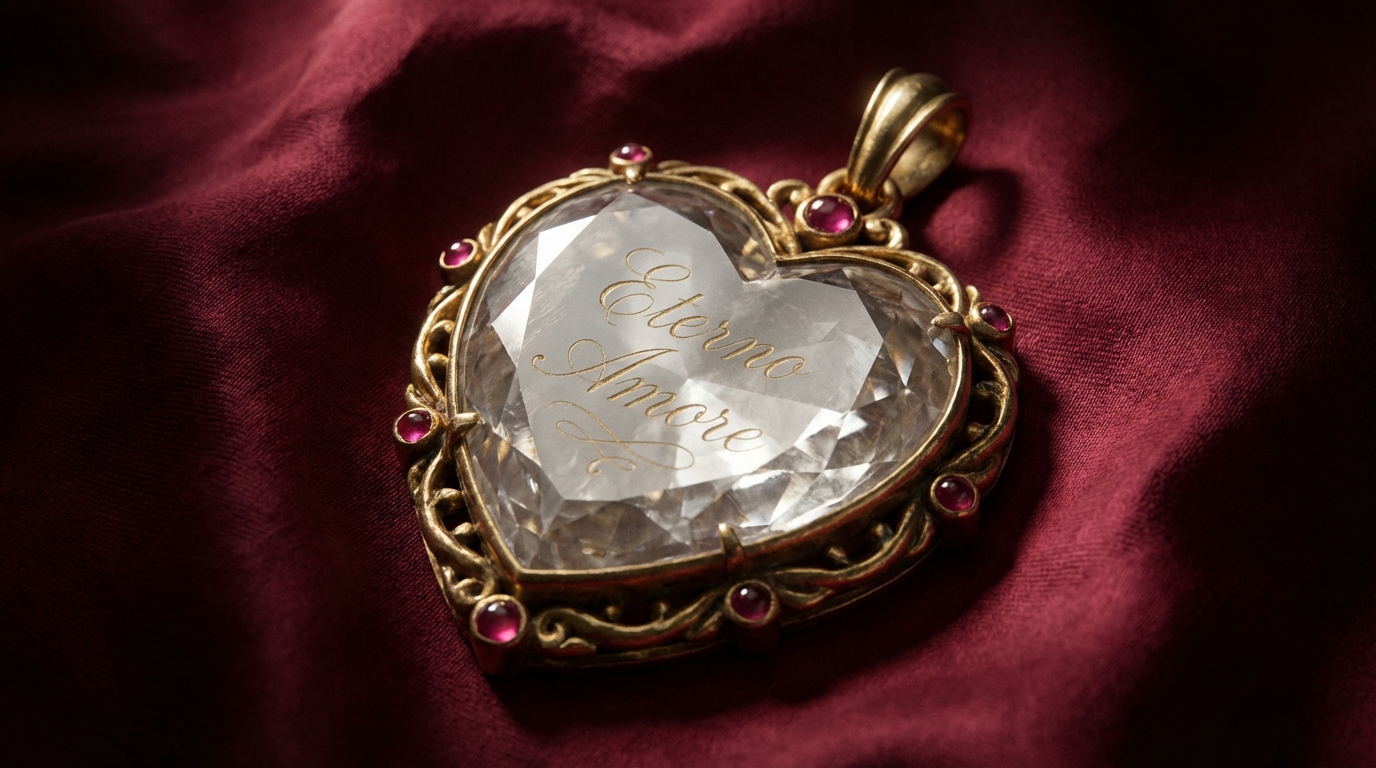
The centerpiece of the necklace is a heart-shaped diamond that serves as a historical document as much as a jewel. Engraved upon its surface is an inscription identifying “Nur Jahan, Lady of the Padshah,” establishing the piece’s royal intent from its inception. Alongside this title, the stone bears the number 23 and the date 1037 (from the Islamic calendar). These markings provide the primary evidence for the gem’s 17th-century provenance, linking it directly to the zenith of the Mughal Empire Vanity Fair.
The corresponding Gregorian date of 1627 is significant within Mughal history, coinciding with the era of Emperor Jahangir and his influential consort, Nur Jahan. While the diamond is colloquially associated with the Taj Mahalbuilt by Nur Jahan’s stepson, Shah Jahanthe inscription explicitly anchors the stone to Nur Jahan’s own timeline. The presence of her name suggests it was a token of high imperial status, commissioned within the royal court during a period of significant dynastic transition. Consequently, the stone remains a tangible artifact of the complex imperial relationships occurring in India during the late 1620s Vanity Fair.
Physical Evolution: From Silk Cord to Cartier
Physically, the jewelry combines ancient craftsmanship with 20th-century luxury modifications. The focal point is the heart-shaped diamond, distinguished by historical engravings etched directly onto the gem’s surface. However, the presentation of the stone has been radically altered over the centuries to suit changing tastes.
Originally, this historic diamond was not mounted in the elaborate metalwork seen in contemporary photographs. Historical details indicate that the stone was initially suspended from a simple silk cord, a style consistent with traditional Mughal jewelry practices which often prioritized the gem over the setting. This modest presentation allowed the focus to remain on the heart-shaped cut and the intricate engravings on the diamond’s face.
It was only in the 20th century that the presentation was transformed to suit Western luxury tastes. The French jewelry house Cartier replaced the original silk cord with a woven gold necklace featuring cabochon rubies and diamonds, creating the structure that exists today Vanity Fair. Encasing the inscribed diamond is an elaborate mount designed to enhance the stone’s silhouette. The diamond rests within a gold heart-shaped setting that is heavily embellished with colored gemstones. Specifically, the design incorporates rubies and jade alongside smaller diamonds to frame the central artifact, adding vibrant red and green contrasts to the clear stone.
The Elizabeth Taylor Connection
The diamond’s journey from the Mughal court to Western collections eventually led to its acquisition by Richard Burton in 1972. Burton sought a significant gesture to mark Elizabeth Taylor’s 40th birthday, resulting in the acquisition of a piece with deep historical resonance. Aware of Taylor’s intense passion for fine jewelry, Burton gifted her the necklace, which remained a key part of her collection for decades.
Burton famously joked that he purchased the necklace because he could not transport the actual Taj Mahal to her. This acquisition brought the 17th-century stone back into global prominence, merging the narrative of Mughal royalty with modern Hollywood history. The purchase represented a high point in the couple’s famous history of collecting rare gems. This specific gift was intended to symbolize a romantic connection that transcended time, aligning with the couple’s public narrative Vanity Fair.
Market Value and Provenance
The financial significance of the “Taj Mahal” necklace was quantitatively established during a landmark sale at Christie’s in 2011. As part of a broader auction of Elizabeth Taylor’s renowned collection, the piece commanded a final price of $8.8 million. This valuation moved the item beyond the category of luxury jewelry and into the realm of investment-grade historical assets.
The sale affirmed that the market value of such pieces is derived as much from their narrative history as from the intrinsic quality of the gemstones. The combination of its Mughal history and its association with Hollywood royalty drove the bidding to exceptional heights. This valuation reflects both the intrinsic quality of the modified jewelry and the rarity of the inscribed heart-shaped diamond.
Conclusion
As the production of Wuthering Heights approaches, the intersection of cinematic storytelling and archival fashion remains a compelling concept. Pieces like the “Cartier Taj Mahal necklace” would effectively link the Gothic romance of the upcoming film with the real-world romantic history of Elizabeth Taylor and the imperial history of the Mughal Empire. The heart-shaped diamond, with its royal inscription and 17th-century provenance, acts as a conceptual bridge between the fiction of Emily Bront and the reality of historical artifacts. Such high-value items set a precedent for the “method dressing” strategy, utilizing provenance and documented history to amplify the themes of the film.
FAQ
How much is the Taj Mahal diamond necklace worth? The necklace was sold at a Christie’s auction in 2011 for $8.8 million. This price reflected the unique combination of its Cartier design, its verified origins in the year 1627, and its provenance as part of Elizabeth Taylor’s estate Vanity Fair.
What is the history behind the Taj Mahal diamond inscription? The diamond features an engraving identifying “Nur Jahan, Lady of the Padshah,” alongside the number 23 and the date 1037. These markings correspond to the years 16271628 AD, linking the stone to the era of Emperor Jahangir and his consort, Nur Jahan, during the Mughal Empire Vanity Fair.
Why is the necklace associated with Hollywood royalty? The necklace became a symbol of Hollywood glamour when Richard Burton gifted it to Elizabeth Taylor in 1972. It remained in her collection for decades before being sold at auction in 2011 Vanity Fair.