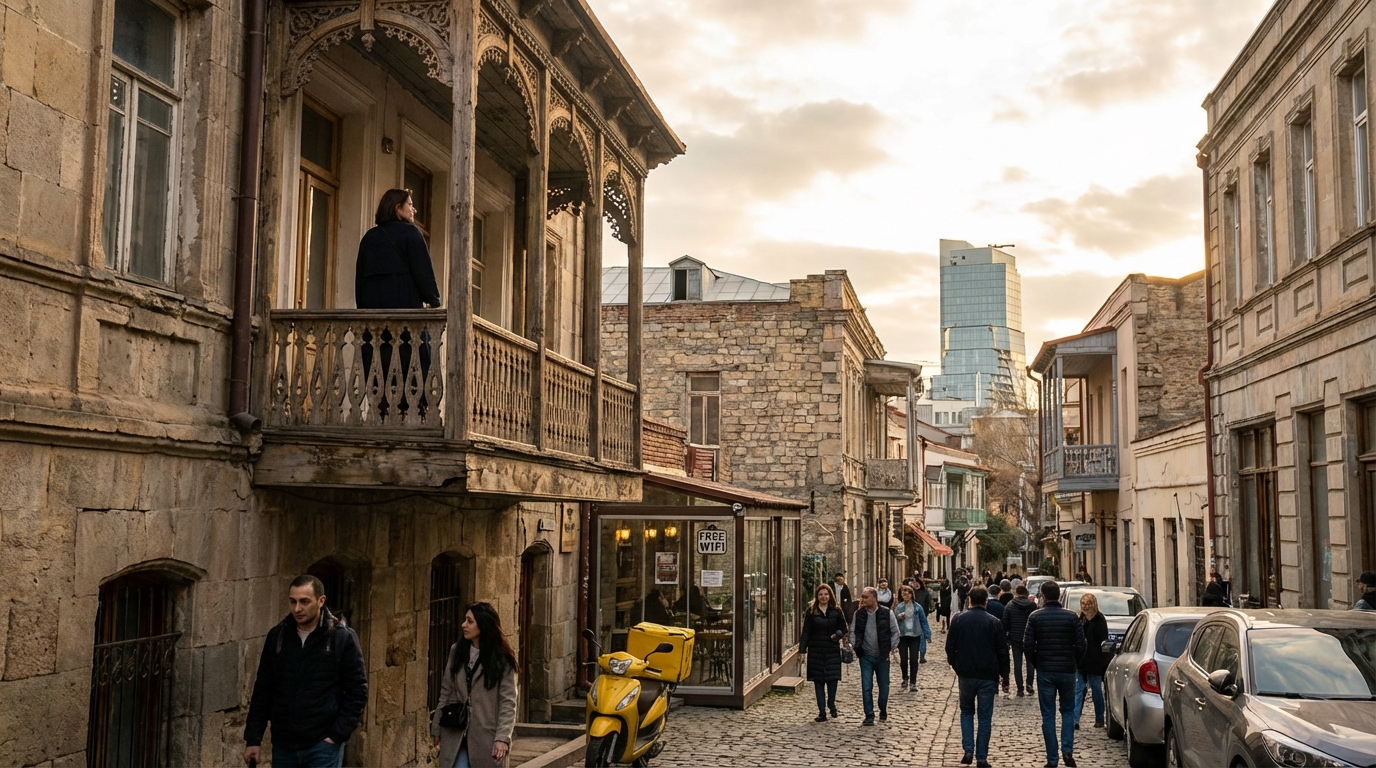
Georgia Country: Ancient Heritage and Modern Travel
Situated at the geopolitical and cultural crossroads of Eastern Europe and Western Asia, the Georgia country is currently navigating a fascinating dual trajectory. On one front, it is rapidly modernizing its tourism infrastructure to court Western travelers seeking the ‘next great destination.’ On the other, it is deeply engaged in excavating and reviving the specific cultural nuances that defined its history long before the Soviet era. This is not merely a travel trend; it is a reassertion of identity in the Caucasus, where ancient hospitality laws collide with modern geopolitical realities.
The Resurrection of Cultural Pluralism
While global headlines often focus on Georgia’s stunning landscapes, a quieter, more profound cultural shift is occurring in the capital, Tbilisi. For the first time in nearly a century, Yiddish theater has returned to the Georgian stage, marking a significant milestone in the preservation of the region’s Jewish heritage. This revival is not a mere museum exhibit but a living, breathing artistic endeavor.
According to a report by the Forward, the State Yiddish Drama Theater has resumed operations, reconnecting with a legacy that was suppressed for decades. This development highlights the country’s historical role as a multi-ethnic hub where diverse communities coexisted. The revival serves as a microcosm for the Georgia country at large: a nation eager to showcase that its history is not monolithic, but a tapestry of influences that survived the homogenization of the 20th century.
TL;DR
- Cultural Milestone: Yiddish theater has returned to Tbilisi after 100 years, symbolizing a revival of the country’s diverse ethnic history.
- Visa Policy: Georgia offers an exceptionally generous one-year visa-free stay for citizens of nearly 100 countries, including the US and EU members.
- Winemaking: The country is the ‘cradle of wine,’ utilizing the 8,000-year-old qvevri method of fermenting grapes in underground clay vessels.
- Transport: Getting around involves a mix of modern apps like Bolt and traditional, chaotic minivans known as marshrutkas.
- Geography: From the Black Sea coast to Ushguli, the highest permanently inhabited settlement in Europe, the terrain is dramatic and varied.
The Cradle of Wine and Radical Hospitality
To understand the economic and social fabric of Georgia, one must look into the qvevri. This large, egg-shaped clay vessel, buried underground for fermentation, represents an uninterrupted winemaking tradition spanning 8,000 years. Unlike the industrialized processes often found in the West, Georgian winemaking is deeply personal and inextricably linked to the national ethos.
As noted by TravelPirates, the local proverb “A guest is a gift from God” is not a marketing slogan but a governing social principle. This radical hospitality drives the tourism sector, distinguishing it from the transactional nature of travel in more developed European markets. The supra (traditional feast) acts as the primary vehicle for this interaction, where the consumption of wine and food such as the ubiquitous khinkali (dumplings) and khachapuri (cheese bread) facilitates a bond between host and visitor that is rare in modern tourism.
However, this hospitality is also a strategic economic asset. By positioning its culinary heritage as a primary attraction, Georgia has successfully differentiated itself from its neighbors, drawing in high-value cultural tourists rather than just backpackers.
Navigating the Caucasus: Logistics and Infrastructure
For the uninitiated, traversing the Georgia country presents a stark contrast between the ease of bureaucracy and the chaos of physical transit. The government has implemented one of the most liberal visa regimes in the world. Citizens of the United States, Canada, the EU, and many other nations can enter and stay for up to one year without a visa. This policy is a deliberate move to attract digital nomads and long-term expatriates who inject foreign currency into the local economy.
Yet, physical movement within the country retains a rugged, post-Soviet character. While the railway network connects major hubs like Tbilisi and Batumi efficiently, reaching the mountainous interior requires engaging with the marshrutka system. These shared minivans are the lifeblood of Georgian transport, operating on loose schedules and often at high speeds along winding mountain roads.
According to Georgia Today, while ride-hailing apps like Bolt and Yandex are available and affordable in Tbilisi, they are virtually non-existent in rural areas. Travelers must rely on cash, negotiation, and a tolerance for what Westerners might consider “spirited” driving. This dichotomyfrictionless entry at the border versus friction-heavy travel in the mountainsdefines the current visitor experience.
Comparison table
The following table breaks down the primary modes of transport available to visitors, analyzing the trade-offs between cost, comfort, and reach.
| Option | Best for | Pros | Cons | Pricing/Cost |
|---|---|---|---|---|
| Marshrutka (Minivan) | Budget travelers and inter-city travel | Extremely cheap; covers almost every village and town; authentic local experience. | Cramped seating; no fixed schedule (leaves when full); erratic driving; cash only. | Very Low (approx. $5-$10 for long distances) |
| Ride-Hailing Apps (Bolt) | City travel (Tbilisi, Batumi, Kutaisi) | Safe; transparent pricing; no language barrier; door-to-door service. | Limited availability outside major cities; prices surge during rain or rush hour. | Low to Moderate |
| Private Driver/Transfer | Touring remote regions (Svaneti, Kazbegi) | High comfort; photo stops allowed; safer driving than marshrutkas. | significantly more expensive than public transit; requires negotiation if not booked via agency. | Moderate to High |
| Railway | Travel between major hubs (Tbilisi to Batumi) | Scenic; comfortable; safe; reliable schedule. | Limited network (does not go to high mountains); tickets sell out in peak season. | Low (approx. $10-$25) |
The High-Altitude Frontier
Beyond the urban centers lies the true geographical magnet of the region: the Greater Caucasus range. The allure of the Georgia country is heavily tied to regions like Svaneti, home to Ushguli, which is cited as one of the highest continuously inhabited settlements in Europe. The preservation of medieval defensive towers in these villages speaks to a history of isolation and resilience.
Travelers venturing here are not just sightseeing; they are entering a zone where the infrastructure is still catching up to the demand. The roads to Ushguli are notorious, yet the reward is a landscape that rivals the Alps but with a fraction of the commercial development. This raw accessibility is a double-edged sword: it offers pristine adventure but lacks the safety nets and medical facilities found in Western Europe.
Pros and cons
Pros
- Unmatched Hospitality: The cultural mandate to treat guests with reverence creates a welcoming atmosphere that is rare globally.
- Culinary Excellence: A unique food and wine scene with 8,000 years of history, featuring affordable and high-quality local produce.
- Ease of Access: The one-year visa-free policy for many Western nations removes bureaucratic hurdles for extended stays.
- Diverse Landscapes: Access to high mountain peaks, semi-desert landscapes, and Black Sea beaches within a single day’s drive.
Cons
- Road Safety: Traffic laws are loosely enforced, and driving habits can be aggressive and dangerous for those unaccustomed to the region.
- Language Barrier: Outside of Tbilisi and younger demographics, English proficiency drops, with Russian or Georgian being the primary means of communication.
- Infrastructure Gaps: Rural areas may lack reliable internet, heating, or modern plumbing, and public transport schedules can be unpredictable.
FAQ
Q: Is Georgia safe for American tourists? A: Yes, Georgia is generally very safe for tourists. Violent crime against foreigners is rare. However, the most significant risk comes from road traffic accidents due to aggressive driving and poor road conditions in rural areas. Standard precautions regarding petty theft in crowded tourist areas apply.
Q: Do I need a visa to visit Georgia? A: For citizens of the US, UK, Canada, Australia, and EU member states, no visa is required. You are granted a stay of up to one year upon entry, which is one of the most generous visa policies in the world.
Q: What is the best way to pay for things in Georgia? A: In major cities like Tbilisi and Batumi, credit cards and Apple Pay are widely accepted. However, if you are traveling to the mountains, riding marshrutkas, or visiting small guesthouses, carrying cash (Georgian Lari - GEL) is absolutely essential.
Q: Is English widely spoken? A: In Tbilisi and within the tourism sector, English is widely spoken by the younger generation. However, among older generations and in rural villages, Russian remains the primary second language after Georgian.
The Path Forward
As the Georgia country continues to balance its rapid tourism growth with cultural preservation, the revival of institutions like the Yiddish theater suggests a promising maturity. The nation is moving beyond being merely a budget-friendly alternative to the Alps or a culinary curiosity. It is establishing itself as a complex, multi-layered destination where history is not just observed but experienced. For the traveler willing to navigate the chaotic roads and embrace the intensity of local hospitality, Georgia offers a rare glimpse into a culture that has survived empires to reclaim its own narrative.
References
- Forward: Yiddish theater is revived in Tbilisi, Georgia, after 100 years
- Georgia Today: Georgia for First Timers: Your Complete Journey Planning Guide
- TravelPirates: Why Travel to Georgia?