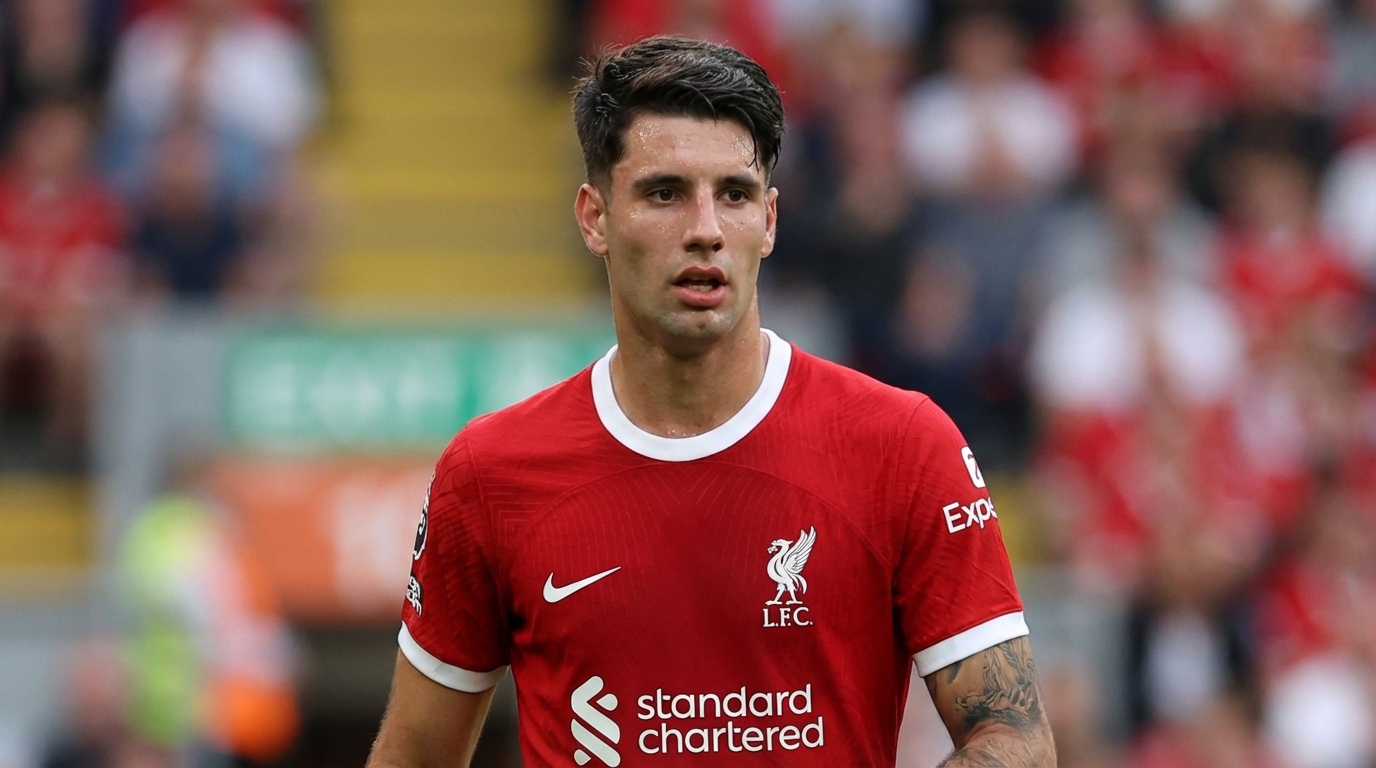
Dominik Szoboszlai Contract Update: Salary and Slot's Plans
The modern Premier League ecosystem is driven as much by asset management as it is by tactical innovation, and nowhere is this more evident than at Anfield. As Liverpool navigates the transitional waters under Arne Slot, the focus has inevitably shifted to the long-term security of their core midfield engine. Dominik Szoboszlai, the Hungarian captain whose dynamism revitalized the Reds’ engine room upon his arrival, has become the subject of intense speculation regarding his contractual future. While the headlines scream of “colossal” demands, a forensic look at the situation reveals a more nuanced game of poker between a player knowing his worth and a club famous for its rigid fiscal discipline.
TL;DR
- Negotiation Status: Talks are reportedly underway or imminent to extend Szoboszlai’s deal, securing his prime years.
- The ‘Colossal’ Rumor: Reports suggest a demand for a massive pay hike, but insiders suggest this is standard opening leverage.
- Tactical Fit: Szoboszlai is viewed as indispensable to Arne Slot’s high-energy system, increasing his bargaining power.
- Fan Sentiment: Despite the noise, reliable journalists advise calm, noting that Liverpool is proactive in protecting asset value.
- Financial Impact: A renewal would likely place him in the upper echelon of earners, just below the Salah/Van Dijk tier.
The Catalyst for Renegotiation
In the high-stakes world of football finance, contracts are rarely allowed to run their full course without intervention, especially for players approaching their peak valuation. Szoboszlai, signed from RB Leipzig, arrived with a reputation for ball-striking and relentless energy. However, the trigger for the current discourse isn’t just his performanceit is the timeline. Clubs are increasingly wary of the two-year remaining mark, a threshold where leverage begins to shift from the employer to the employee.
According to recent reports, Liverpool is preparing to address the midfielder’s future to ward off any potential suitors and reward his integration into the Premier League. The narrative surrounding these talks, however, has bifurcated. On one side, sensationalist reports claim the player is holding out for a “colossal” salary that could disrupt the dressing room hierarchy. On the other, more grounded reporting suggests a standard administrative process is unfolding.
Analyzing the “Colossal” Demands Narrative
The term “colossal” does heavy lifting in modern transfer journalism. Recent coverage from OneFootball suggests that Liverpool is ready to accept significant salary demands to keep their stars happy. This narrative implies that the club, usually prudent under Fenway Sports Group (FSG), might be willing to break character. The suggestion is that Szoboszlai, aware of his integral role in the post-Klopp era, is seeking parity with the club’s highest earners.
However, investigative analysis requires balancing these claims against the club’s historical behavior. Liverpool rarely panics. When rumors surface about a player demanding astronomical wages, it is often a tactic used by agents to test the market’s temperature. If Szoboszlai is indeed asking for a major hike, it is likely a reflection of the market rate for a starting number 8 in a Champions League-contending side, rather than an ultimatum.
The Voice of Reason: Contextualizing the Panic
Amidst the fervor of contract rumors, it is crucial to consult sources with a track record of reliability regarding Liverpool’s internal operations. David Lynch, a respected journalist covering the club, has provided a counter-narrative to the hysteria. As detailed by Anfield Index, Lynch argues that fans should not be overly worried by the claims of difficult negotiations.
Lynch’s analysis suggests that what is being framed as a standoff is likely just the friction of standard business. Every agent starts high; every club starts low. The “worry” stems from the broader anxiety surrounding the expiring contracts of Trent Alexander-Arnold, Virgil van Dijk, and Mohamed Salah. Szoboszlai’s situation is different; he is not on the brink of a free transfer. This gives Liverpool time and leverage, meaning they are unlikely to be held ransom to demands that do not align with their internal valuation models.
Tactical Necessity Under Arne Slot
To understand why Liverpool might entertain a wage increase, one must look at the tactical board. Under Jurgen Klopp, Szoboszlai was a “chaos engine.” Under Arne Slot, his role has evolved. The Dutchman’s system requires midfielders who can press intelligently but also control tempoa hybrid skillset that is expensive to replace in the transfer market.
If Liverpool were to sell Szoboszlai, the cost of acquiring a replacement with similar Premier League experience, pressing stats, and age profile (mid-20s) would likely exceed 60-70 million, plus wages. Therefore, a salary bumpeven a significant oneis often the more fiscally responsible route than entering the transfer market. The “colossal” demand, when amortized over a new five-year deal, is cheaper than the transfer fee of a replacement.
The Athletic’s Perspective on Timeline
The timeline of these talks is also significant. Reporting from The Athletic indicates that while the immediate focus remains on the “Big Three” (Salah, Trent, VVD), the club is simultaneously working to secure the next generation. Szoboszlai represents the bridge between the old guard and the new era. Securing his signature is not just about retaining a player; it is about signaling to the squad that the club is building around a new core.
Comparison Table: Liverpool’s Strategic Options
Liverpool faces three distinct paths regarding Szoboszlai’s contract situation. Each carries specific risks and rewards.
| Option | Best for | Pros | Cons | Pricing/Cost |
|---|---|---|---|---|
| Immediate Renewal | Long-term stability | Locks in a key asset through prime years; avoids future leverage loss. | Likely requires meeting higher wage demands immediately. | High (Wage bill increase) |
| Delay Talks (1 Year) | Financial flexibility | Allows club to assess consistency under Slot before committing. | Risk of player value dropping or transfer rumors distracting the team. | Medium (Potential leverage loss) |
| Sell & Reinvest | Squad overhaul | Generates massive transfer fee to fund multiple signings. | Losing a settled starter; risk of replacement failing to adapt. | Unknown (Market dependent) |
Pros and Cons of Meeting the Demands
The decision to potentially break the wage structure for a player who is not yet a club legend like Salah involves complex trade-offs.
Pros:
- Asset Protection: Ensures the player’s transfer value remains high by extending the contract length.
- Continuity: Maintains the core of Arne Slot’s midfield, preventing tactical disruption.
- Market Signal: Demonstrates to potential signings that Liverpool rewards performance and retains top talent.
- Age Profile: Unlike older stars, Szoboszlai is entering his athletic prime, making the investment lower risk regarding decline.
Cons:
- Wage Inflation: Granting a massive hike could trigger a domino effect, with other players (e.g., Luis Diaz, Mac Allister) demanding parity.
- Budget Constraints: Higher fixed costs reduce the available budget for new signings in other positions.
- Performance Risk: If form dips after signing, the club is stuck with a high-earning, underperforming asset (the “Ozil effect”).
FAQ
Q: When does Dominik Szoboszlai’s current contract expire? A: While specific dates can vary by source, he signed a long-term deal upon arrival in 2023, typically running for five years (until 2028). The current talks are about extending and improving terms early to reflect his status.
Q: Is Szoboszlai likely to leave Liverpool if demands aren’t met? A: It is highly unlikely. Most reliable sources indicate he is happy at Anfield. The rumors of “colossal” demands are generally viewed as standard negotiation posturing rather than an exit strategy.
Q: How does his salary compare to Salah or Van Dijk? A: Currently, he is believed to be on a tier below the top earners. The new contract would likely bridge that gap, moving him closer to the top bracket, though likely not exceeding Salah’s historic wage.
Q: Why is Liverpool negotiating now if he has years left? A: Top clubs now operate proactively. Waiting until a player has two years or less remaining invites pressure and lowers transfer value. Renewing early protects the asset.
Conclusion
The noise surrounding Dominik Szoboszlai and his contract demands serves as a reminder of the relentless nature of modern football business. While headlines regarding “colossal” salaries generate clicks, the reality at Liverpool is often far more pragmatic. The club identifies value, assesses the cost of replacement, and acts accordingly. Szoboszlai has proven himself to be a vital cog in Arne Slot’s machine, possessing the rare combination of physical durability and technical flair.
Ultimately, Liverpool’s willingness to engage in these talks suggests they view the Hungarian not just as a player for today, but as a pillar for the next half-decade. Fans should look past the sensationalism of salary figures and recognize this for what it is: a big club doing the necessary work to remain at the summit of European football.
References
- The Athletic: Dominik Szoboszlai Liverpool Contract Talks
- Anfield Index: David Lynch Reveals Why Liverpool Fans Should Not Be Worried
- OneFootball: Liverpool to Accept Major Stars Colossal Salary Demands