Vince Gill: 50 Years From Home and a Legacy of Virtuosity
In an industry often obsessed with the next viral sensation, Vince Gill stands as a testament to the enduring power of virtuosity and strategic patience. For over five decades, the Oklahoma native has navigated the turbulent waters of the music business, transitioning from the bluegrass circuits to the heights of pop-country stardom, and eventually settling into the role of a revered elder statesman. However, recent movements in his catalog suggest that Gill is not merely resting on his laurels. With the release of his ambitious archival project, 50 Years From Home, Gill is re-contextualizing his career for a modern audience, proving that his creative output is as vibrant today as it was during his chart-topping dominance in the 1990s.
The Sonic Fingerprint: Vince Gill and the 1953 Telecaster
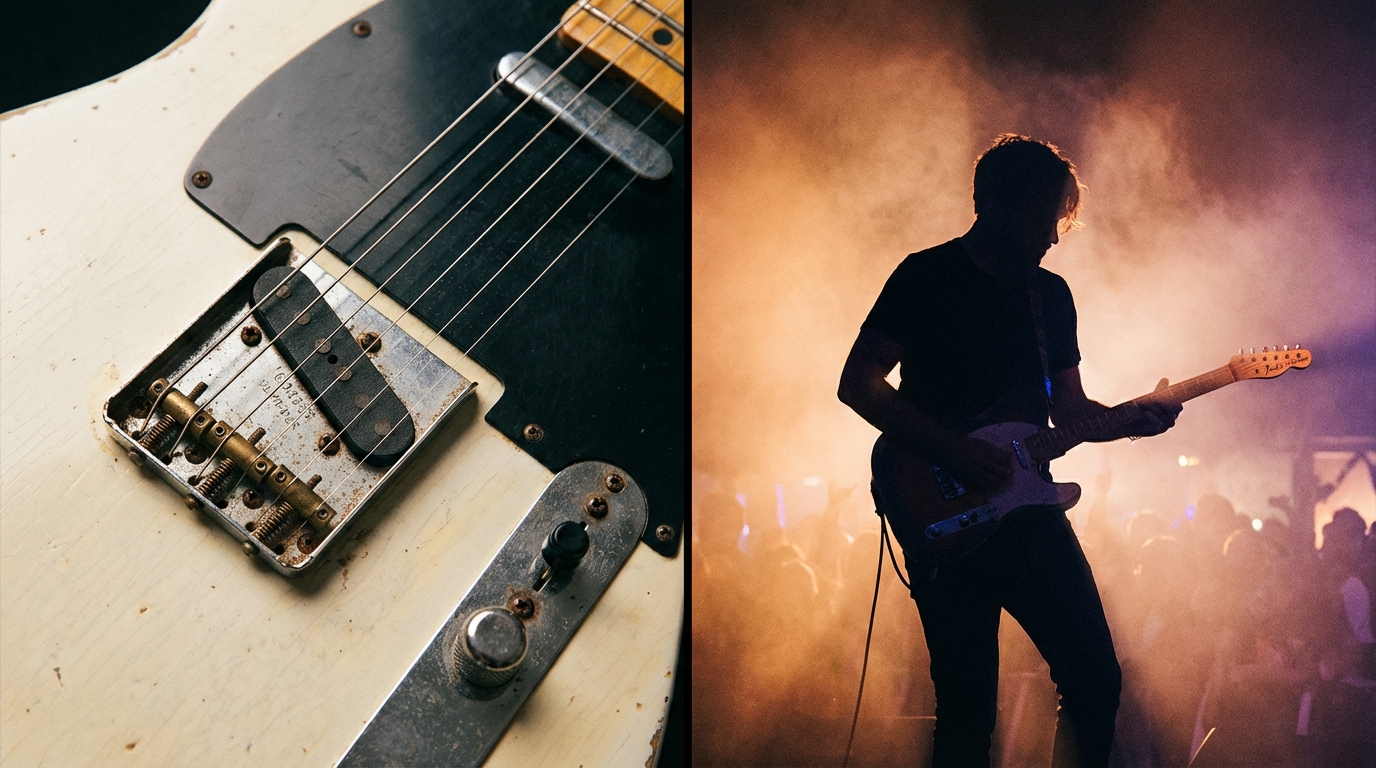
To understand the longevity of Gill’s career, one must look past the velvet voice and examine the instrument in his hands. While many country singers use a guitar as a mere prop, Gill is a musician’s musician, a fact underscored by his relationship with his primary instrument. It is impossible to separate the artist from his tools, and in this case, the tool is a white 1953 Fender Telecaster.
This specific guitar is not just a collector’s item; it is the engine room of his sound. According to a recent interview with Guitar Player, Gill identifies this 1953 model as the “definitive guitar” of his life. The instrument possesses a unique sonic charactera distinct “honk” in the low endthat Gill attributes to the specific density of the ash wood body used during that era of manufacturing.
For an investigative observer, this detail is crucial. It highlights that Gill’s staying power is rooted in sonic distinctiveness. In a genre where production techniques often homogenize sound, Gill’s reliance on a vintage instrument with a specific, inimitable timbre allows him to cut through the noise. He notes that while he owns arguably finer instruments, such as a D-45 acoustic, the Telecaster is the one that defines his artistic identity. This dedication to authentic sound over modern processing is a key differentiator that has allowed his live performances to retain a raw, visceral quality even as he enters his late 60s.
Deconstructing the ‘50 Years From Home’ Strategy
The modern music economy is unkind to the album format. Attention spans have shortened, and the streaming algorithm favors consistent, frequent releases over massive, singular drops. Gill’s management and label seem acutely aware of this shift. The project 50 Years From Home is not a traditional box set dump; it is a calculated rollout of four distinct EPs, each containing unreleased songs that span the breadth of his career.
According to Billboard, this series includes the releases Redneck Hollywood, Secondhand Smoke, The Lost Americana, and Classic Country. By breaking a potential double-album into four thematic EPs, Gill is able to sustain media attention over a prolonged period rather than a single news cycle. This strategy mirrors the “waterfall” release method used by pop stars half his age, indicating that while Gill’s sound is vintage, his business acumen is thoroughly modern.
The first installment, Redneck Hollywood, set the stage, but it is the subsequent releases that offer the most intrigue for long-time followers. The project allows Gill to empty the vaults in a way that feels curated rather than cluttered. It validates the sheer volume of high-quality material he has produced but never released, reinforcing his reputation as a prolific writer who creates for the sake of creation, not just commerce.
Analyzing ‘Secondhand Smoke’ and the Return to Roots
The second EP in this series, Secondhand Smoke, offers perhaps the most intimate glimpse into Gill’s musical DNA. While his radio hits were often polished country-pop ballads, his heart has always beat in time with bluegrass and traditional folk. This collection features tracks that strip away the gloss of Nashville production to reveal the raw songwriting underneath.
As reported by That Eric Alper, this EP includes standout tracks like “One Less Bottle of Wine” and the title track “Secondhand Smoke.” These songs are not chasing radio trends. Instead, they serve as a bridge to his past, referencing the sounds of The Time Jumpers and his early days with Pure Prairie League.
The track “Biodegradable” is particularly telling of Gill’s current mindseta reflection on mortality and legacy wrapped in acoustic instrumentation. By grouping these songs into a specific EP, Gill allows listeners to compartmentalize his vast artistry. He is telling the audience that he is not just the “When I Call Your Name” singer; he is a custodian of American roots music. This segmentation is vital for legacy artists trying to appeal to both casual nostalgia seekers and serious musicologists.
The Eagles Factor and Industry Leverage
No analysis of Vince Gill’s current standing is complete without addressing the monumental shift that occurred in 2017 when he joined the Eagles. Stepping in to fill the void left by Glenn Frey was a high-risk move that could have alienated his core country fanbase or drawn the ire of rock purists. Instead, it elevated his status to that of a cross-genre icon.
This tenure with one of the biggest bands in history has undoubtedly influenced his solo output. It has given him the financial freedom to pursue passion projects like 50 Years From Home without the pressure of commercial viability. He no longer needs a number-one hit to sell tickets; his association with the Eagles ensures sold-out arenas. This liberation is audible in the Secondhand Smoke EP. The music sounds relaxed, unhurried, and devoid of the desperation that plagues many aging stars trying to recapture their youth.
Furthermore, the technical demands of playing Eagles classics night after night have kept his guitar chops sharp. The precision required to replicate those iconic solos feeds back into his own work, ensuring that when he picks up that 1953 Telecaster for a solo record, he is playing with the accuracy of a session pro and the soul of a songwriter.
Frequently Asked Questions
What is the significance of the ‘50 Years From Home’ project? It is a four-part EP series curated by Vince Gill that features previously unreleased songs. The project is designed to showcase the diversity of his songwriting across his 50-year career, covering themes from bluegrass to classic country.
Does Vince Gill still tour as a solo artist? Yes. While he dedicates significant time to touring with the Eagles, Gill continues to perform solo shows and often tours with his band, showcasing material from his extensive catalog and new releases.
What is Vince Gill’s primary guitar? A 1953 Fender Telecaster. Gill describes it as the definitive instrument of his life, praising its unique ash-wood tone. He has used it on nearly all his major recordings and live performances.
How many EPs are in the new series? The series consists of four EPs: Redneck Hollywood, Secondhand Smoke, The Lost Americana, and Classic Country.
The Future of a Legacy
As we look at the trajectory of Vince Gill, it becomes clear that he is executing a masterclass in career longevity. By leveraging his archival material through the 50 Years From Home series, he is effectively rewriting his own history, ensuring that he is remembered not just for his commercial peaks, but for the depth of his musicianship.
The release of Secondhand Smoke and the continued reverence for his 1953 Telecaster serve as reminders that authenticity remains the most valuable currency in music. In a world of fleeting digital trends, Gill offers something tangiblea connection to the roots of the genre and a commitment to excellence that has survived half a century of industry change.