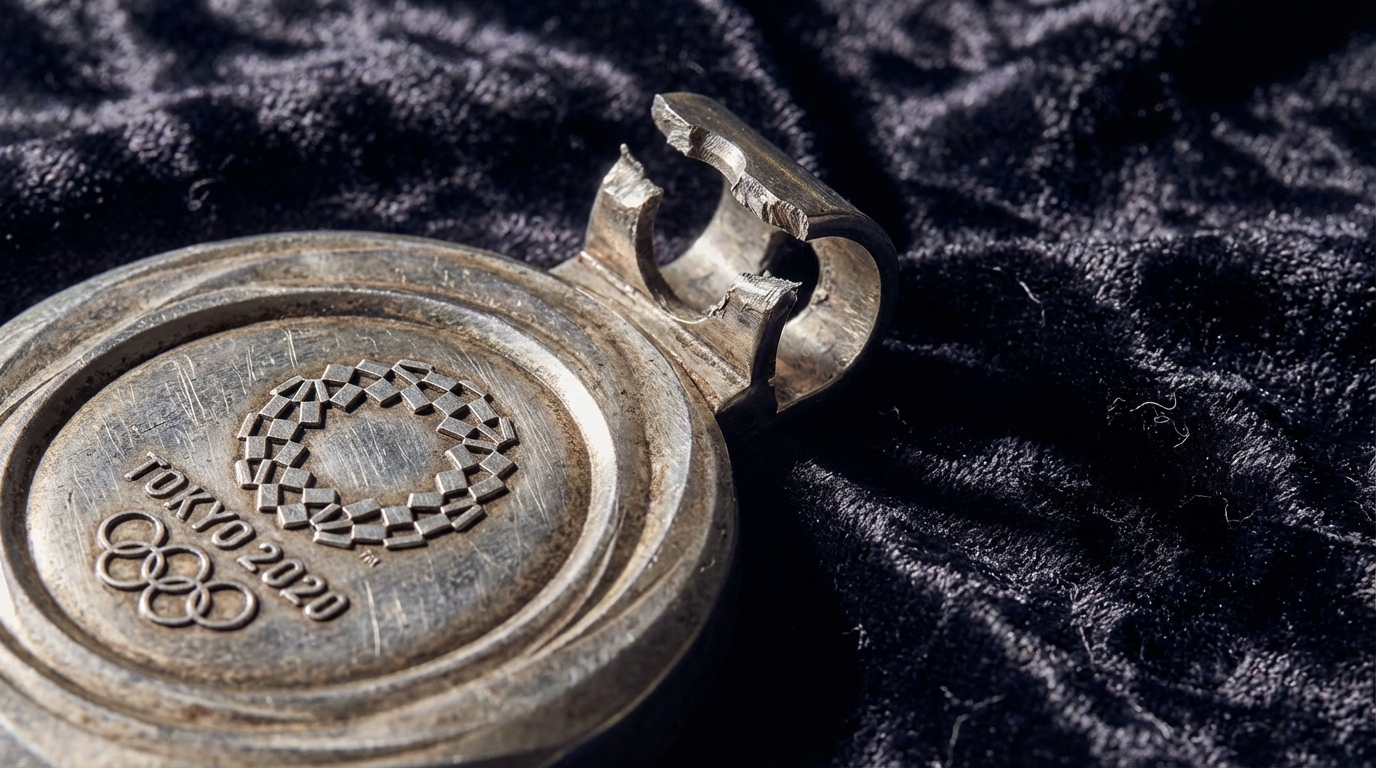
Breaking News: 2026 Winter Games Medals Are Breaking Apart
It is the nightmare scenario for any organizer of a global sporting event, and it has become the literal breaking news of the 2026 Winter Games. After years of training, sacrifice, and the ultimate triumph of standing atop the podium, athletes expect their tangible rewardthe Olympic medalto last a lifetime. However, reports surfacing from Milano Cortina indicate that for several winners, the glory is proving to be incredibly fragile. A disturbing trend of structural failure has marred the celebration, forcing officials into damage control mode as the world watches one of the most prestigious symbols in sports fall apart in the hands of its recipients.
TL;DR
- Defect Confirmed: Multiple athletes have reported their Olympic medals breaking, specifically at the ribbon attachment point.
- Investigation Launched: Organizers are currently investigating the manufacturing process to identify the root cause of the failures.
- Immediate Response: A repair and replacement protocol has been activated to assist affected athletes immediately.
- Reputation Hit: The manufacturing flaws serve as an embarrassing counterpoint to the “Made in Italy” design narrative.
Comparison Table: Medal Remediation Strategies
| Option | Best for | Pros | Cons | Pricing/Cost |
|---|---|---|---|---|
| On-Site Repair | Minor structural detachments | Immediate resolution; athlete keeps original item | May not address underlying metal fatigue | Free to athlete |
| Full Replacement | Catastrophic breakage or loss | Guarantees a pristine condition award | Loss of the sentimental “podium” medal | Free to athlete |
| Post-Games Mail-In | Defects discovered after closing ceremony | Convenient for athletes already home | Long wait times; shipping risks | Free to athlete |
| Design Retrofit | Systemic manufacturing flaws | Prevents future breakage for all inventory | Extremely expensive; logistical nightmare | High (Organizer cost) |
Pros and Cons of the Organizer’s Response
Pros
- Rapid Acknowledgment: Officials did not deny the reports, moving quickly to validate the athletes’ claims.
- Service Availability: Establishing immediate repair options prevents athletes from leaving the Games with broken hardware.
- Transparency: The admission of an investigation helps maintain some level of trust with the sporting community.
Cons
- Reputation Damage: The incident tarnishes the brand of Italian craftsmanship central to the Games’ marketing.
- Athlete Distress: The emotional toll of a broken medal cannot be fixed by simple soldering or replacement.
- Logistical Distraction: Resources meant for event management are now diverted to quality assurance and crisis management.
The Fracture in the Design
The allure of the 2026 Milano Cortina Games was built heavily on the foundation of Italian style and industrial design. However, that narrative is currently under scrutiny. According to recent reports, at least four athletes have come forward with damaged prizes. The issue appears to stem from the physical integration of the medal and its suspension system. In a high-profile instance of defective Olympic medals, the mechanisms holding the heavy metal discs to the ribbons have failed, causing the medals to drop and, in some cases, sustain further damage.
This is not merely a cosmetic issue; it is a structural failure of the object that symbolizes the pinnacle of athletic achievement. As noted in coverage by Yahoo News, an investigation is currently underway to determine why these breakages are occurring with such frequency. The concern is that the defect may be systemic across the production batch rather than isolated to a few unlucky units. If the metal alloy used for the clasp is too brittle, or if the assembly process was rushed to meet deadlines, hundreds of medals could be ticking time bombs waiting to snap.
A Crisis of Craftsmanship
The timing of these defects is particularly stinging for the host nation. Italy is synonymous with luxury manufacturing and precision engineering. For the Olympic medals to fail is a significant embarrassment. The organizers have been forced to scramble for solutions. As reported by the Detroit News, the Milano Cortina committee has reportedly found a fix for the defects and is actively offering repairs to the athletes. This suggests that the issue might be repairable without a total recall, perhaps involving the reinforcement of the connecting lug or the replacement of the ribbon pin.
However, the question remains: how did this pass quality control? Olympic medals are subjected to rigorous design reviews. They are meant to be heavy, substantial, and durable. The current situation implies a gap between the design studio and the manufacturing floor. Whether this was a cost-cutting measure that backfired or a genuine engineering oversight remains to be seen, but the “medal investigation” is now a subplot that threatens to overshadow the athletic performances themselves.
Breaking News: The Technical Fallout
While the human interest side of this story focuses on the disappointed athletes, the technical side is a massive headache for the International Olympic Committee (IOC) and the local organizers. Sources indicate that the problem was identified quickly enough to implement countermeasures, but the initial failure rate is statistically significant for such a high-value item. CNN highlights the business and logistical impact of these failures, noting the immediate scrutiny placed on the vendors responsible for the medal production.
The phrase “breaking news” is rarely used literally regarding the physical integrity of the awards, but here we are. The organizers must now balance the ongoing events with a background operation of quality assurance. Every medal yet to be awarded is likely being double-checked, and contingency plans for on-podium failures are undoubtedly being discussed. The fear is a live broadcast moment where a medal falls off a champion’s neck during the anthema PR disaster that would live on in blooper reels forever.
The Athlete’s Perspective
Imagine the moment: the adrenaline has faded, the press conference is over, and you are back in the Olympic Village showing your prize to teammates. Suddenly, it snaps. The emotional whiplash for the athletes involved cannot be overstated. These objects are not just metal; they are the crystallization of lifelong dreams. For them to break suggests a cheapness that insults the effort required to earn them.
The prompt response by the organizers to offer repairs is the only viable path forward, but it changes the narrative. Instead of taking their medal on a victory tour, these athletes are handing them back to a repair shop. It adds an asterisk to their experience. While the Detroit News confirms that repairs are being offered, the inconvenience and the initial shock are already part of the history of the 2026 Games.
FAQ
Q: How many medals have actually broken? A: Currently, confirmed reports indicate that four athletes have experienced breakage or defects with their medals, though organizers are checking inventory for wider issues.
Q: What exactly is breaking on the medals? A: The primary failure point appears to be the connection between the medal disc and the ribbon, causing the medal to detach or the clasp to snap.
Q: Will the athletes get new medals? A: Yes. Organizers are offering repairs for minor issues and full replacements for medals that cannot be restored to pristine condition.
Q: Who is responsible for the manufacturing? A: While the specific vendor has not been publicly shamed in the initial reports, the Milano Cortina organizing committee holds ultimate responsibility for the quality control of the awards.
The Legacy of the 2026 Hardware
As the Games continue, the saga of the broken medals serves as a cautionary tale about the importance of execution over aesthetics. The 2026 Milano Cortina Games will be remembered for incredible athletic feats, but also for this peculiar stumble in organization. The breaking news of defective prizes has forced a conversation about the commercialization and production standards of modern sporting events. One hopes that the swift repairs hold firm, ensuring that the only thing breaking for the remainder of the Games are world records, not the rewards given to those who set them.