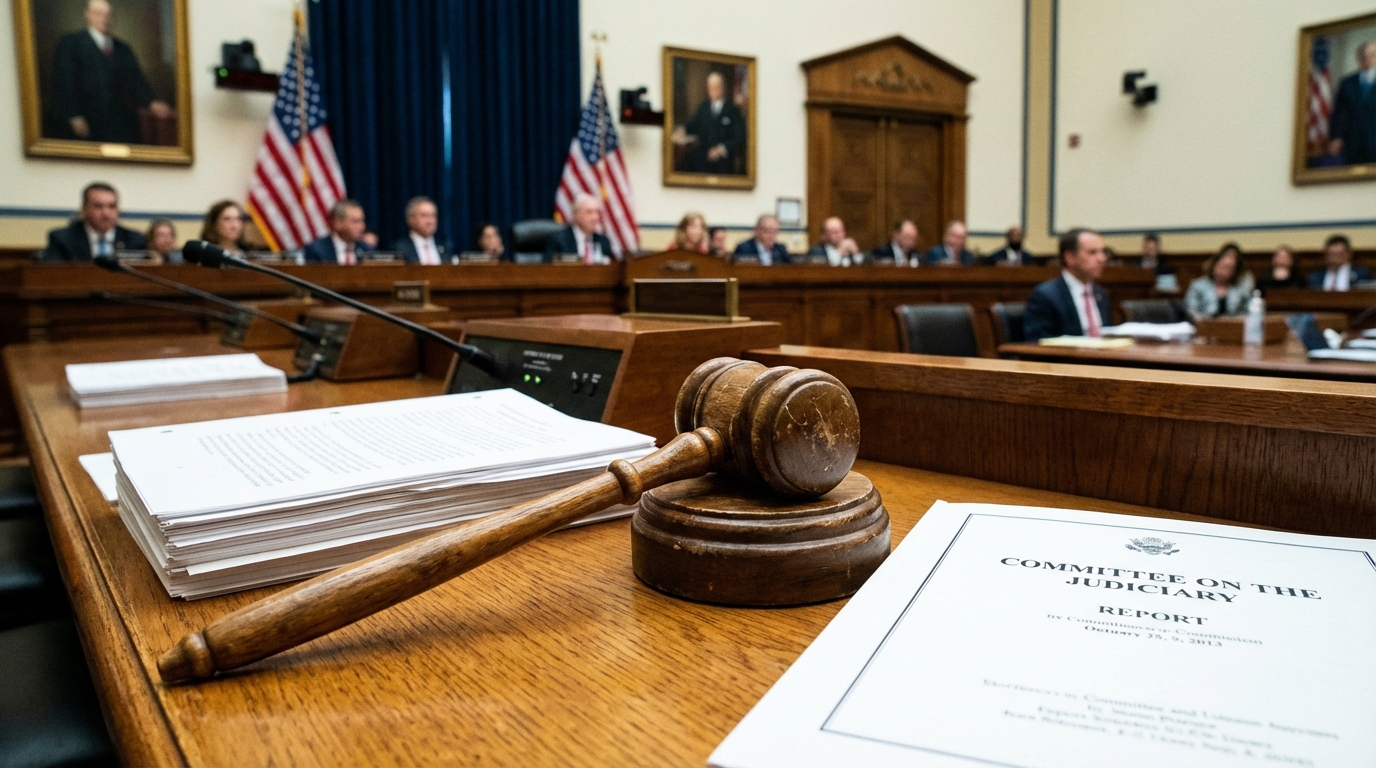
Fox News Live: Congress Probes Nonprofit Tax Exemptions
The sanctity of the American charitable sector is currently under the microscope in Washington, D.C., as the House Ways and Means Committee initiates a rigorous examination of tax-exempt organizations. For viewers tuning into Fox News Live, the unfolding drama on Capitol Hill represents a pivotal moment in the battle over national security and the integrity of the U.S. tax code. Lawmakers are alleging that the privileges afforded to 501(c)(3) and 501(c)(4) organizations are being weaponized by bad actors to sow discord, fund radicalism, and facilitate foreign influence within American borders.
TL;DR
- The Core Conflict: Congress is investigating whether tax-exempt nonprofits are violating their charitable mandates by engaging in radical disruption and illegal activities.
- Foreign Influence: A major focus of the hearings is the alleged flow of money from the Chinese Communist Party (CCP) and hostile entities to U.S.-based groups.
- Radical Tactics: Groups funding vandalism, road blockades, and aggressive pro-Hamas protests are facing potential revocation of their tax-exempt status.
- Legislative Goal: Chairman Jason Smith aims to reform the tax code to ensure American taxpayers are not subsidizing organizations that undermine national stability.
- Key Targets: The Climate Emergency Fund and the Westchester Peace Action Committee Foundation (WESPAC) have been named as specific subjects of scrutiny.
Comparison Table: Tax-Exempt Structures vs. Proposed Reforms
| Option | Best for | Pros | Cons | Pricing/Cost |
|---|---|---|---|---|
| Current 501(c)(3) Status | Charitable, religious, and educational organizations. | Tax-deductible donations; exempt from federal income tax. | Vulnerable to ‘mission creep’ into political agitation; lack of transparency on foreign donors. | Revenue loss for Treasury (Subsidized by taxpayers). |
| Current 501(c)(4) Status | Social welfare organizations and civic leagues. | Allows for unlimited lobbying and political activity. | Donations are not tax-deductible; darker money channels allowed. | Unknown (Varies by organization size). |
| Proposed Oversight Reform | National security and strict legislative compliance. | Prevents foreign adversaries (CCP, etc.) from funding domestic chaos; protects taxpayer funds. | Could create a ‘chilling effect’ on legitimate free speech and advocacy; high administrative burden. | High enforcement costs for IRS. |
Pros and Cons of the Congressional Crackdown
Pros
- National Security: Prevents hostile foreign nations from using U.S. tax loopholes to destabilize domestic tranquility.
- Taxpayer Protection: Ensures that public funds (via tax deductions) are not subsidizing criminal activity or vandalism.
- Accountability: Forces nonprofits to adhere to their stated charters rather than acting as political proxies.
- Transparency: Sheds light on dark money flows connecting global adversaries to local protests.
Cons
- First Amendment Risks: Aggressive regulation could inadvertently suppress legitimate political dissent and freedom of assembly.
- Administrative Overreach: Giving the IRS broad powers to define “chaos” could lead to partisan targeting of organizations.
- Operational Burden: Legitimate charities might face increased legal costs to prove their compliance under stricter rules.
- Ambiguity: Defining the line between “aggressive advocacy” and “sowing chaos” remains legally complex.
The Shift from Charity to Chaos
At the heart of the investigation is the contention that certain nonprofits have abandoned their charitable missions in favor of radical political agitation. House Ways and Means Committee Chairman Jason Smith has been vocal about the need to expose these organizations. According to Fox News, the committee is targeting groups that have moved beyond education and into the realm of “sowing chaos.” The argument is that the tax code was designed to support soup kitchens and educational foundations, not organizations that bail out criminals or fund vandalism.
The committee has highlighted specific tactics that they believe cross the line. These include blocking critical infrastructure, defacing public art, and engaging in violent confrontations with law enforcement. The premise is that when a group’s primary activity becomes the disruption of civil society, they have effectively forfeited their right to a tax subsidy. This is not merely a matter of policy disagreement; it is a question of whether the American taxpayer should be forced to underwrite the very groups causing civil unrest in their communities.
Investigating the Foreign Connection
The scope of the hearing extends far beyond domestic environmentalists. A significant portion of the inquiry is dedicated to identifying foreign influence operations masquerading as American nonprofits. As reported by KOMO News, the panel is deeply concerned with money trails leading back to the Chinese Communist Party (CCP) and entities sympathetic to Hamas. The fear is that hostile foreign powers are exploiting the opacity of the U.S. tax code to funnel money into groups that destabilize the country from within.
This “Trojan Horse” theory suggests that 501(c) organizations are the perfect vehicles for foreign interference because they offer a veneer of legitimacy and, in some cases, donor anonymity. If a foreign adversary wishes to weaken the United States, funding internal division through tax-exempt groups is a cost-effective strategy. The committee’s focus on “pro-Hamas” elements indicates a specific concern regarding the recent wave of campus protests and urban disruptions, questioning who is footing the bill for the logistics and legal defense of these agitators.
The Environmental Extremism Angle
While geopolitical foes are a major concern, the committee is also taking aim at radical environmental groups. The “Climate Emergency Fund” has been explicitly named as a subject of interest. These organizations are accused of financing high-profile stunts, such as throwing soup on priceless artwork or blocking rush-hour traffic, tactics that alienate the public and strain law enforcement resources.
According to Politico, the committee is examining the foreign ties of these environmental groups as well. The intersection of environmental activism and foreign funding raises questions about energy security. If foreign competitors are funding groups that aim to dismantle U.S. energy infrastructure, the implications transcend tax law and become a matter of economic warfare. The hearings aim to determine if these groups are acting as genuine educational entities or as saboteurs protected by a 501(c)(3) shield.
The Role of WESPAC and Fiscal Sponsorship
A key mechanism under review is “fiscal sponsorship,” a practice where an established tax-exempt charity accepts donations on behalf of a smaller group that lacks its own tax-exempt status. The Westchester Peace Action Committee Foundation (WESPAC) has been identified as a major player in this arena. Critics argue that WESPAC serves as a pass-through entity for radical groups that would never qualify for tax-exempt status on their own merits.
By utilizing fiscal sponsorship, controversial movements can access tax-deductible donor pools without undergoing the same level of IRS scrutiny as a standalone foundation. Chairman Smith’s investigation seeks to pierce this veil, demanding accountability for the ultimate destination of these funds. If WESPAC is found to be funneling money to groups engaged in illegal activities or foreign propaganda, the consequences for the fiscal sponsorship model could be severe.
Analyzing the ‘Fox News Live’ Coverage of the Hearings
The hearings have garnered significant attention on conservative media outlets, with Fox News Live providing extensive coverage of Chairman Smith’s opening statements and the subsequent testimony. The narrative presented emphasizes the “weaponization” of the nonprofit sector against American values. For the viewing public, the hearings validate long-held suspicions that the playing field is tilted, with radical groups enjoying tax privileges while engaging in anti-American behavior.
This coverage is crucial because it mobilizes public support for legislative reform. Tax law is notoriously dense and unexciting, but when framed as a battle against foreign infiltration and domestic chaos, it becomes a potent political issue. The visual evidence of vandalism and blocked highways, paired with the financial forensics of the committee, creates a compelling case for the necessity of a crackdown.
FAQ
Q: What is the difference between a 501(c)(3) and a 501(c)(4)? A: A 501(c)(3) is a charitable organization (religious, educational, scientific) where donations are tax-deductible, but political activity is strictly limited. A 501(c)(4) is a social welfare group that can engage in unlimited lobbying and political activity, but donations are not tax-deductible.
Q: Can the government legally revoke a nonprofit’s status for protesting? A: Yes, if the organization’s activities violate its charter or the law. If a group engages in or incites illegal acts (like vandalism or violence) or devotes a substantial part of its activities to political lobbying (for c3s), it can lose its tax-exempt status.
Q: Why is the committee focusing on the Chinese Communist Party? A: Lawmakers are concerned that the CCP is using U.S. nonprofits to influence American public opinion and policy covertly. By funding groups that sow social division, foreign adversaries can weaken the U.S. without direct confrontation.
Q: What is the “Climate Emergency Fund”? A: It is a nonprofit organization that provides grants to climate activist groups. It has come under scrutiny for funding groups known for disruptive civil disobedience tactics, such as blocking roads and damaging property.
Conclusion: The Future of Tax-Exempt Activism
The House Ways and Means Committee hearings mark a potential turning point in the relationship between the U.S. government and the nonprofit sector. As the evidence mounts regarding foreign influence and the funding of illegal activities, the pressure to reform the tax code is intensifying. For those watching the developments on Fox News Live, the message is clear: the era of unchecked radicalism hiding behind a charitable designation may be coming to an end. The outcome of these hearings could reshape the landscape of American activism, forcing organizations to choose between their tax benefits and their radical tactics.