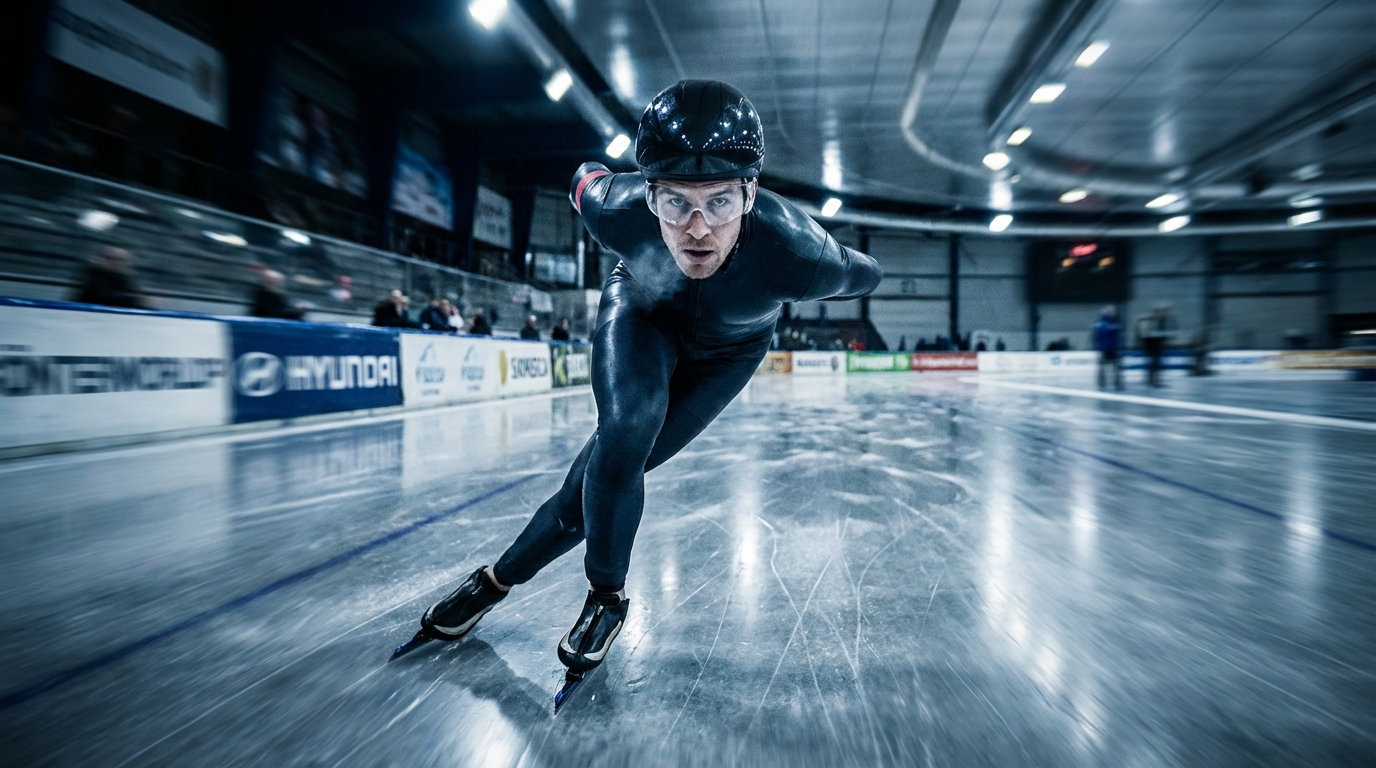
Jordan Stolz: Rewriting Speed Skating History for 2026
The sound of a clap skate hitting the ice is rhythmic, almost hypnotic, but for Jordan Stolz, it is the sound of history being rewritten. In the quiet rinks of Wisconsin, far from the flashing lights of the global stage, a revolution in speed skating has been brewing. For decades, the sport has trended toward hyper-specialization, with sprinters dominating the 500m and endurance specialists ruling the longer distances. Stolz has shattered that paradigm. As we look toward the 2026 Winter Games, the question is no longer if he can win, but rather how much history he can devour in the process.
This is not merely a story about a fast kid from the Midwest. It is an investigative look into the physiology of a generational anomaly. The pressure mounting on Stolz is quantifiable, measured in split seconds and medal counts. With the backing of legends and the eyes of a nation starving for a new Winter Olympic icon, Jordan Stolz is poised to shoulder a burden that crushed many before him: the expectation of perfection.
TL;DR
- Jordan Stolz is targeting gold medals across sprint and middle distances (500m, 1000m, 1500m), a feat rarely attempted in the modern era.
- Eric Heiden, the 1980 five-gold medalist, has explicitly stated that Stolz is the best American skater since his own era.
- The physical toll of training for both explosive power (sprints) and lactate threshold (1500m) is the primary risk factor for his Olympic campaign.
- Stolz’s technique allows him to carry higher corner speeds than his competitors, giving him a mathematical advantage in the inner lanes.
The Ghost of Lake Placid
For forty years, every American speed skater showing promise has been walked into the long shadow of Eric Heiden. It is an unfair comparison for most; Heiden’s five gold medals at the 1980 Lake Placid Games remain the gold standard of individual Winter Olympic performance. However, in the case of Stolz, the comparison is not media hyperboleit is coming from the source itself. According to a recent interview, Eric Heiden confirmed that Stolz is the best American speedskater since his own reign, noting the young skater’s uncanny ability to dominate the 500m, 1000m, and 1500m simultaneously.
This endorsement changes the narrative. It shifts the conversation from potential to expectation. The modern era of speed skating, influenced heavily by Dutch training methods, usually dictates that an athlete chooses a lane: pure sprint or endurance. Stolz refuses to choose. His recent performances suggest that he has unlocked a physiological cheat code, maintaining the fast-twitch muscle fibers required for a sub-35-second 500m while possessing the aerobic engine to crush the field in the 1500m. This versatility is the primary weapon in his arsenal, but it is also his greatest liability. The training load required to maintain peak performance in conflicting energy systems is a delicate high-wire act.
Strategic Options: The Specialist vs. The Generalist
The following table breaks down the strategic approaches available to elite speed skaters, highlighting where Stolz fits into the broader ecosystem of the sport.
| Option | Best for | Pros | Cons | Physical Cost/Investment |
|---|---|---|---|---|
| The Pure Sprinter | Athletes with high explosive power (500m focus). | Lower training volume; reduced aerobic fatigue; higher peak velocity. | Limited medal opportunities; highly volatile results (one slip costs the race). | High intensity, lower volume. Focus on CNS recovery. |
| The Endurance Specialist | Skaters with high VO2 max (5000m, 10000m). | Consistent pacing; less reliance on the perfect start; tactical drafting (in mass start). | Inability to compete in marquee sprint events; lower media profile. | Extreme volume. High caloric burn and joint wear. |
| The Stolz Hybrid (All-Rounder) | Generational talents (500m through 1500m). | Multiple medal chances; marketing superstardom; psychological dominance over rivals. | High burnout risk; conflicting physiological adaptations; scheduling nightmares. | Maximum intensity AND volume. Requires genetic anomaly for recovery. |
The Double-Edged Sword of Versatility
Being a hybrid skater sounds ideal on paper, but the reality is a logistical and physiological nightmare. Here are the distinct advantages and disadvantages Stolz faces as he prepares for the Olympic stage.
Pros
- Medal Volume: Unlike a specialist who has one shot at glory, Stolz has three to four realistic chances at gold, providing a safety net against bad luck or equipment failure.
- Psychological Edge: When competitors see an athlete win the 500m and then return to the ice to dominate the 1500m, it creates an aura of invincibility that can demoralize the field before the gun goes off.
- Marketing Appeal: The “Quest for Gold” narrative is easier to sell to sponsors and networks like NBC when the athlete is competing on multiple nights.
Cons
- Schedule Congestion: The Olympic schedule is rarely kind to all-rounders. Recovery times between the 1000m and 1500m heats can be minimal, leading to cumulative fatigue.
- Physiological Conflict: Training for explosive power often blunts aerobic capacity, and vice versa. Balancing these opposing adaptations requires perfect periodization.
- Heightened Scrutiny: Failure to win one event can be framed as a “disappointment,” even if he medals in others, due to the high bar set by the Heiden comparisons.
Technical Mastery on the Oval
What makes Jordan Stolz technically distinct? It is his cornering. In speed skating, the corner is where the G-forces are highest and where technical breakdowns usually occur. Most skaters have to scrub a fraction of speed to maintain their line. Stolz, however, accelerates through the turn. His ability to maintain a low center of gravity while generating immense pressure into the ice allows him to exit corners with more velocity than his rivals.
This technique was highlighted when NBC News covered his ascent to gold medal contention, noting that his mechanics are reminiscent of short-track skaters who live and die by their cornering ability. By adopting a slightly different blade setup and body position, Stolz minimizes friction and maximizes the transfer of power. This technical efficiency is what allows him to conserve energy for the longer 1500m race, effectively letting him “rest” while skating at world-record pace. It is a terrifying proposition for his competitors: he is not just working harder; he is working smarter.
The 2026 Schedule Gauntlet
Looking ahead to the Winter Olympics, the schedule itself becomes an opponent. The International Olympic Committee and the International Skating Union determine the order of events, and they do not always favor the multi-distance athlete. A condensed schedule means less time to flush lactate from the muscles and reset the central nervous system. As reported by The Guardian regarding the 2026 scheduling challenges, the density of high-stakes races will test the limits of human recovery.
If the 500m and the 1500m are scheduled too closely, Stolz will have to prioritize. Does he go all-out in the sprint and risk having ‘dead legs’ for the middle distance? Or does he conserve energy, risking a loss in the sprint where margins are measured in thousandths of a second? This tactical gambling is where the coaching staff’s role becomes critical. They must manage his load not just during the Games, but in the months leading up to them, ensuring he peaks exactly when the torch is lit.
The Stakeholders: NBC, Sponsors, and US Speedskating
The rise of Jordan Stolz is not just an athletic phenomenon; it is a commercial necessity for US Speedskating. Since the retirement of icons like Apolo Ohno (short track) and the fading of the Shani Davis era, the US has lacked a singular face for the sport. Speed skating is a niche sport in America that relies heavily on the Olympic cycle for visibility and funding. A superstar like Stolz drives ratings, which in turn drives sponsorship dollars.
NBC, in particular, relies on “tentpole” athletes to anchor their primetime coverage. A skater attempting a “Heiden-esque” sweep provides a multi-night narrative arc that keeps viewers tuning in. If Stolz succeeds, he revitalizes the financial health of the sport in the US for the next decade. If he falters, the sport risks slipping back into obscurity until the next cycle. The weight on his shoulders is financial as well as historical.
Conclusion
As the world turns its eyes toward the next Winter Games, Jordan Stolz stands at the precipice of immortality. He is armed with the endorsement of Eric Heiden, the mechanics of a virtuoso, and the engine of a thoroughbred. The path forward is fraught with the dangers of injury, burnout, and the unforgiving nature of the ice. Yet, the evidence suggests that we are witnessing a rare convergence of talent and timing. Whether he leaves with one gold medal or five, Stolz has already achieved something remarkable: he has made the world believe that the impossible standards of 1980 might finally be within reach again.
FAQ
Q: How does Jordan Stolz compare to Eric Heiden? A: While Eric Heiden won five gold medals in 1980 (ranging from 500m to 10,000m), Jordan Stolz is primarily focused on the 500m, 1000m, and 1500m. However, Heiden himself has stated that Stolz is the most talented American skater since his own era, possessing a similar ability to dominate both sprints and middle distances.
Q: What events will Jordan Stolz skate in the 2026 Olympics? A: Stolz is expected to compete in the 500m, 1000m, and 1500m. He may also participate in the Team Pursuit or Mass Start depending on the final schedule and his physical condition during the games.
Q: Why is it difficult to win both the 500m and 1500m? A: The 500m requires pure explosive power and fast-twitch muscle fibers, while the 1500m requires significant aerobic capacity and lactate tolerance. Training for one usually negatively impacts the other, making Stolz’s ability to excel in both highly unusual.