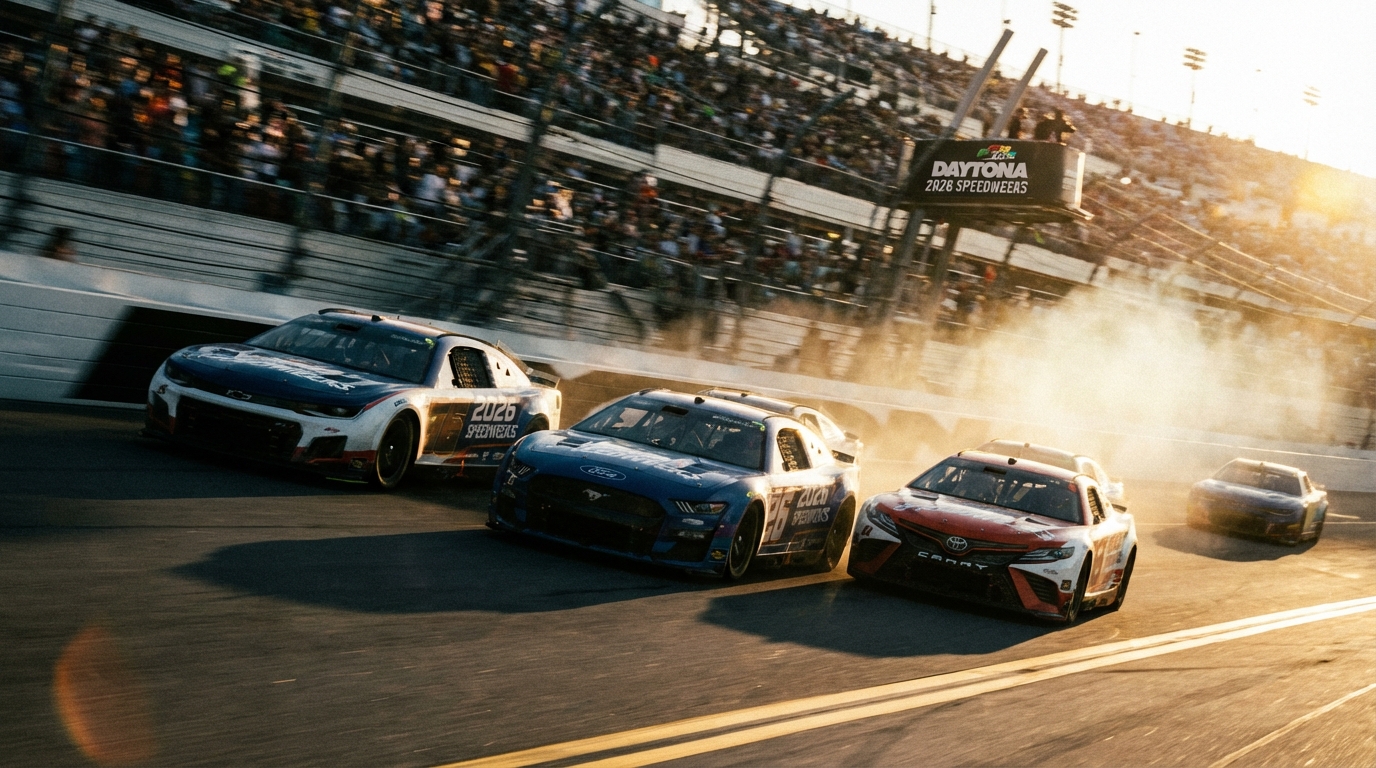
2026 NASCAR Schedule: Analyzing the High-Pressure Daytona Week
The air at Daytona International Speedway carries a weight that is distinct from any other venue in motorsports. It is a mixture of sea salt, burning rubber, and the palpable anxiety of an entire industry waking from its winter slumber. As we look toward the launch of the 2026 season, the NASCAR schedule has once again become the central document governing the lives of mechanics, drivers, and logistical coordinators. It is not merely a list of dates; it is a gauntlet that determines financial survival for the smaller teams and sets the competitive tone for the championship contenders.
For the 2026 iteration of the Great American Race, the schedule has been fine-tuned to heighten the drama of qualification. The days of a sprawling, two-week vacation in Daytona Beach have largely been traded for a streamlined, high-intensity week of speed. This shift reflects a broader trend in professional sports to condense action, reducing downtime and keeping the narrative tight for a global audience.
However, for the teams on the ground, this compression increases the pressure. There is no time to recover from a mechanical failure in practice. Every lap turned during Speedweeks is a calculated risk, balancing the need for data against the catastrophic possibility of destroying a primary car before the green flag drops on Sunday.
The Architecture of the 2026 NASCAR Schedule
The structure of the season opener is built around a crescendo of speed, culminating in the 68th annual Daytona 500. The schedule dictates a rhythm that veteran teams know well, but for 2026, the specific timing of the qualifying rounds has introduced new strategic wrinkles. The process begins in earnest with single-car qualifying, a solitary test of horsepower and aerodynamic efficiency that locks in the front row.
This initial session is deceptive in its simplicity. While it appears to be just a car against the clock, it is actually the culmination of months of wind tunnel testing. According to NASCAR.com, the 2026 lineup tracker reveals a fierce battle for the pole position, but the true intrigue lies further down the timing sheet. For the “Open” carsthose without a guaranteed charter spotthis session is the first hurdle in a life-or-death struggle to make the field.
The schedule then pivots immediately to the Bluegreen Vacations Duels. These twin 150-mile races are unique in professional sports: they are exhibition races that carry championship points and simultaneously serve as the final elimination round for qualifying. The transition from the solitary focus of time trials to the chaotic pack racing of the Duels requires a mental reset that tests even the most experienced drivers.
Survival of the Fastest: The Duel Dynamics
The most investigative aspect of the 2026 Speedweeks is the plight of the non-chartered teams. In the modern NASCAR economy, the charter system guarantees 36 cars a spot in every race. With a field cap of 40, that leaves only four spots available for open entries. The NASCAR schedule at Daytona is designed to make these teams earn their way in through fire.
An analysis of the entry list shows a mix of past champions attempting comebacks, young guns looking for a break, and specialty teams built solely for superspeedway racing. If an Open team fails to post a fast time in single-car qualifying, they must race their way in during the Duels. This creates a fascinating sub-plot: while the chartered teams are largely trying to protect their equipment and learn the draft, the Open teams are racing with desperation.
The volatility of the Duels cannot be overstated. A single mistake by a chartered driver can sweep up an Open contender, ending their Daytona dreams before the weekend truly begins. The schedule places these races on Thursday night, leaving a scant two days for teams to repair damage or prepare backup cars before the final practices. This tight turnaround favors the deep pockets of organizations like Hendrick Motorsports or Joe Gibbs Racing, while placing immense strain on smaller operations.
Broadcast Logistics and Fan Integration
The evolution of the schedule is also inextricably linked to how the sport is consumed. The timing of events is no longer dictated solely by the position of the sun, but by broadcast windows and engagement metrics. As detailed by FloRacing, the 2026 schedule is optimized for multi-platform viewing, ensuring that fans can track the progression from practice to the checkered flag across linear TV and streaming services.
This year, the integration of gamification has reached new heights. The schedule is not just a timeline for viewing; it is a timeline for interaction. Citing Fox News, the Fox Super 6 contest has become a major driver of engagement, incentivizing fans to predict outcomes ranging from stage winners to the final margin of victory. This gamification requires the schedule to be rigid and predictable in its start times to allow for betting windows to open and close systematically.
The commercialization of the schedule extends to the pre-race festivities. The timeline for driver introductions, the invocation, and the national anthem is choreographed to the second. This precision is necessary to hit the “green flag” window that networks promise advertisers. For the investigative observer, this highlights the tension between NASCAR as a sportwhich can be unpredictable and messyand NASCAR as a television product, which demands order.
The Sunday Showdown: February 15, 2026
When Sunday arrives, the NASCAR schedule narrows down to a single focal point: 2:30 PM ET. This is the traditional targeted start time for the Daytona 500, a slot chosen to maximize domestic viewership while avoiding the late-afternoon Florida thunderstorms that have plagued the event in years past.
The 2026 race features 200 laps around the 2.5-mile tri-oval. However, the schedule of the race itself is broken into three stages. This stage racing format, introduced nearly a decade prior, has fundamentally changed the flow of the event. It creates two guaranteed breaks in the action, allowing networks to air commercials without missing green-flag racing, but it also forces teams to strategize around these artificial cautions.
For the drivers, the stage breaks are a double-edged sword. They offer a chance to adjust the car’s handling and refuel, but they also bunch the field back together, increasing the likelihood of the “Big One”the massive multi-car wreck that Daytona is infamous for. The schedule of the race effectively forces three sprint races rather than one endurance marathon, altering how drivers manage their equipment.
Economic Implications of the Schedule
Beyond the track, the schedule serves as an economic barometer. The presence of the Duels and the specific practice sessions dictates the travel costs for teams. In 2026, with inflation impacting logistics, every day spent at the track costs teams tens of thousands of dollars in hotel rooms, per diems, and operational overhead.
By condensing the schedule, NASCAR attempts to mitigate these costs, but the savings are often negligible for the top teams who will spend whatever is necessary to win. For the smaller teams, however, a streamlined schedule is essential. It reduces the wear and tear on crew members and allows for a more sustainable business model. The 2026 schedule strikes a delicate balance between maintaining the pageantry of Speedweeks and acknowledging the financial realities of modern motorsport.
Furthermore, the schedule impacts the local economy of Daytona Beach. A condensed event schedule means fewer nights in hotels for fans, potentially reducing the economic impact on the region. This is a constant negotiation between the sanctioning body, the broadcasters, and the host cities. The 2026 itinerary suggests a shift toward high-impact, short-duration events rather than prolonged festivals.
Frequently Asked Questions
Q: How does the qualifying format for the 2026 Daytona 500 work?
A: Qualifying is a multi-step process. It begins with single-car qualifying runs to determine the front row (pole and outside pole). The remaining starting spots are determined by the results of the two Bluegreen Vacations Duel races held on Thursday. The fastest two “Open” (non-charter) cars from single-car qualifying are guaranteed a spot, while the others must race their way in during the Duels.
Q: What happens if it rains on race day?
A: NASCAR has specific protocols for inclement weather. If rain delays the start, they will attempt to dry the track using Air Titans. If the race cannot be started or reached the halfway point (100 laps) on the scheduled day, it is typically postponed to the following day (Monday). The schedule is always subject to change based on weather conditions.
Q: Where can I find the official start times for all Speedweeks events?
A: The official start times are listed on the NASCAR website and through broadcast partners. For the 2026 season, networks like FOX and streaming platforms provide real-time updates to the schedule, including practice sessions and the Duels.
Q: Why are there “Open” cars and “Charter” cars?
A: The Charter system functions like a franchise model. 36 teams possess a Charter, guaranteeing them entry into every race and a portion of the purse money. “Open” teams do not have this guarantee and must qualify for the remaining four spots in the 40-car field based on speed or finishing position in the qualifying races.
Conclusion
As the engines fire and the field rolls off pit road, the meticulous planning of the last year dissolves into the visceral reality of racing. The NASCAR schedule for 2026 has done its job: it has organized the chaos, built the anticipation, and set the stage for one of the world’s greatest sporting spectacles.
From the desperate qualifying runs of the independent teams to the polished broadcast productions of the major networks, the schedule is the invisible framework that holds the sport together. As we watch the 2026 Daytona 500 unfold, we are witnessing not just a race, but the execution of a complex logistical and economic strategy designed to keep stock car racing relevant in a rapidly changing world. The dates and times may change from year to year, but the objective remains the same: to find the fastest driver and car combination in America.