Beyond Donovan Carrillo: Haemmerle Wins Snowboard Gold
The Razor’s Edge: When Gold is Decided by Centimeters
The Winter Olympics are defined by moments of sheer precision and heart-stopping drama. While the world often turns its eyes to the artistic flair of figure skatingwhere athletes like the charismatic Donovan Carrillo capture the global imagination with their history-making performancesthere is a different, more brutal kind of artistry found on the snow courses. In the mountains of Zhangjiakou, the men’s snowboard cross final delivered a spectacle that stood in stark contrast to the subjective scoring of the rink. Here, there were no judges to impress, only a finish line to cross. And in one of the tightest races in Olympic history, Austrian Alessandro Haemmerle proved that the difference between gold and silver can be measured in the blink of an eye.
TL;DR
- The Result: Alessandro Haemmerle (Austria) won Gold; Eliot Grondin (Canada) won Silver; Omar Visintin (Italy) won Bronze.
- The Finish: The race ended in a dramatic photo finish where Haemmerle’s board crossed the line mere centimeters ahead of Grondin.
- The Odds: Eliot Grondin was the betting favorite going into the final, but the chaotic nature of snowboard cross upended the odds.
- The Legacy: This victory cemented Austria’s dominance in the discipline and highlighted the intense physical demands of the sport.
The Setup: Favorites, Odds, and Expectations
Coming into the final of the men’s snowboard cross, the narrative was heavily skewed toward the rising Canadian star, Eliot Grondin. In the world of sports betting and analysis, momentum is everything. According to pre-race analysis by Sports Illustrated, Grondin was positioned as the favorite. The betting markets had identified him as the man to beat, reflecting his dominant form in the heats leading up to the medal race.
The psychology of being the favorite is a heavy burden. In snowboard cross, a discipline often described as NASCAR on snow, being the fastest qualifier does not guarantee safety. The course is riddled with jumps, banks, and, most dangerously, other riders. While Grondin carried the expectations, Alessandro Haemmerle entered the fray with the grit of a veteran. The odds painted a picture of a likely Canadian coronation, but the icy track had other plans.
The Final Run: A Duel for the Ages
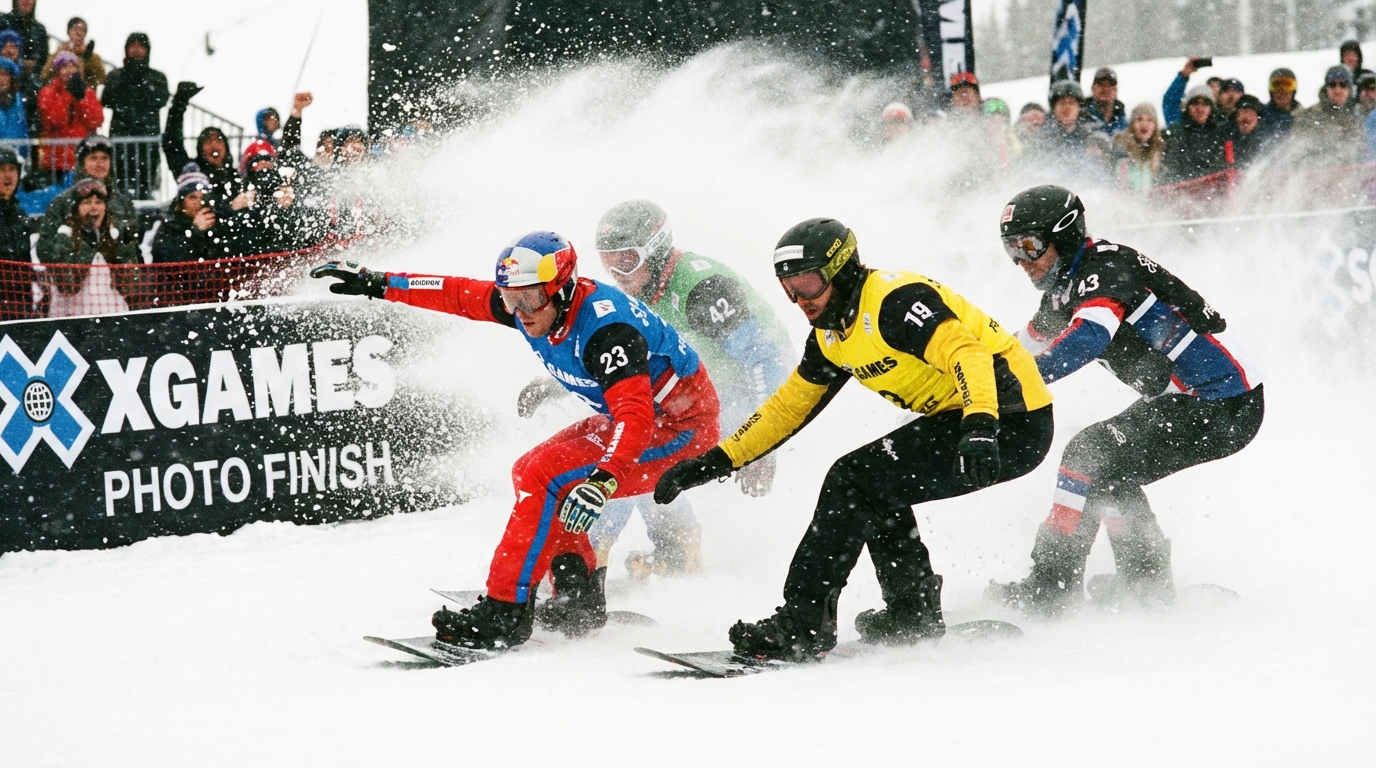
The final race unfolded as a breathless duel between Haemmerle and Grondin. From the moment the gates dropped, it was clear that the gold medal would be contested between these two titans of the sport. They separated themselves from the pack, turning the four-man race effectively into a one-on-one showdown.
As they navigated the rollers and banked turns, the lead exchanged hands, or rather, board tips. Grondin, demonstrating the speed that made him the favorite, pushed hard, but Haemmerle held a defensive line that was nothing short of masterful. According to reports from ESPN, the conclusion of the race was so tight that the naked eye could barely discern the winner. As they approached the final jump and the finish line, Grondin made a desperate, lunging effort to throw his board forward.
Both riders crashed to the snow immediately after crossing the line, exhausted and unsure of the result. It was a moment of suspended animation. The electronic timing and the photo finish camera were the final arbiters. The verdict: Haemmerle had crossed first, by a margin so slim it was almost negligible. This victory was not just a win; it was a survival of the fittest.
Comparison Table: The Gold Medal Duel
To understand the dynamics between the top two contenders, we analyze their standing and result in this historic final.
| Feature | Alessandro Haemmerle | Eliot Grondin | Implication |
|---|---|---|---|
| Nation | Austria | Canada | Continued European dominance vs. North American rise |
| Result | Gold Medal | Silver Medal | A photo-finish decision |
| Betting Status | Contender | Favorite (+175) | Favorites are never safe in cross events |
| Race Strategy | Defensive/Lead Holding | Aggressive/Chasing | Leading is advantageous but stressful |
| Margin | Centimeters | Centimeters | The smallest error costs Gold |
The Austrian Triumph and Italian Resilience
Haemmerle’s victory was a significant moment for Austrian winter sports. As detailed by Yahoo Sports, this win added to the country’s rich legacy in alpine events. For Haemmerle, it was the culmination of years of competition on the World Cup circuit. The mental fortitude required to hold off a charging favorite like Grondin cannot be overstated.
Behind the lead duo, the battle for bronze was also fierce. Omar Visintin of Italy managed to secure the third spot on the podium. While the cameras were fixed on the photo finish for gold, Visintin’s performance ensured that Italy remained a key player in the snowboard cross discipline. The podiumAustria, Canada, Italyrepresented a global cross-section of snowboarding powerhouses.
The Unforgiving Nature of Olympic Sport: Beyond Donovan Carrillo and the Rink
The contrast between the various disciplines at the Winter Games is what makes the event so compelling. On one hand, you have the subjective, artistic sports. When Donovan Carrillo steps onto the ice, he is battling not just gravity, but the scrutiny of judges and the pressure of artistic interpretation. His performance is a dialogue with the audience and the panel. In Snowboard Cross, the dialogue is purely physical.
The objective brutality of the clock and the finish line in Snowboard Cross offers no room for interpretation. Haemmerle didn’t win because his style was better; he won because his board was three inches further ahead. This binary nature of winning and losingdetermined by a sensor rather than a scorecardprovides a different, yet equally intense, narrative to the Games. It reminds us that whether an athlete is performing a quad jump or navigating a banked turn at 50 mph, the margin for error is nonexistent.
Pros and Cons of the Snowboard Cross Format
The “first to the line” format of Snowboard Cross is thrilling, but it comes with inherent advantages and disadvantages compared to time-trial events.
Pros:
- High Excitement: The head-to-head format creates immediate tension and identifiable winners without waiting for times to be posted.
- Unpredictability: A single mistake or collision can allow an underdog to win, keeping the audience engaged.
- Visual Clarity: Viewers can easily understand the objective: whoever crosses the line first wins.
Cons:
- Collision Risk: Riders can be taken out of the race by the mistakes of others, which some argue is unfair.
- Lane Bias: Sometimes specific lanes on the course are faster or safer, giving qualifiers in those lanes an advantage.
- Chaos Factor: The “luck” element is higher than in solo timed runs, potentially robbing the fastest rider of a win due to traffic.
The Aftermath and Future Implications
For Eliot Grondin, the silver medal is a bittersweet achievement. To be the favorite, to race a nearly perfect line, and to lose by a geometric sliver is a haunting outcome. However, at his young age, Grondin’s performance signals that he will be a force in the sport for cycles to come. The betting markets were right about his talent, if not the final result.
For Haemmerle, the gold is a validation of consistency. Surviving the elimination rounds in Snowboard Cross is an achievement in itself; winning the final against the odds-on favorite is the stuff of legend. The event also solidified the viewing public’s love for the sport. Unlike the sometimes esoteric rules of other winter sports, the drama of a photo finish is universal.
FAQ
Q: Who was the betting favorite to win the Men’s Snowboard Cross? A: According to Sports Illustrated, Canadian Eliot Grondin was the favorite with odds of +175 going into the final, followed by Alessandro Haemmerle at +350.
Q: How close was the finish between Haemmerle and Grondin? A: It was a photo finish. The difference was a matter of centimeters, requiring official review to determine that Haemmerle’s board crossed the line first.
Q: Who won the bronze medal in this event? A: Omar Visintin of Italy finished third to claim the bronze medal.
Q: Is Snowboard Cross judged or timed? A: In the final rounds, it is a race. It is not judged on style; the first person to cross the finish line wins. Qualifiers are timed, but the medals are decided by head-to-head racing.
Conclusion
The Men’s Snowboard Cross final at the Beijing Games will be remembered as one of the closest contests in Olympic history. Alessandro Haemmerle’s triumph over Eliot Grondin was a testament to the unpredictable, chaotic, and thrilling nature of the sport. While the betting odds may favor one athlete, the mountain often decides another. As the Games continue, stories of resilience emerge from every corner of the Olympic village. Whether it is the cultural barriers broken by figure skater Donovan Carrillo or the physical limits pushed by Haemmerle and Grondin, these athletes share a singular drive. They remind us that in the pursuit of Olympic glory, every inch, every second, and every movement counts.