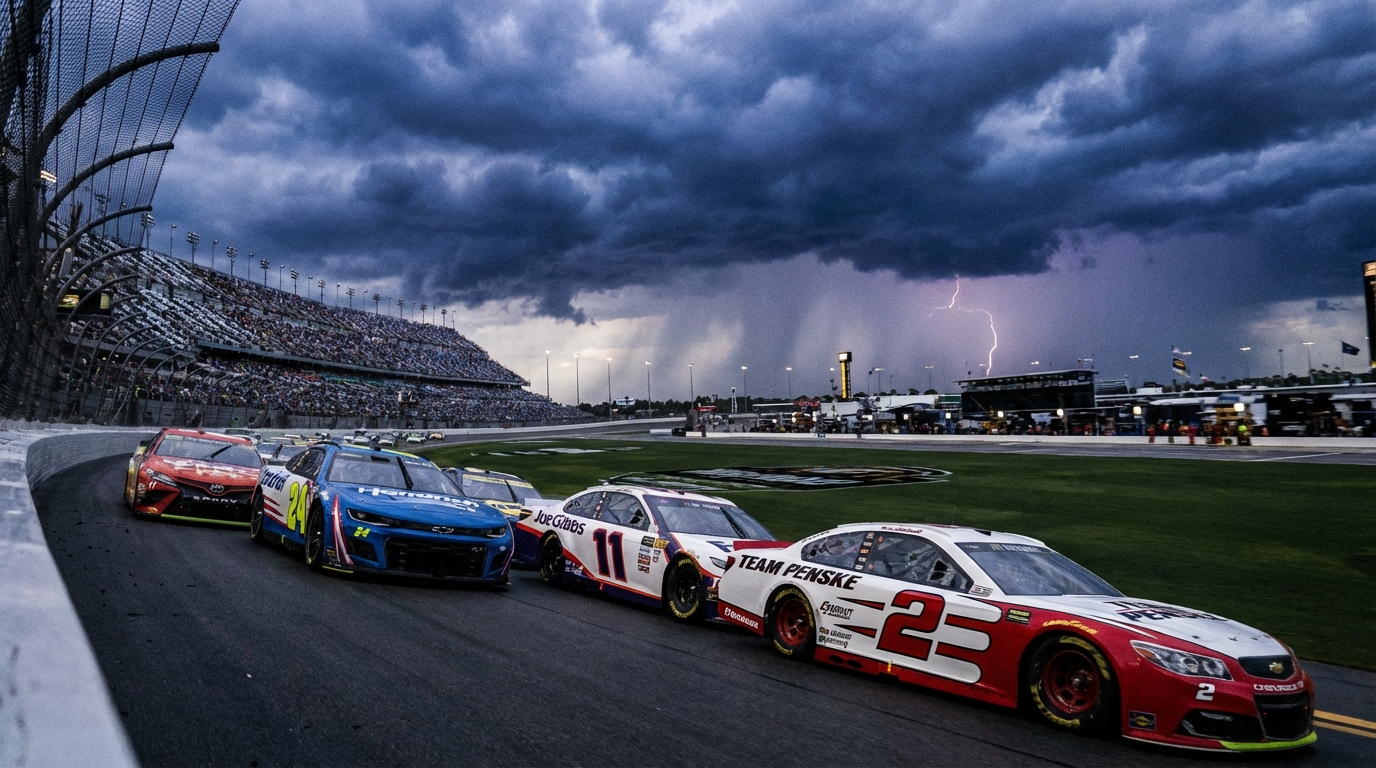
2026 Daytona 500 Start Time: Schedule Shift Due to Weather
The air at Daytona International Speedway is always thick with a specific blend of humidity, high-octane fuel, and palpable anxiety, but the 2026 edition of the Great American Race has added a new layer of tension: the clock. As teams and fans descended upon Florida for the season opener, the primary topic of conversation shifted from horsepower to meteorology. The daytona 500 start time has officially become the most critical statistic of the weekend, dictating not just when the engines fire, but how the entire strategic roadmap of the race will unfold.
In a sport where split-seconds define careers, an alteration of sixty minutes is a lifetime. The decision to adjust the schedule is never taken lightly, balancing the demands of national broadcasters with the safety of drivers and the experience of the fans. Yet, as we look toward the 2026 event, the looming threat of inclement weather has forced the hand of officials, turning the countdown to the green flag into a race against the elements themselves.
TL;DR
- Schedule Shift: The start time has been moved up by one hour to mitigate the risk of rain shortening the event.
- Lineup Set: The field is locked in following intense single-car qualifying sessions and the dual qualifying races.
- Betting Impact: Sportsbooks have released updated odds and promos, with the weather adding a variable to prop bets.
- Broadcast: Viewers must tune in earlier than traditionally scheduled to catch the pre-race ceremonies and the command to start engines.
- Strategy: Cooler track temps earlier in the day could alter tire wear and pack racing dynamics.
The Meteorological Gamble: Shifting the Green Flag
Tradition is a pillar of NASCAR, and the Sunday afternoon slot for the Daytona 500 is almost sacred. However, the 2026 running has encountered a formidable adversary in the local forecast. According to reports, the daytona 500 start time has been moved up by an hour as bad weather looms over the Florida coast. This decision, detailed by ESPN, is a preemptive strike to ensure the race reaches its full 500-mile distanceor at least the halfway point required to make it officialbefore the skies open up.
For the casual viewer, an hour might seem negligible. For the crew chiefs sitting atop the pit boxes, it changes the calculus of the race. A race starting at 1:30 PM ET versus 2:30 PM ET presents different track temperatures. Asphalt temperature dictates grip levels; cooler tracks generally provide more grip, potentially leading to higher speeds and tighter pack racing earlier in the event. Conversely, if the sun breaks through during this earlier window, the transition from handling to slick conditions will happen at a different stage of the fuel run.
Moving the start time is also a massive logistical undertaking. Thousands of security personnel, concession workers, and broadcast crew members must recalibrate their schedules. The urgency conveyed in the ESPN report highlights the severity of the weather threat; NASCAR is prioritizing the completion of the event on Sunday rather than risking a Monday finish, which historically sees a significant drop in television viewership and attendance retention.
The Grid: Analyzing the 2026 Lineup
The drama regarding the clock has not overshadowed the intensity of the on-track product. The path to the front row was as arduous as ever. The unique qualifying format of the Daytona 500, which blends single-lap speed with the chaotic nature of the Duels, has produced a fascinating grid for 2026. As tracked by NASCAR.com, the lineup is now set, featuring a mix of seasoned veterans and aggressive newcomers.
The single-car qualifying session earlier in the week locked in the front row, a prestigious honor that allows those two teams to focus purely on race trim during the practice sessions. However, the rest of the field had to fight for their starting spots in the Duels. These twin qualifying races are often the first real indicator of which manufacturers have brought the most horsepower and which teams have mastered the aerodynamic draft.
This year’s Duels were particularly telling. We saw aggressive blocking and three-wide racing that resulted in a few bruised egos and bent fenders, forcing some teams to switch to backup cars. The lineup tracker indicates that several high-profile drivers will be starting from the rear due to these equipment changes or penalties. This adds a layer of volatility to the opening stage; fast cars starting in the back will be desperate to slice through the field before the weatheror the “Big One”arrives.
Comparison Table: Viewing and Betting Options
With the schedule change, fans need to know where to watch and how to engage with the race. The following table breaks down the primary ways to consume the 2026 Daytona 500.
| Option | Best for | Pros | Cons | Cost |
|---|---|---|---|---|
| Standard Broadcast (FOX/NBC) | General Fans | High production value, free with cable/antenna. | Commercial interruptions. | Free (OTA) or Cable Sub |
| Streaming Apps (Peacock/Fox Sports) | Cord Cutters | Mobile access, dedicated driver cams. | Potential latency/lag behind live action. | $5.99 - $15/mo |
| Sportsbook Apps (DraftKings/FanDuel) | Bettors | Real-time odds, prop bets, engagement. | Financial risk involved. | Varies (Wager dependent) |
| Trackside Scanner | Die-hards | Uncensored team audio, raw strategy. | Requires hardware or paid app subscription. | ~$20 - $40 |
Wagering on the Great American Race
The uncertainty surrounding the start time and weather has caused fluctuations in the betting markets. Professional handicappers hate uncertainty, but for the opportunistic bettor, chaos creates value. According to CBS Sports, the major sportsbooks have rolled out specific promos for the 2026 Daytona 500, anticipating heavy volume despite the schedule change.
The betting landscape for Daytona is distinct from any other race. “Restrictor plate” (now tapered spacer) racing serves as the great equalizer, meaning longshots have a genuine chance to win. The CBS guide suggests looking at manufacturer propsbetting on a Chevy, Ford, or Toyota to winas a way to hedge against the randomness of individual driver crashes. With the race moved up, bettors should also keep an eye on “Under” bets regarding race duration or caution flags, specifically if the weather shortens the event to just past the halfway mark.
Furthermore, the “Group Betting” options allow you to pick the winner out of a small group of 4 drivers. In a race where survival is key, picking a conservative veteran over three aggressive rookies in a group bet is often a sound strategy. The updated timeline means bettors need to lock in their wagers earlier in the day, as odds will shift rapidly once the pre-race ceremonies begin.
Pros and Cons: The Early Start
The decision to move the race up by an hour has generated mixed reactions from the stakeholder groups involved.
Pros
- Completion Likelihood: Increases the chances of running the full 500 miles before the rain arrives.
- Track Conditions: Cooler daytime temperatures generally allow for better tire grip and more aggressive racing.
- Prime Time Finish: If the race runs clean, it concludes earlier, allowing East Coast viewers to tune out before late evening.
- Safety: Better visibility for drivers compared to a race delayed late into the night.
Cons
- Viewer Confusion: Casual fans who didn’t see the news may tune in at the original time and miss the start.
- Logistical Stress: Teams and track staff lose an hour of preparation time.
- Track Evolution: The track may not “rubber in” as expected if the sun is hidden by cloud cover earlier in the day.
- Shadows: Different sun angles (if sunny) can create blinding glare in Turn 1 earlier in the afternoon.
Strategic Implications of a Shortened Window
If the radar holds true and the race is threatened by rain even with the earlier start, the strategy in the pit lane will shift from “patience” to “urgency.” Typically, the Daytona 500 is a race of survival for 180 laps and a race for the win for the final 20. However, if crew chiefs believe the rain will hit at lap 120 (past the official halfway point), the intensity will ramp up at lap 100.
Drivers will be instructed to fight for track position much earlier. We may see fewer fuel-saving strategies where the pack runs at half-throttle to save gas. Instead, it will be a sprint. This urgency increases the likelihood of the “Big One” occurring in the second stage rather than the third. The ESPN report on the weather looming serves as a warning: the halfway flag is the new checkered flag if the skies turn dark.
Additionally, the lineup determination from the Duels, as noted by NASCAR, placed several contenders mid-pack. In a full-distance race, they would patiently wait. In a weather-shortened threat scenario, they must gouge their way to the front immediately. This dynamic creates a powder keg on the track, where every inch of asphalt is contested from the drop of the green flag.
FAQ
Q: Why was the 2026 Daytona 500 start time moved? A: The start time was moved up by one hour due to a forecast of bad weather and rain later in the afternoon. Officials want to ensure the race reaches at least the halfway point to be considered official.
Q: Is the Daytona 500 lineup determined solely by speed? A: No. Only the front row (pole and second place) is set by single-car qualifying speed. The rest of the field is determined by the finishing order of the Duel qualifying races.
Q: What happens if it rains during the race? A: If rain stops the race before the halfway point, it will be delayed and resumed later or the next day. If the race has passed the halfway point (usually Lap 100), NASCAR can declare the race official and the leader at that moment is the winner.
Q: Can I still bet on the race after the time change? A: Yes, major sportsbooks will accept bets up until the green flag drops. However, odds may fluctuate based on the weather news and the shortened preparation time.
Conclusion
The 2026 Daytona 500 is shaping up to be a memorable chapter in the history of the sport, not just for the racing, but for the dramatic circumstances surrounding it. The decision to adjust the daytona 500 start time reflects the modern reality of major sporting events: flexibility is required to deliver the product. While the hour shift disrupts routines, it ensures that the priority remains on crowning a champion on Sunday afternoon.
As the field takes the green flag an hour earlier than anticipated, the eyes of the world will be on the sky as much as the track. The drivers are ready, the cars are on the grid, and the stakesamplified by the threat of rainhave never been higher. Whether the race runs the full 500 miles or ends in a rain-shortened sprint, the adaptability of the teams and the resilience of the fans will define this year’s Great American Race.