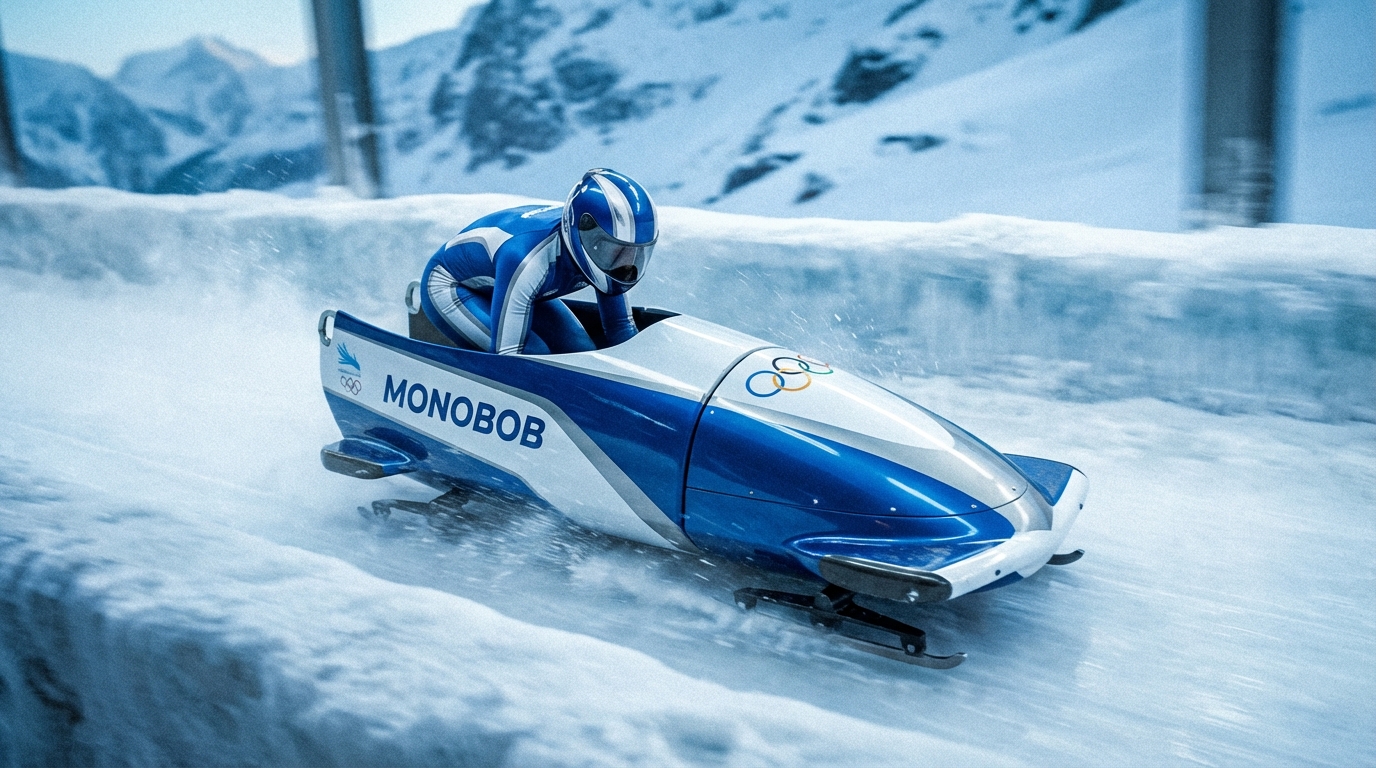
Elana Meyers Taylor's Pursuit of Olympic Monobob Gold
The silence of a quarantine hotel room offers a stark, unsettling contrast to the deafening roar of a bobsled tearing down an icy chute at 80 miles per hour. For Elana Meyers Taylor, the lead-up to the Beijing Games was not defined solely by time trials or weight training, but by a solitary battle against a virus that threatened to derail a historic career. As the only woman to win three bobsled medals for the United States, her presence at the Yanqing National Sliding Centre is a testament to a resilience that transcends sport. Yet, as she straps into her sled for the debut of the women’s monobob, the narrative shifts from survival to the relentless pursuit of gold in a discipline that strips away teammates, leaving the driver exposed to the raw physics of the track.
TL;DR
- Resilience defined: Meyers Taylor moved from an isolation hotel directly to medal contention.
- Tech warfare: The monobob event utilizes standardized sleds but relies heavily on customized footwear and aerodynamic precision.
- Solo challenge: Unlike two-woman events, the monobob requires the driver to push, steer, and brake alone.
- Legacy: Beyond the track, Meyers Taylor continues to advocate for racial justice and mothers in sports.
- Current status: She sits in fourth place, mere hundredths of a second away from the podium.
The Solitary Crucible of the Monobob
The introduction of the women’s monobob to the Olympic program marks a significant shift in winter sports dynamics. Traditionally, bobsledding is a symphony of synchronized powera pusher and a driver moving in perfect unison. The monobob dismantles this structure. It isolates the driver, forcing them to become the sole engine, the navigator, and the mechanic. According to NBC Olympics, the event has quickly become a battleground for the world’s elite, with Team USA placing three sleds in medal contention after the initial heats.
Kaillie Humphries, Meyers Taylor’s former teammate turned rival, currently leads the pack, capitalizing on the independence the monobob affords. However, Meyers Taylor, sitting in fourth place, remains a lethal threat. The gap between a medal and obscurity in this sport is measured in fractions of a second. The monobob tests the purest definition of driving ability; without a brakeman to manipulate the sled’s weight distribution at the start or stop it at the finish, the physiological load on the athlete is immense.
Engineering Velocity: The Hidden Tech War
While the monobob event mandates standardized sleds to level the playing field, the “standardization” ends where the athlete’s body meets the ice. The technological arms race has simply migrated from the chassis to the peripherals. Investigative analysis reveals that the margin of victory often lies in the microscopic details of aerodynamics and traction.
As reported by Wired, the footwear worn by athletes like Meyers Taylor is a marvel of modern engineering. These are not simple cleats; they are “brushes” containing hundreds of spikes designed to claw into the ice with maximum efficiency. The friction generated during the initial push phase is the single most critical factor in a race. If a driver slips even a millimeter at the start, the kinetic energy loss is unrecoverable by the bottom of the track. Furthermore, the sleds themselves, often designed with input from automotive giants like BMW, utilize carbon fiber weaves optimized for specific vibration frequencies. While the monobob chassis is fixed, the maintenance and tuning of the runners (the steel blades) fall to the athlete, adding a layer of technical complexity that Meyers Taylor has had to master alongside her driving.
Comparison Table: Monobob vs. Two-Woman Bobsled
| Feature | Monobob | Two-Woman Bobsled | Best For | Pros | Cons | Cost |
|---|---|---|---|---|---|---|
| Crew Size | 1 (Driver only) | 2 (Driver + Brakeman) | Individual superstars | Highlights pure driving skill; lower barrier to entry | immense physical fatigue; no error correction by teammate | Standardized (Lower) |
| Sled Design | Standardized (One make) | Constructor/Custom | Team innovation | Tech advantages can be engineered; higher top speeds | ”Arms race” favors wealthy nations; expensive R&D | High (Custom R&D) |
| Role | Push, Drive, Brake | Specialized roles | Specialists | Shared workload; camaraderie | Interpersonal conflicts; synchronization issues | High (Travel/Crew) |
| Weight | Lighter (~162kg min) | Heavier (~325kg min) | Agility | Faster acceleration curves | Harder to control in skids | Unknown |
Elana Meyers Taylor and the Weight of Expectation
The path to the starting line in Beijing was paved with obstacles that would have broken a lesser competitor. Upon arriving in China, Meyers Taylor tested positive for COVID-19. As detailed by NBC News, this diagnosis forced her into an isolation hotel, separating her from her team and, painfully, from her two-year-old son, Nico. The psychological toll of isolation, combined with the inability to train on the ice, created a deficit that physical conditioning alone could not fill.
She was elected as the flag bearer for the Opening Ceremonya supreme honor for a four-time Olympianbut was unable to march, surrendering the role to speed skater Brittany Bowe. Yet, the isolation did not dull her competitive edge; it sharpened it. Meyers Taylor utilized her time in quarantine to mentally visualize the track, studying the curves of the Yanqing course remotely. This mental fortitude is characteristic of her career. At 37, she is not just competing for hardware; she is competing for representation. As a Black woman in a predominantly white winter sport, and as a mother to a son born with Down syndrome, she carries the hopes of multiple communities on her shoulders.
The Mathematics of the Podium
The current standings in the monobob event reveal a brutal contest of precision. Kaillie Humphries has established a commanding lead, but the fight for silver and bronze is a congested traffic jam of talent. Meyers Taylor sits in fourth, trailing Canada’s Christine de Bruin and Germany’s Laura Nolte. The time differentials are razor-thin. A slight correction in “The Dragon”the track’s notorious 360-degree turncould catapult Meyers Taylor into medal position.
According to race data analyzed by NBC Olympics, the German sleds are exhibiting tremendous speed in the lower sections of the track, likely due to superior runner conditioning or aerodynamic tucks. However, Meyers Taylor is renowned for her explosive starts. If she can leverage her spiked “brushes” to gain an extra hundredth of a second at the push, the physics of the track dictate that this advantage will multiply by the finish line. The variable here is the ice condition, which degrades with every runner. Being in the hunt requires not just speed, but the ability to read the microscopic imperfections in the surface.
Pros and Cons of the Monobob Discipline
Pros:
- Meritocratic Design: The standardized sled forces the competition to be about the driver’s skill rather than the nation’s engineering budget.
- Accessibility: It allows smaller nations to compete without funding a full two-woman or four-man development program.
- Driver Focus: It highlights the raw athletic ability of the pilot, who must possess the explosive power of a sprinter and the reflexes of a Formula 1 driver.
Cons:
- Physical Attrition: The driver must expend maximum energy pushing the sled and then immediately calm their heart rate to steer with precision, leading to faster exhaustion.
- No Redundancy: In a two-woman sled, a brakeman can help correct a skid by shifting weight. In monobob, a mistake by the driver is often unrecoverable.
- Isolation: The mental burden is entirely singular; there is no teammate to share the pressure in the starting house.
Beyond the Ice: A Legacy of Advocacy
To view Meyers Taylor solely through the lens of split times is to miss the broader scope of her impact. Her journey is inextricably linked to her role as a mother and an advocate. Traveling with a toddler is difficult under normal circumstances; traveling to a pandemic-restricted Olympics with a nursing child who has special needs is a logistical feat rivaling the competition itself.
Her vocal stance on racial justice following the murder of George Floyd and her insistence on the visibility of mothers in elite sports have reshaped the culture of the US Olympic team. She has proven that motherhood is not a career-ender for female athletes but a new chapter of strength. As noted in her profile by NBC News, her perseverance through the isolation hotel ordeal was fueled by the desire to show her son, Nico, the meaning of resilience. Whether she leaves Beijing with gold, silver, or bronze, the image of her navigating the “Dragon” track alone, after days of solitude, will remain one of the defining images of these Games.
FAQ
Q: Why was Elana Meyers Taylor in isolation before the competition? A: Upon arriving in Beijing for the Winter Olympics, Meyers Taylor tested positive for COVID-19. She was required to stay in a quarantine hotel, separated from her team and her son, until she produced two negative tests, allowing her to return just days before the heats began.
Q: How does the monobob differ from traditional bobsled events? A: The monobob is a solo event where a single athlete acts as the pusher, driver, and brakeman. Unlike other bobsled events where sleds are custom-built by various manufacturers, monobob uses standardized sleds to ensure the competition is based on athletic ability rather than equipment technology.
Q: Is Elana Meyers Taylor expected to win a medal? A: She is a strong contender. Despite her training interruption, she is currently sitting in fourth place after the initial heats. With her history as a three-time Olympic medalist and her reputation for strong starts, she remains within striking distance of the podium.
Q: What specific gear is critical for bobsledders? A: Aside from the sled and helmet, the shoes are the most critical piece of equipment. Known as “brushes,” these shoes contain hundreds of small spikes that allow the athlete to sprint on ice without slipping. This traction is vital for the initial push, which determines the sled’s momentum.
Conclusion
The final heats of the monobob will be decided by milliseconds, but the context of those milliseconds is years in the making. Elana Meyers Taylor has navigated a course far more treacherous than the ice at Yanqing. She has steered through the complexities of a global pandemic, the rigors of new motherhood, and the systemic challenges facing Black athletes in winter sports. As the world watches the clock tick down on her final run, the result will be a data point in the record books. However, the story of how she arrived at the starting linespikes digging into the ice, alone in the sled but carrying the weight of a nationconfirms her status as one of the most formidable athletes of her generation.