Why the Salvation Army Is Removing Public Clothing Bins
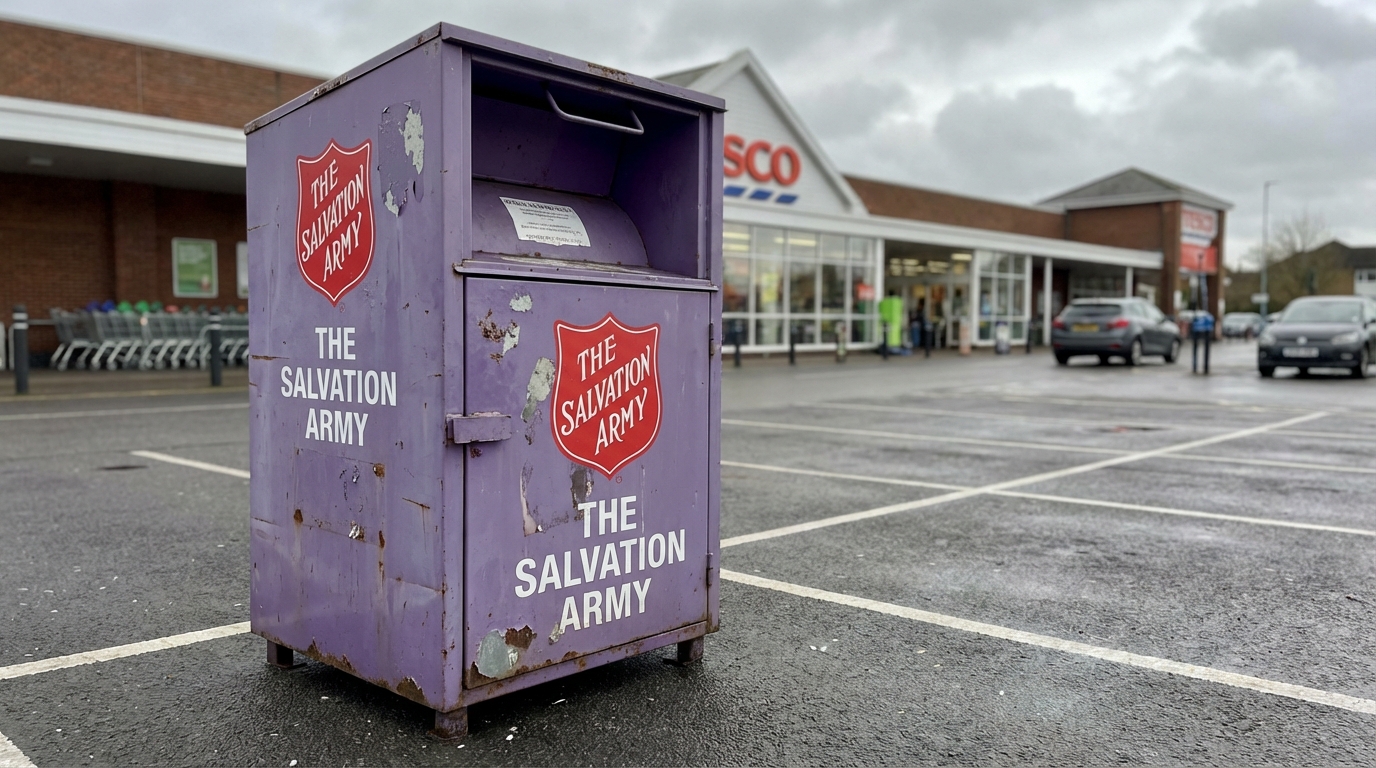
For decades, the presence of a brightly colored metal bin in a supermarket parking lot has served as a silent, ubiquitous invitation to charity. It was a simple transaction: you cleaned out your closet, dropped a bag of old clothes into the chute, and drove away feeling lighter, both physically and morally. However, this traditional model of textile collection is undergoing a radical transformation. The Salvation Army, one of the world’s most recognizable charitable organizations, is quietly but decisively altering the landscape of how it collects, processes, and monetizes used textiles. The era of the unattended parking lot bin is fading, replaced by a sophisticated, data-driven approach that favors corporate boardrooms over curbside concrete.
This shift is not merely a logistical tweak; it is a response to the volatile economics of global recycling and the increasing operational burdens placed on non-profits. As the organization navigates the complexities of modern waste management, the removal of these physical banks signals a new chapter in the intersection of philanthropy and retail logistics.
The Disappearing Metal Box
The visible evidence of this strategy is already manifesting in communities where the bins were once staples. In a move that surprised local residents, the Salvation Army recently initiated the removal of its clothing banks from various locations. A prime example occurred in Bedford Borough, where the local council announced that the charity’s trading arm, SATCoL (Salvation Army Trading Company Ltd), had decided to withdraw its banks following a review of their national operations. According to Bedford Borough Council, the removal is part of a broader national change, forcing local governments and citizens to seek alternative avenues for their textile recycling.
This is not an isolated retreat but a calculated contraction. The decision to reduce the textile bank network is driven by a convergence of negative factors that have plagued the industry for years. While these bins provide convenience for donors, they are logistical nightmares for charities. They are prone to theft, vandalism, and, most critically, contamination. When a well-meaning donor drops a bag of clothes next to a bag of household trashor when the bin itself is used as a dumping ground for non-textile wastethe cost of sorting and disposal often outweighs the value of the salvageable material.
The operational drag is significant. Reports indicate that SATCoL is actively seeking to further reduce its textile bank network across the UK, a trend likely to influence operations in other regions as global waste management costs rise. As noted by letsrecycle.com, the strategy involves a careful culling of sites that are no longer commercially viable. The charity is effectively cutting off the limbs that are infected by inefficiency to save the body of the organization. The resources once spent sending trucks to collect potentially ruined clothes from remote parking lots are now being redirected toward more controlled, higher-yield collection streams.
The Corporate Pivot: From Curbside to Boardroom
If the parking lot bin is dying, what is replacing it? The answer lies in corporate integration. The Salvation Army is aggressively pivoting toward partnerships with major retailers, turning the source of the clothingthe stores themselvesinto the point of collection. This strategy, often referred to as “take-back” schemes, integrates the donation process directly into the retail cycle.
Shaunacy Burne, the Corporate Donations Manager for SATCoL, highlights this evolution. In an interview with The Retail Bulletin, Burne explained that the organization is focusing heavily on corporate donations and retail partnerships. The logic is sound: corporate donations often consist of excess stock, returns, or end-of-line items. These textiles are clean, new or gently used, and uniform in packaging. They do not require the intensive, hazardous sorting that a wet bag of clothes pulled from a roadside bin demands.
This shift also aligns with the growing pressure on retailers to adopt circular economy principles. By partnering with the Salvation Army, brands can offload unsold inventory in a way that provides a tax benefit, boosts their Corporate Social Responsibility (CSR) profile, and ensures the items do not end up in a landfill. It is a symbiotic relationship where the charity acts as a sustainability service provider for the private sector, rather than just a passive recipient of public goodwill.
The Economics of Contamination and Quality
The move away from public banks is fundamentally an economic decision rooted in the quality of the “raw material”in this case, used textiles. The global market for second-hand clothing is competitive. For a charity to monetize donations to fund its social programssuch as homeless shelters and food banksit must sell the textiles to recyclers or in its own thrift stores.
Public banks have a high “reject rate.” A bin left in the rain with a broken seal can result in hundreds of pounds of moldy textiles that the charity must pay to landfill. Conversely, a corporate donation or an in-store take-back scheme provides a controlled environment. When a customer hands a bag of old clothes to a cashier at a participating retailer, or when a brand donates 5,000 unsold winter coats, the chain of custody is secure. The items remain dry, clean, and sortable.
This efficiency is crucial because the Salvation Army is not just a charity; in this context, it is a business operator. The funds generated from these trading activities are the lifeblood of their humanitarian aid. By reducing the overhead associated with maintaining, repairing, and servicing thousands of metal bins, the organization can improve its net revenue, ensuring that more money actually reaches those in need rather than being spent on fuel for collection trucks or landfill taxes for contaminated waste.
A New Social Contract for Donors
For the average citizen, this operational shift requires a change in behavior. The convenience of the neighborhood drop-off point is being traded for a more intentional form of giving. Donors are now encouraged to bring items directly to charity shops or to utilize the growing network of in-store collection points at major retailers.
This change may initially cause friction. As seen in Bedford, the removal of banks can lead to confusion and, ironically, an initial spike in fly-tipping as residents leave bags where the bins used to be. However, the long-term goal is to educate the public on the value of their donation. By requiring a slightly higher effortdriving to a store or a donation centerthe charity effectively filters out the “garbage” donations. A person is less likely to hand a bag of trash to a human volunteer at a donation center than they are to stuff it into an anonymous metal box.
Ultimately, the Salvation Army is modernizing its approach to meet the demands of a 21st-century economy. The romantic image of the charity bin is being replaced by the efficiency of supply chain logistics. While the metal banks may be disappearing from our parking lots, the mission remains the same. The organization is simply ensuring that it can afford to keep that mission alive in an era where efficiency is the only way to survive.
FAQ
Q: Why are Salvation Army clothing banks disappearing from my area? A: The organization is reducing its network of outdoor banks to cut operational costs and reduce issues with contamination and vandalism. They are shifting focus toward more secure, efficient collection methods like in-store take-back schemes and direct donations to charity shops.
Q: Where can I donate my clothes if the local bank is gone? A: You can donate directly to Salvation Army thrift stores (charity shops) during operating hours. Additionally, many major retailers now partner with the charity to offer in-store collection points where you can drop off used textiles.
Q: Does the Salvation Army still want my used clothing? A: Yes, absolutely. Textile donations are a vital source of funding for their charitable work. They are simply changing how they collect them to ensure the donations are high quality and cost-effective to process.
Q: What happens to the clothes I donate? A: Donated items are either sold in the charity’s thrift stores, sold to textile recyclers, or exported to global second-hand markets. The revenue generated funds the Salvation Army’s social programs, including homeless shelters, disaster relief, and food pantries.