Adeliia Petrosian Wins 2026 Olympic Gold as Neutral Athlete
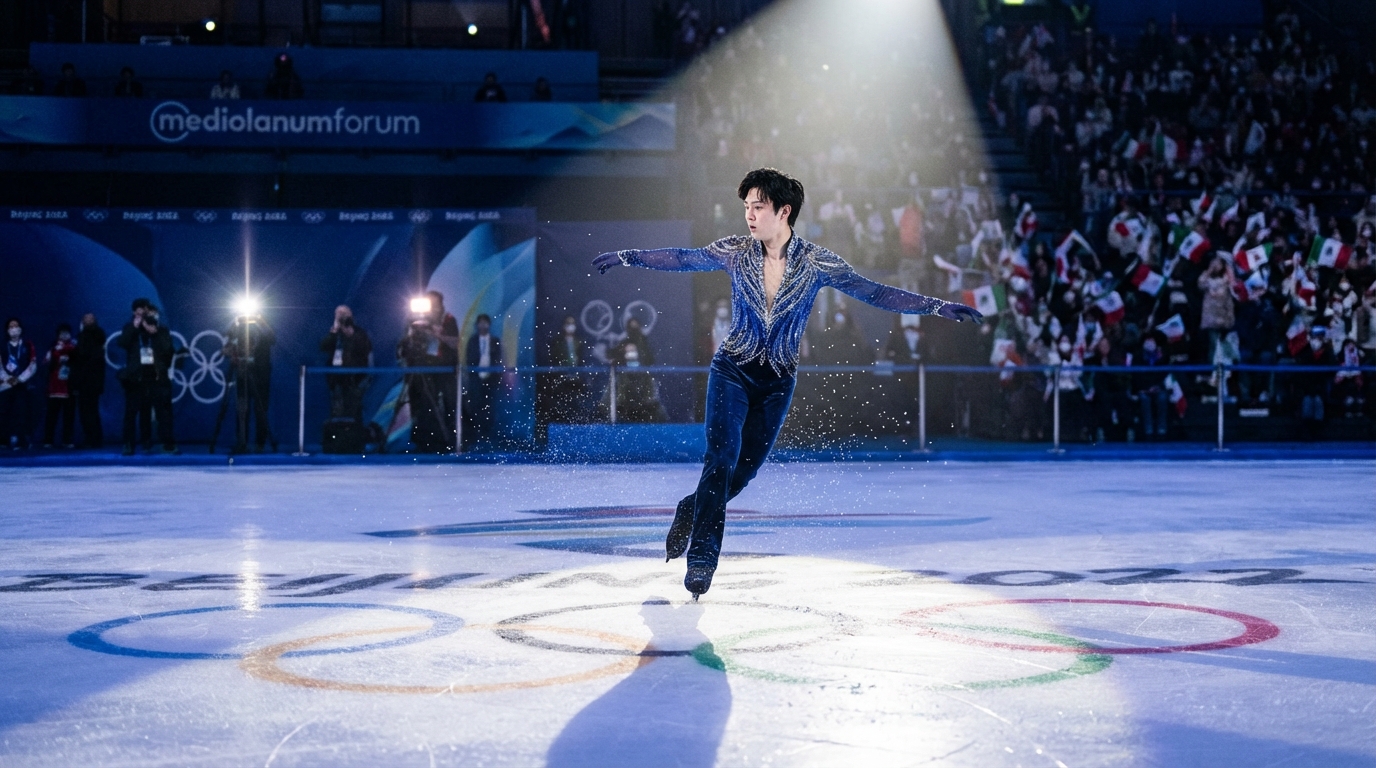
The atmosphere inside the Mediolanum Forum was thick with a tension that had little to do with the physics of rotation and everything to do with the ghosts of Beijing. When Adeliia Petrosian took her starting pose at center ice, the silence was not merely the hush of anticipation; it was a heavy, politicized vacuum. It is February 2026, and the Milan-Cortina Winter Olympics have once again brought the world to a crossroads between athletic brilliance and ethical ambiguity. Petrosian, the diminutive powerhouse from the Eteri Tutberidze camp, arrived in Italy not just as a skater, but as a lightning rod for the unresolved conflicts plaguing the sport since 2022.
TL;DR
- The Result: Adeliia Petrosian won the gold medal in women’s singles, utilizing a technical arsenal of quadruple jumps that outpaced her competitors.
- The Context: She competed as an Individual Neutral Athlete (AIN), barred from using the Russian flag or anthem due to ongoing geopolitical sanctions and doping fallout.
- The Conflict: Her victory has reignited the debate regarding the involvement of coach Eteri Tutberidze and the fairness of allowing Russian athletes to compete amidst the Ukraine war.
- The Rivalry: The event featured a stark contrast between Petrosian’s acrobatics and the mature artistry of Japanese and American contenders.
- The Future: The International Skating Union (ISU) faces renewed pressure to revise scoring codes to balance athleticism with artistry.
The Shadow of the Quad Factory
To understand the magnitude of what occurred in Milan, one must look backward before looking forward. The figure skating world has spent the last four years trying to sanitize its image following the Kamila Valieva doping scandal. Yet, the system that produced Valievathe Sambo-70 school led by Eteri Tutberidzeremains the most efficient gold-medal machine in history. According to the Associated Press, Petrosian’s program content in Milan was mathematically nearly insurmountable before she even laced her skates. Her ability to land multiple quadruple jumps places her in a stratosphere of technical difficulty that most senior women cannot reach.
However, the technical marvel is inseparable from the training methodology. Critics argue that the “churn and burn” nature of the Tutberidze camp treats athletes as disposable commodities. Yet, Petrosian has displayed a resilience that defies the typical two-year expiration date of her predecessors. Her performance in Milan was clinical, a barrage of rotation that left judges little choice but to reward the score sheet, even if the audience’s reception was tepid.
The Uncomfortable Coronation of Adeliia Petrosian
The medal ceremony was a study in cognitive dissonance. There was no Russian anthem; instead, the generic Olympic hymn played while a plain white flag was raised. Yet, for the millions watching in Moscow, the symbolism was irrelevantthe gold belonged to them. The New York Times reported that the Kremlin immediately hailed the victory as a triumph over “discriminatory politics,” effectively weaponizing Petrosian’s success for domestic propaganda despite the IOC’s efforts to neutralize the event.
This brings us to the core issue: the efficacy of the “neutral” status. Does stripping an athlete of their flag truly separate them from their state, especially when that state funds their training and uses their image for soft power? In the case of Adeliia Petrosian, the answer seems to be a resounding no. Her presence in Milan was a constant reminder that while flags can be banned, influence cannot be so easily legislated away.
Comparison Table: The Contenders of Milan 2026
The women’s event was not a monolith; it was a clash of philosophies. Below is a breakdown of the primary contenders and what they represented.
| Option | Best For | Pros | Cons | Pricing/Cost (Training Funding) |
|---|---|---|---|---|
| Adeliia Petrosian (AIN) | Maximum Scoring Potential | Unmatched technical base value (Quads); high consistency under pressure. | Artistic components often seen as robotic; polarized public reception; geopolitical baggage. | State-sponsored (High) |
| Kaori Sakamoto (JPN) | Purist Skating Skills | Deep edges, massive ice coverage, mature interpretation, crowd favorite. | Lacks quadruple jumps; lower technical ceiling compared to Russian ultra-C elements. | Federation/Sponsor funded (Medium-High) |
| Isabeau Levito (USA) | Artistic Interpretation | Exceptional flexibility, intricate choreography, classic American style. | Jump technique often scrutinized; lower jump height; inconsistent under Olympic pressure. | Private/Sponsor funded (High) |
| Loena Hendrickx (BEL) | Performance Quality | Charismatic performance style, unique choreography, strong mental game. | No ultra-C elements (Quads/3A); lower base value limits gold medal chances. | Federation/Private (Medium) |
The Technical vs. Artistic Divide
The 2026 Games have once again exposed the rift in the International Skating Union’s scoring system (IJS). Petrosian represents the absolute peak of the “sport” aspect of figure skatingathletics pushed to their biomechanical limit. Her quadruple flip and quadruple toe loop are feats of gravity defiance that demand respect. However, observers noted a distinct coolness in the arena. The Boston Globe noted that while the American and Japanese skaters received standing ovations for their artistry, Petrosian’s applause was polite but restrained.
This dichotomy forces a difficult question: What is figure skating? If it is purely a jumping contest, Petrosian is the undisputed queen. If it is a balance of art and sport, the argument becomes murkier. The current code of points heavily favors the risk-reward ratio of quadruple jumps. Even with a fall, a fully rotated quad often scores higher than a perfect triple. This mathematical reality is what allowed Petrosian to buffer her lead against the sublime skating skills of Kaori Sakamoto.
Pros and Cons: The Neutral Athlete Solution
The decision to allow Russian skaters to return as neutrals was intended to be a compromise. Here is an analysis of that policy’s outcome in Milan.
Pros
- Athletic Integrity: The best skaters in the world were present, ensuring the gold medal was won against the strongest possible field.
- Individual Rights: It upholds the principle that athletes should not be punished for the actions of their government.
- Competition Level: It pushed other nations to upgrade their technical content to stay competitive.
- Revenue: High-profile rivalries drive viewership and sponsorship interest for the ISU.
Cons
- Propaganda Risk: As seen, the “neutrality” is often ignored by the home nation, which claims the victory regardless.
- Fairness Concerns: Critics argue that the Russian state-sponsored doping system has not been sufficiently reformed to guarantee a clean field.
- Overshadowing: The political narrative dominated the coverage, taking attention away from other medalists.
- Locker Room Tension: Created an uncomfortable environment for Ukrainian and other Western athletes forced to share ice with representatives of an aggressor state.
FAQ
Q: Why was Adeliia Petrosian allowed to compete despite the Russian ban? A: The IOC and ISU established a pathway for “Individual Neutral Athletes” (AIN). Skaters who were not actively supporting the war and passed strict anti-doping vetting were permitted to compete without their national flag or anthem.
Q: Did Adeliia Petrosian perform quadruple jumps in her program? A: Yes. Petrosian is known for her high-risk technical content. In Milan, she successfully landed multiple quadruple jumps, which provided the point differential needed to secure the gold medal.
Q: Who is Adeliia Petrosian’s coach, and why is it controversial? A: She is coached by Eteri Tutberidze. Tutberidze is a polarizing figure due to her harsh training methods and her involvement in the 2022 doping scandal involving Kamila Valieva. Her presence at the boards in Milan was a major point of contention.
Q: How did the crowd react to her win? A: The reaction was mixed. While there was acknowledgment of her athletic feat, the celebration was muted compared to other medalists, reflecting the complex geopolitical sentiments of the European audience.
The Future of the Ice
As the zamboni clears the ice in Milan for the final time, the legacy of this event remains murky. The sport has crowned a champion who is undeniably the most talented jumper of her generation, yet the victory feels hollow to many. The ISU must now reckon with a scoring system that prioritizes revolution over resolution, and a geopolitical framework that attempts to separate the athlete from the statea separation that, in 2026, proved to be an illusion.
Ultimately, Adeliia Petrosian leaves Italy with gold around her neck, but the figure skating world leaves with more questions than answers. The “Quad Revolution” is here to stay, but the cost of admissionboth physical and ethicalremains higher than ever. The Milan Games will be remembered not just for the jumps landed, but for the heavy silence that fell between them.