SCOTUS Blog Analysis: The Fight Over Home Equity Theft
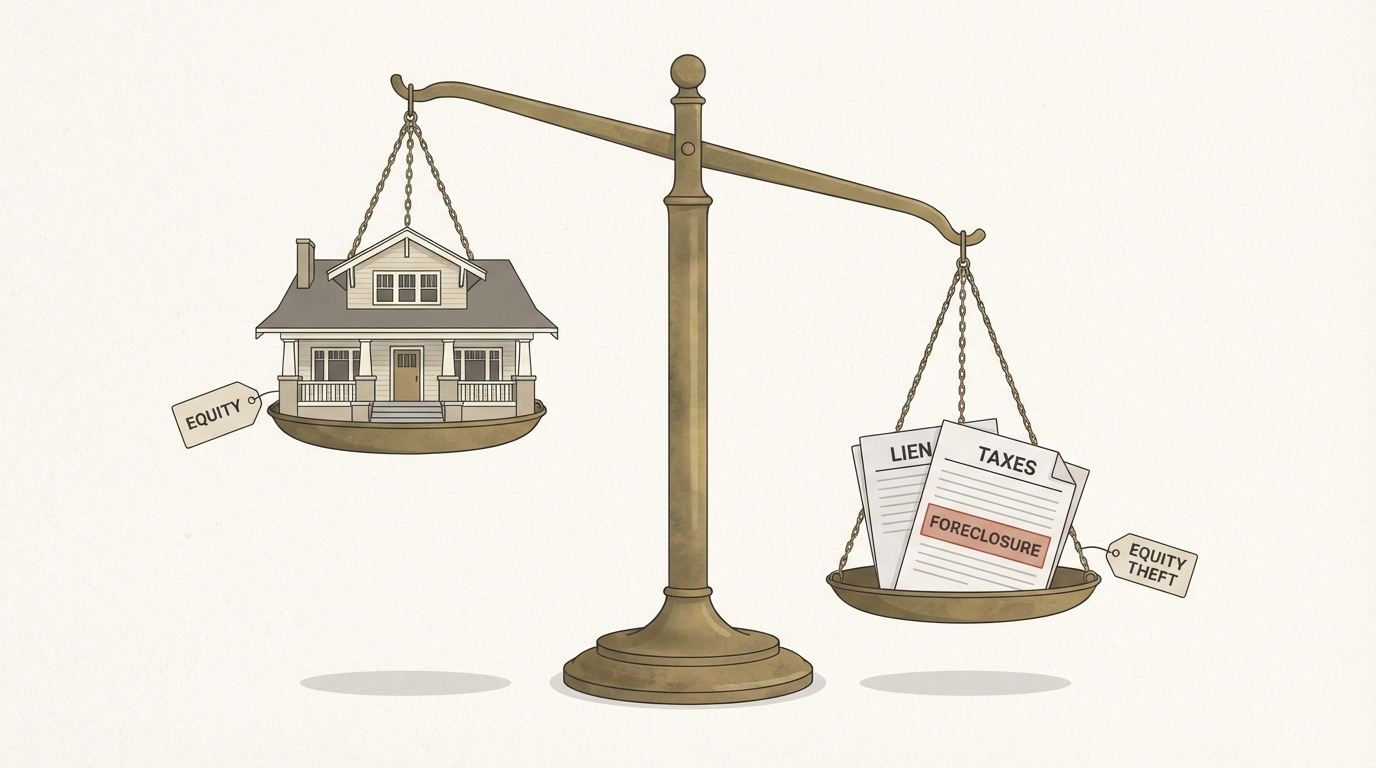
The arithmetic of modern forfeiture is often brutal in its simplicity. A homeowner falls behind on property taxessometimes for an amount as trivial as a few hundred dollarsand the local government initiates foreclosure. In a standard commercial foreclosure, the property is sold, the debt is paid, and the remainder is returned to the owner. But in a distinct subset of American jurisdictions, the government has operated under a different set of rules: they sell the home, pay the debt, and pocket the surplus. It is a practice critics call “home equity theft,” and it is currently the subject of intense scrutiny on SCOTUS blog and within the halls of the highest court in the land.
For years, this mechanism allowed counties to turn tax delinquency into a revenue stream. A grandmother in Michigan or a retiree in Minnesota could lose a $200,000 home over a $2,000 bill, with the county keeping the $198,000 difference as a windfall. While the Supreme Court struck a major blow against this practice in Tyler v. Hennepin County, the war over property rights is far from over. New cases are bubbling up, challenging the procedural hurdles and legislative loopholes states have erected to keep the equity pipeline flowing.
The Arithmetic of Plunder
The core of the controversy lies in the disparity between the debt owed and the value seized. The government’s interest in a property is legally limited to the taxes, penalties, interest, and costs incurred. When a municipality steps beyond that line, seizing the entire asset regardless of its value relative to the debt, it enters the territory of unconstitutional takings.
Legal scholars tracking these developments note that the state’s power to tax is not a power to confiscate. The Fifth Amendment’s Takings Clause”nor shall private property be taken for public use, without just compensation”is the shield intended to protect against such overreach. Yet, the interpretation of “just compensation” in the context of tax foreclosure remains a fiercely contested battleground. Is the compensation the surplus money generated at an auction? Or is it the fair market value of the property if the government chooses to keep the deed rather than sell it?
According to analysis provided by the Pacific Legal Foundation, the constitutional standard requires a “full and perfect equivalent” for the property taken. This means the owner must be placed in as good a position pecuniarily as they would have been if the property had not been taken. When a government entity seizes a home and retains the surplus equity, they are effectively imposing a penalty that far exceeds the statutory limits of the tax code.
Analyzing the Docket on SCOTUS Blog
For observers following the trajectory of property rights law, SCOTUS blog remains the essential resource for tracking how the Justices are navigating these murky waters. The platform has highlighted how, despite the Tyler ruling, lower courts are struggling with implementation. Some states have pivoted to arguments that the statute of limitations for claiming the surplus is vanishingly short, or that the homeowner must proactively file a complex lawsuit to retrieve their own money, effectively creating a “procedure trap” that achieves the same result as the old laws.
Recent updates suggest that the Justices are preparing to consider the constitutionality of these specific procedural barriers. As noted in a recent breakdown on SCOTUSblog, the Court is looking at whether states can construct administrative mazes that make it practically impossible for the average citizen to reclaim their equity. If the right to just compensation exists, it cannot be nullified by labyrinthine bureaucracy designed to discourage its exercise.
This isn’t merely a theoretical debate. In Michigan, the issue has real-world consequences for thousands of residents. The state was previously ground zero for some of the most aggressive foreclosure practices in the nation. Following the Michigan Supreme Court’s ruling in Rafaeli, LLC v. Oakland County, the landscape began to shift, but the friction between counties seeking revenue and homeowners seeking justice has not abated.
The Michigan Front and Beyond
The situation in the Midwest provides a grim case study of why federal intervention has become necessary. Local news outlets have documented cases where families lost generational wealth over minor accounting errors. As reported by ABC12, cases from Mid-Michigan are heading to the U.S. Supreme Court, highlighting that the lower courts are still divided on how to apply the Takings Clause when the government acts as a debt collector.
The resistance from county treasurers is often rooted in budget concerns. Municipalities argue that the surplus funds are necessary to cover the administrative costs of the foreclosure system and to cover losses on other properties that are underwater (where the debt exceeds the value). They contend that the foreclosure process is expensive and that “responsible” taxpayers shouldn’t have to subsidize the collection efforts against “delinquent” ones.
However, this “cross-subsidization” argument fails constitutional muster. One citizen’s constitutional rights cannot be violated to pay for the processing of another citizen’s debt. The Supreme Court has historically frowned upon the idea that the government can ignore the Bill of Rights simply because it is fiscally convenient.
The Definition of Just Compensation
The forthcoming arguments will likely center on the definition of value. If a county sells a seized home at a “fire sale” auction for a fraction of its market value, is the former owner entitled only to the surplus from that low-ball sale, or are they entitled to the fair market value?
If the government acts as the fiduciary for the homeownerselling the home to pay the debtthey have a duty to maximize the return. Selling a $200,000 home for $20,000 just to clear a $2,000 debt, and then handing the owner $18,000, is still a form of theft if the destruction of value was negligent. The Pacific Legal Foundation argues that “just compensation” is not merely about handing over the change from a transaction; it is about ensuring the citizen is made whole.
This distinction is critical. If states are allowed to sell homes for pennies on the dollar to insider investors or land banks, the “surplus” returned to the homeowner is negligible, and the equity is still effectively stolentransferred not to the government’s bank account, but to the favored buyers who acquire real estate at a steep discount.
Bureaucratic Resistance and Future Implications
The implications of these rulings extend far beyond tax law. They touch upon the fundamental relationship between the citizen and the state. If the government can seize more than it is owed, the concept of private property is eroded. The Fifth Amendment was written specifically to prevent the government from loading the costs of public business onto a few individuals.
As the Justices prepare to hear these arguments, the legal community is watching closely. A ruling that enforces a strict interpretation of “just compensation” could force a complete overhaul of tax collection systems in dozens of states. It would require counties to treat tax foreclosure not as a forfeiture of title, but as a collection action where the government has a lien, not a claim to the fee simple absolute.
For the investigative writer, the story here is one of persistence. Despite clear signals from the judiciary that equity theft is unconstitutional, the administrative state is slow to correct its course. It requires constant litigation, funded by public interest firms, to force compliance. The data emerging from these cases paints a picture of a system that disproportionately affects the elderly and the poorthose least able to navigate the complex legal requirements to demand their surplus.
FAQ: Understanding Tax Foreclosure and Constitutional Rights
Q: What is the main legal argument against the government keeping surplus equity? A: The primary argument is based on the Takings Clause of the Fifth Amendment. Critics argue that when the government takes property to satisfy a debt, it can only keep the amount owed (plus costs). Keeping the surplus equity constitutes a “taking” of private property without just compensation.
Q: Has the Supreme Court ruled on this before? A: Yes. In Tyler v. Hennepin County (2023), the Court unanimously ruled that the government cannot keep the surplus equity after a tax foreclosure sale. However, new cases are addressing how states are implementing this ruling and whether they are creating procedural loopholes to avoid paying.
Q: What happens if the home is sold for less than its market value? A: This is a current point of contention. If the government sells the home for a price far below market value, advocates argue the homeowner should be compensated based on the fair market value, not just the auction price, to satisfy the requirement of “just compensation.”
Q: How can homeowners protect themselves? A: The best protection is to pay property taxes on time or engage with the county treasurer immediately upon receiving a notice. However, if foreclosure occurs, homeowners must now be vigilant in filing claims for surplus proceeds, as many states have strict deadlines for requesting the money.
Conclusion
The saga of home equity theft is a stark reminder that constitutional rights are not self-executing; they require vigilance and, often, a protracted legal fight to enforce. As the Supreme Court revisits the mechanics of tax foreclosure, the hope is for a standard that eliminates the perverse incentives for governments to seize more than they are owed. Until then, legal analysts will continue to refresh SCOTUS blog, waiting for the final word on whether the Fifth Amendment truly guarantees a full and perfect equivalent for what is taken, or if the state can still find a way to keep the change.
References
- Howe, A. (2026, February). Justices to consider constitutionality of tax foreclosure sales. SCOTUSblog. www.scotusblog.com
- Pacific Legal Foundation. (n.d.). A Full and Perfect Equivalent: Just Compensation and the Fifth Amendment. pacificlegal.org
- ABC12 News Team. (n.d.). Mid-Michigan tax foreclosure case heads to U.S. Supreme Court. ABC12. www.abc12.com