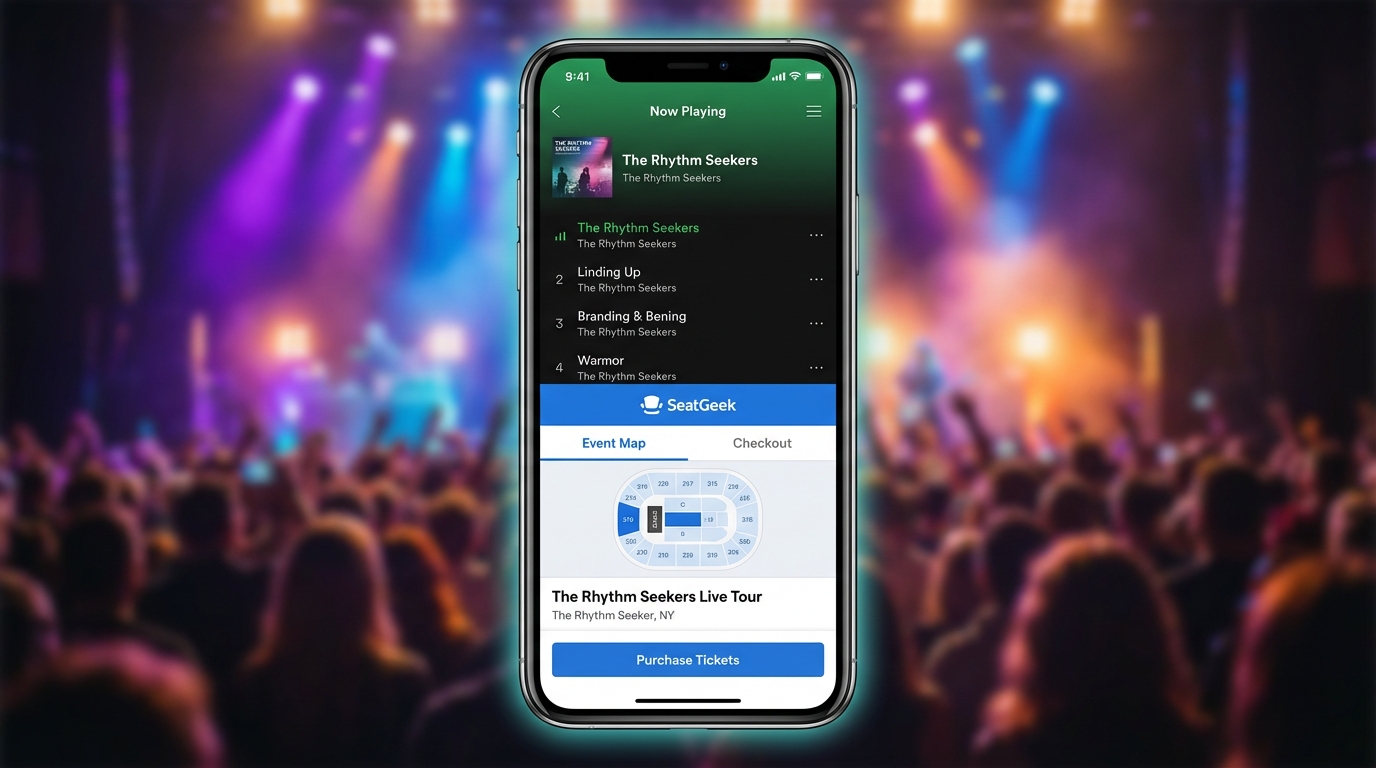
SeatGeek Partners with Spotify for Direct In-App Ticketing
The gap between hearing a song and seeing it performed live has always been a canyon filled with friction, redirects, and lost passwords. For years, the music industry has sought a way to bridge the emotional high of discovery with the transactional necessity of commerce. In a definitive move to close this loop, SeatGeek has officially partnered with Spotify, a collaboration that promises to reshape how fans secure their spots at live events. By embedding the ticketing infrastructure directly into the world’s most popular audio streaming platform, the two companies are attempting to dismantle the barriers that often deter casual listeners from becoming ticket-buying attendees.
This integration, announced in February 2026, is not merely a referral link or a ‘buy now’ button that kicks users out to a web browser. It is a deep-stack integration of SeatGeek’s primary ticketing inventory into the Spotify ecosystem. For the investigative observer, this signals a shift in power dynamics within the live entertainment sector, moving leverage away from traditional gatekeepers and toward the platforms where fans actually spend their time.
TL;DR
- Seamless Integration: Users can purchase SeatGeek tickets directly within the Spotify app without external redirects.
- Primary Inventory: The deal focuses heavily on primary sales (box office), not just resale markets.
- Data Synergy: Spotify listener data will power precise tour recommendations, increasing conversion rates for artists.
- Account Linking: Fans can link their Spotify and SeatGeek accounts for faster checkout and ticket management.
- Market Impact: This creates a formidable competitor to the Live Nation/Ticketmaster ecosystem by empowering independent venues.
The Convergence of Stream and Stage
For nearly a decade, the ‘holy grail’ of music tech has been the unified user journey. Previously, a fan might discover a band on a playlist, search for tour dates on Google, and eventually land on a ticketing siteoften losing interest or patience along the way. According to TechCrunch, this new partnership eliminates those steps. The integration allows Spotify to serve as the point of sale, utilizing SeatGeek’s backend technology to process transactions for concerts, sports, and theater events.
The timing is significant. As streaming revenue growth stabilizes, platforms are looking for ancillary revenue streams. Simultaneously, the live events industry is recovering from years of pricing controversies and consumer fatigue regarding hidden fees. By placing the transaction at the moment of peak interestwhile the song is playingSeatGeek is betting on impulse and convenience to drive volume.
Above: The modern concert experience is increasingly digital, with fans expecting their mobile devices to bridge the gap between the app and the arena.
Beyond the Resale Market
Crucially, this deal highlights SeatGeek’s evolution from a secondary market aggregator to a primary ticketing force. While the company built its brand on resale, recent years have seen them aggressively court venues and sports teams for primary box office rights. As noted by MusicAlly, this integration specifically highlights SeatGeek’s “primary tickets.” This is a vital distinction. It means that for integrated venues, fans on Spotify are buying tickets at face value directly from the source, rather than marked-up resale inventory.
This strategy benefits the artist significantly. By routing fans to primary inventory first, artists ensure that the revenue goes to the production rather than third-party brokers. It also allows SeatGeek to pitch its enterprise software, SeatGeek Open, to more venue owners. The value proposition is clear: use our software, and we will put your tickets directly in front of the millions of people listening to the artist right now.
The Data Advantage
The true currency of this partnership is data. Spotify possesses the world’s most comprehensive dataset on listening habits, while SeatGeek holds data on purchasing power and geographic location. Combining these allows for hyper-targeted marketing that traditional promoters cannot match. Instead of a generic email blast, a fan who has listened to a specific artist 50 times in the last month can receive a push notification the moment tickets go on sale in their city.
MarketScreener reports that this integration covers a wide range of live events, suggesting that the recommendation engine could eventually cross-pollinate interestssuggesting a basketball game to a fan of a specific podcast, or a Broadway show to a soundtrack listener. This level of granularity is essential in an era where marketing costs for tours have skyrocketed.
Comparison Table
The following table outlines how the SeatGeek-Spotify integration compares to traditional purchasing methods.
| Option | Best for | Pros | Cons | Pricing/Cost |
|---|---|---|---|---|
| Spotify x SeatGeek Integration | Superfans & casual listeners | Instant access; no app switching; highly relevant recommendations based on listening history. | Limited to SeatGeek inventory; requires account linking. | Face value (primary) or Market rate (resale) + standard fees |
| Ticketmaster / Live Nation | Major stadium tours | Massive inventory access; monopoly on many large venues. | High service fees; complex “Verified Fan” queues; disjointed from streaming apps. | Often dynamic pricing (high variance) |
| Venue Box Office (In-person) | Locals avoiding fees | Lowest possible price; no digital service charges. | Inconvenient; requires physical travel; risk of sell-out before arrival. | Face value (lowest cost) |
| General Resale Sites (StubHub, etc.) | Sold-out events | Finding tickets for “impossible” shows. | High markup; risk of fraud; zero integration with artist data. | Market rate + high service fees |
Pros and Cons
Pros
- Reduced Friction: Eliminates the need to create new accounts or enter credit card details repeatedly if accounts are linked.
- Artist Support: Prioritizing primary tickets ensures more money stays within the music ecosystem rather than the resale market.
- Discovery to Action: Shortens the time between discovering a new band and deciding to see them live.
- Verified Inventory: Because the integration taps into SeatGeek’s enterprise system, the risk of fraudulent tickets is significantly lower than open marketplaces.
Cons
- Ecosystem Lock-in: Further consolidates power within Spotify, raising concerns about the platform’s dominance over the music industry.
- Inventory Limits: The feature is only useful for events ticketed by SeatGeek; venues under exclusive contracts with competitors (like Ticketmaster) are excluded.
- Data Privacy: Linking listening habits with spending habits creates a comprehensive consumer profile that privacy-conscious users may find intrusive.
- Service Fees: While convenient, the integration does not necessarily reduce the processing fees associated with digital ticketing.
The Battle for the Independent Sector
This partnership is a lifeline for the independent venue sector. For years, independent clubs and theaters have struggled to compete with the marketing machinery of Live Nation. By partnering with SeatGeek, these venues gain access to Spotify’s marketing reach without selling out to a conglomerate. It levels the playing field, allowing a 500-capacity club to reach fans just as effectively as a 20,000-seat arena.
However, the challenge remains inventory. As indicated by search interest on Google Trends, SeatGeek has grown, but the ticketing landscape remains fragmented. For this integration to truly change the industry, SeatGeek must continue to win contracts with venues to expand the supply of tickets available for direct sale. If a user sees a concert date on Spotify but cannot buy it because the venue uses a competitor, the friction returns, and the promise of the integration is broken.
FAQ
Q: Do I need a SeatGeek account to buy tickets on Spotify? A: Yes, users will generally need to link a SeatGeek account to their Spotify profile to finalize transactions, though the process is designed to be a one-time setup.
Q: Are the ticket prices on Spotify higher than on the SeatGeek app? A: No. The inventory mirrors what is available on SeatGeek directly. Prices for primary tickets are set by the artist and venue, while resale tickets fluctuate based on market demand.
Q: Can I access my tickets directly through Spotify at the venue? A: While purchasing happens in Spotify, entry usually requires the SeatGeek app or a mobile wallet integration to display the secure, rotating barcode used for scanning.
Q: Does this cover all concerts listed on Spotify? A: No. This integration only applies to events where SeatGeek is the ticketing partner or has verified inventory. Events ticketed exclusively by other providers may still appear but will link out to external sites.
Conclusion
The integration between Spotify and SeatGeek represents a logical, albeit overdue, evolution of the digital music economy. By removing the friction between the play button and the purchase button, the partnership addresses a fundamental inefficiency in the market. For fans, it offers convenience; for artists, it offers better data; and for the industry, it offers a glimpse into a future where the platform that delivers the music also powers the experience. As SeatGeek continues to expand its primary ticketing footprint, this alliance could serve as the wedge that finally cracks open the monolithic structure of live event ticketing in the US.