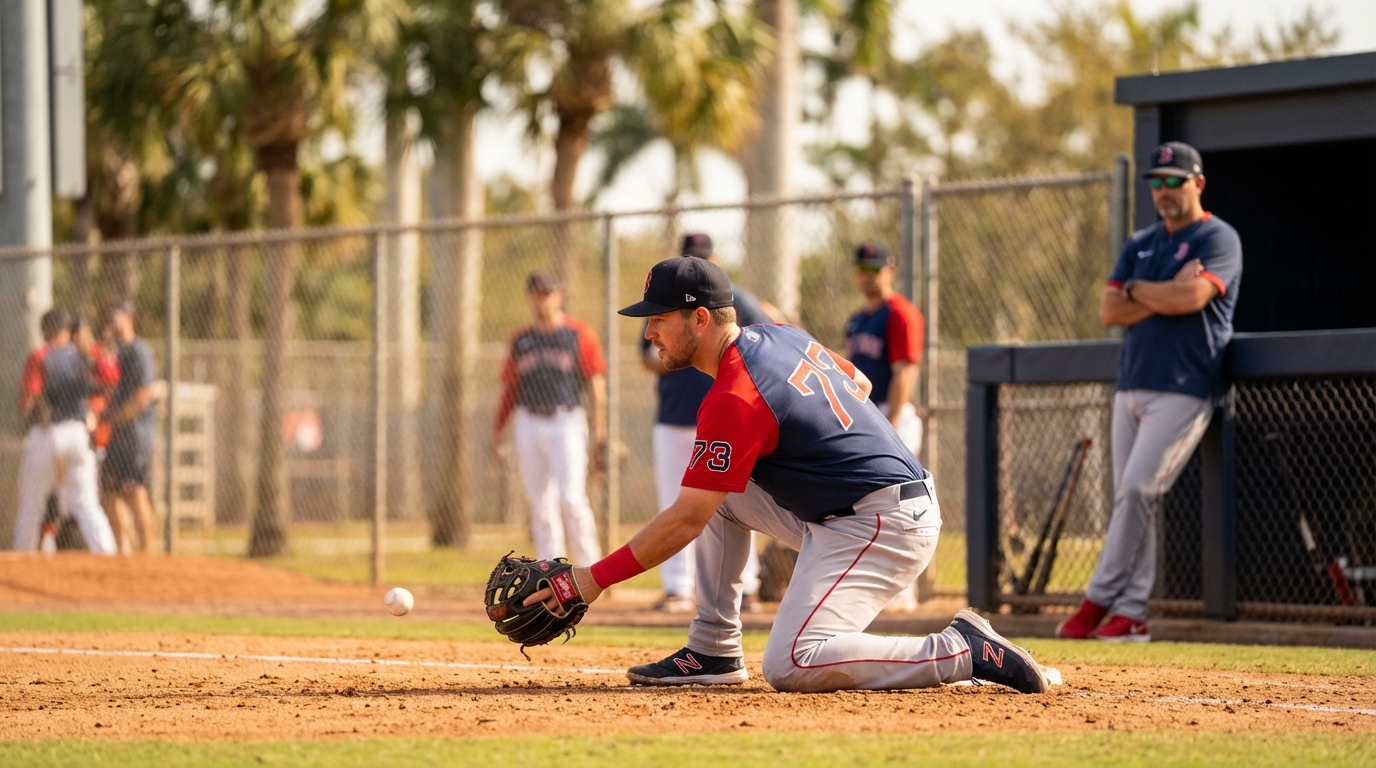
The Red Sox Crossroads: Youth, Injuries, and Infield Depth
The Red Sox Crossroads: Youth, Injuries, and the Infield Shuffle
Spring training in Fort Myers is typically a time of unbridled optimism, where every prospect is a future Hall of Famer and every veteran is in the best shape of their life. However, the Red Sox have opened this chapter with a distinct mixture of high-stakes potential and sobering medical realities. As the organization looks toward a competitive window opening wide by 2026, the current roster construction is being tested by the aggressive ascent of top prospects and the sudden unavailability of key depth pieces. The narrative has shifted from a simple rebuild to a complex puzzle of fitting high-ceiling talent into a roster that is already springing leaks.
TL;DR
- Marcelo Mayer’s Ascent: The top prospect is not just participating in camp; he is actively pushing for a timeline that could see him in Boston sooner than anticipated.
- Caleb Durbin’s Setback: A surgery requirement has sidelined the infielder, removing a critical safety net for the second and third base positions.
- Cora’s New Tone: Manager Alex Cora has revealed a shift in his managerial stance, prioritizing different metrics or attitudes than in previous tenures.
- Depth Concerns: The injury to Durbin highlights the fragility of the infield depth, putting more pressure on the remaining prospects.
- 2026 Vision: Every move made now is being calculated against the projected peak of the team’s young core in 2026.
The Marcelo Mayer Timeline
The most electrifying storyline emerging from the complex is undoubtedly the progression of Marcelo Mayer. For years, he has been the crown jewel of the farm system, the shortstop of the future. But according to recent reports, the future is trying to force its way into the present. Mayer is battling for a job that many assumed would only be his after another season of seasoning. This isn’t just a courtesy invite to camp; it is a legitimate evaluation of whether his bat and glove are ready to handle the rigors of the American League East.
As noted by MLB.com, Mayer is positioning himself as a cornerstone for the 2026 Red Sox, but his performance now is forcing the front office to reconsider their timeline. The pressure on Mayer is immense. He represents the bridge between the chaotic mediocrity of recent seasons and the promised land of sustainable contention. If he proves he can handle major league pitching this spring, it creates a “good problem” for management, forcing them to clear a path at shortstop that might displace established veterans or force position changes elsewhere.
The Caleb Durbin Setback
While Mayer represents the ceiling of the organization, Caleb Durbin represented its floorthe gritty, versatile depth necessary to survive a 162-game marathon. That floor has developed a crack. Durbin, who was expected to compete for significant innings at second and third base, has undergone surgery. This development throws a wrench into the team’s utility plans. Durbin was viewed as a Swiss Army knife, a player capable of plugging holes whenever the inevitable wear and tear of the season set in.
According to The Athletic, Durbin is now wrestling with a recovery timeline rather than opposing pitchers. The loss is significant not because Durbin was the star, but because he was the insurance policy. Without him, the Red Sox are thinner at two positions that were already considered areas of flux. This injury forces the team to look further down the depth chart or perhaps explore the waiver wire for veteran stopgaps, a strategy that often blocks the very youth movement they are trying to promote.
Alex Cora’s Strategic Pivot
Amidst the player movement, Manager Alex Cora remains the fulcrum upon which the team’s culture balances. Known for his player-friendly approach, recent comments suggest a shift in philosophy. Yahoo Sports reports that Cora has revealed an “unexpected stance” regarding the team’s outlook and preparation. This pivot likely stems from the mounting pressure to transition from a “rebuilding” excuse to a “winning” reality.
Cora’s new stance may involve less patience for developmental errors at the big-league level. If the manager is tightening the leash, it raises the stakes for prospects like Mayer. It implies that while the organization loves potential, the manager demands execution. This dynamic creates a fascinating tension in the clubhouse: a front office looking at 2026 and a manager trying to win tonight.
Comparison Table: Infield Options
With Durbin out and Mayer pushing hard, the infield hierarchy is in flux. Here is how the current options stack up for the upcoming campaign.
| Option | Best for | Pros | Cons | Pricing/Cost |
|---|---|---|---|---|
| Marcelo Mayer | Shortstop / Future Core | High ceiling, elite defensive potential, fan excitement. | Lack of MLB experience, potential service time concerns. | Pre-Arb (League Minimum) |
| Caleb Durbin | Utility / Depth (Injured) | Versatility, contact skills, base running. | Currently recovering from surgery, lower power ceiling. | Pre-Arb (League Minimum) |
| Veteran Stopgap | Stability / Mentorship | Proven track record, clubhouse leadership. | Low upside, blocks prospect development, costs money. | $1M - $5M (varies) |
| Internal Utility | Emergency Depth | Familiarity with system, zero acquisition cost. | Lower talent level, exposed against elite pitching. | Pre-Arb (League Minimum) |
Pros and Cons: The Youth Movement
The Red Sox are clearly leaning into their farm system, but this strategy comes with inherent volatility.
Pros
- Cost Control: Relying on Mayer and pre-arb players allows financial flexibility for pitching acquisitions.
- Sustainability: Building a core that can play together for 5-7 years (the 2026 vision).
- Fan Engagement: Supporters are desperate for a homegrown star to rally around.
- Defensive Upside: Younger legs generally translate to better range in the infield.
Cons
- Volatility: Rookie progression is rarely linear; slumps can be prolonged and destructive.
- Depth Fragility: As seen with Durbin, relying on unproven depth leaves the team vulnerable to injury.
- Service Time Friction: Balancing the best roster against business decisions can alienate players.
- Pressure Cooker: Boston is a notoriously difficult market for young players to struggle in.
The 2026 Vision vs. 2025 Reality
The overarching theme of this spring is the tension between the future and the now. The organization has clearly circled 2026 as the year the window is wide open. This is when the waves of prospectsled by Mayerare expected to reach maturity. However, ticket-buying fans and a competitive manager live in the present. The injury to Durbin is a reminder that “best-laid plans” often crumble upon contact with reality.
If Mayer makes the team, it accelerates the timeline. It forces the Red Sox to admit that the future has arrived, which in turn increases the expectation to win immediately. You do not call up your top prospect to tank. Conversely, if the injury bug continues to bite the depth pieces, the team may be forced into a conservative shell, delaying the youth movement to protect their assets from a losing environment. The “unexpected stance” from Cora suggests he is ready to push buttons, perhaps signaling that the era of patience is coming to an end.
FAQ
Q: Will Marcelo Mayer start on Opening Day? A: While he is battling for a job, it remains an uphill climb. The organization typically prefers to manipulate service time or ensure a prospect dominates Triple-A before a call-up. However, a strong spring combined with infield injuries could force their hand.
Q: How long is Caleb Durbin out? A: Specific recovery timelines post-surgery can vary, but his absence during the critical spring evaluation period means he will likely start the season on the Injured List or in the minors for rehab, removing him from the immediate Opening Day conversation.
Q: What does Alex Cora’s “unexpected stance” mean for the roster? A: It likely signals a departure from guaranteed playing time based on veteran status or contract size. Cora appears ready to prioritize performance and availability, which could benefit hungry prospects if they can prove they are ready to contribute to winning baseball immediately.
Conclusion
The Boston Red Sox are navigating a delicate transition. The injury to Caleb Durbin removes a safety net, while the surge of Marcelo Mayer offers a high-risk, high-reward alternative. With Alex Cora signaling a shift in managerial tone, this spring training is less about warm-ups and more about defining the identity of the franchise for the next half-decade. The decisions made in the coming weeks will determine if the team is merely waiting for 2026, or if they are ready to fight for relevance today.