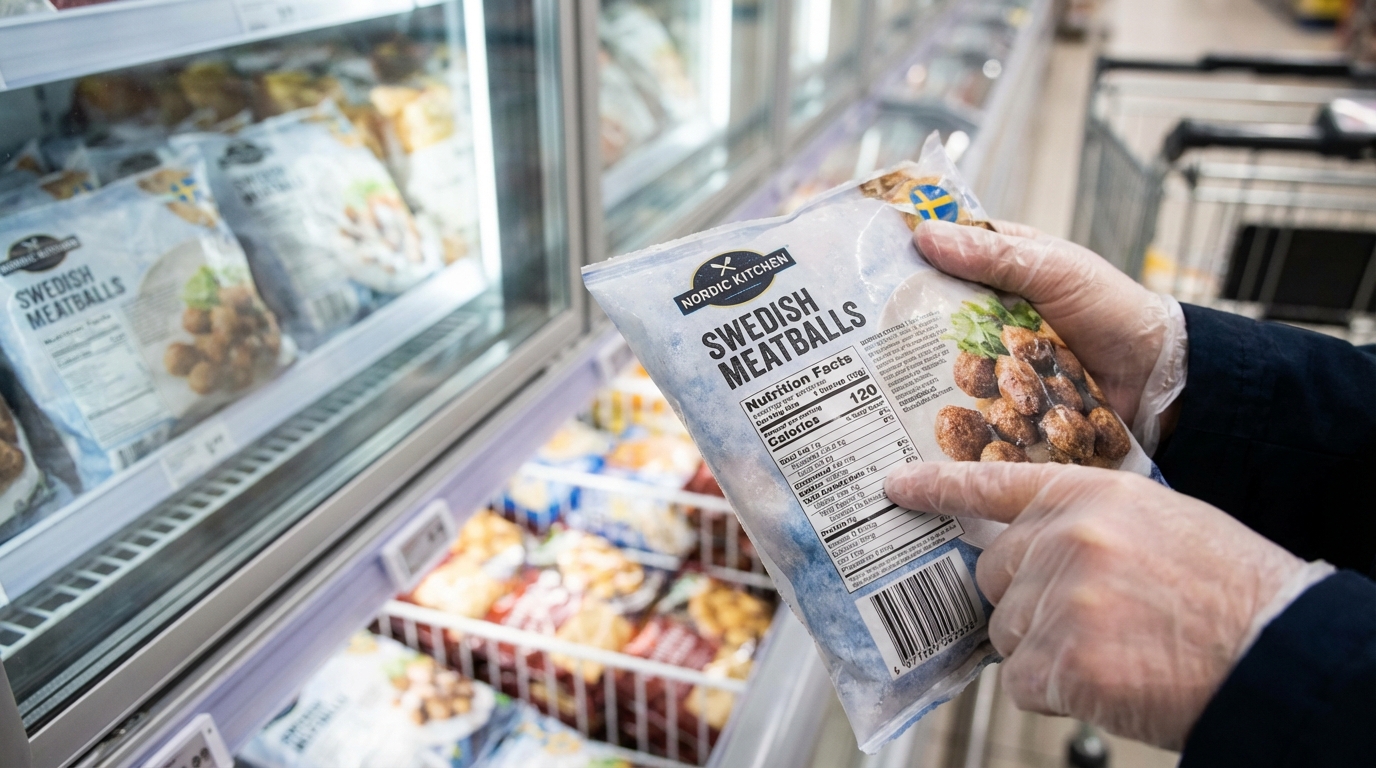
Aldi Product Recall: Metal Fragments in Frozen Meatballs
When consumers walk into a grocery store, there is an implicit contract of trust: the food purchased will nourish, not harm. However, that trust is occasionally fractured by supply chain failures that force immediate action. A significant product recall has recently shaken this confidence for shoppers at Aldi, specifically concerning a popular frozen dinner staple. The discovery of foreign materials in processed meat serves as a stark reminder of the complexities and vulnerabilities within our industrial food systems.
TL;DR
- The Issue: Metal fragments were discovered in frozen meatballs, prompting a nationwide safety alert.
- The Product: Bremer Italian Style Meatballs (30-oz plastic bag), sold exclusively at Aldi.
- The Identifiers: Look for Lot Code C77448 and “Best if used by” date of Feb 11, 2026.
- The Action: Do not consume. Throw the product away or return it to the place of purchase for a full refund.
- The Status: No injuries have been reported, but the USDA has classified this as a high-priority health risk.
Anatomy of a Supply Chain Failure
The incident centers on Vineland, New Jersey-based Rich Products Corp., which has recalled approximately 3,012 pounds of frozen meatball products. According to Fox Business, the recall was triggered after the firm notified the USDA’s Food Safety and Inspection Service (FSIS) that they had received a report alleging metal fragments were found in the product. While the exact origin of the metal remains a matter of internal investigation, such contamination usually points to machinery fatigue or filtration failure during the grinding or mixing process.
The specific item in question is the 30-oz. plastic bag package of “Bremer ITALIAN STYLE MEATBALLS IN MARINARA SAUCE.” These were produced on December 11, 2024. It is vital for consumers to understand that this is not a blanket recall of all Bremer products, but a surgical removal of a specific batch that poses a risk. The impacted products bear the establishment number “EST. 33152” inside the USDA mark of inspection, a critical identifier for tracking the origin of the meat.
Identifying the Risk: A Comparative Analysis
To assist consumers in distinguishing between safe products and the recalled batch, the following table outlines the specific markers. If your product does not match the “Recalled Batch” criteria, it is not part of this specific alert.
| Option | Best for | Pros | Cons | Pricing/Cost |
|---|---|---|---|---|
| Recalled Batch (Lot C77448) | Immediate Disposal | Refundable at Aldi | Potential metal contamination; Health risk | Full Refund |
| Safe Bremer Batches | Consumption | Safe to eat; Standard quality | None relative to recall | Standard Retail Price |
| Homemade Alternatives | Safety Assurance | Total ingredient control | Time-consuming; Higher cost | Varies by ingredients |
The Scope of Distribution
The reach of this recall is extensive. The products were shipped to distributors and retail locations in 24 states, creating a wide net of potential exposure. As reported by USA Today, the states involved include Alabama, Arkansas, Delaware, Florida, Georgia, Iowa, Illinois, Kansas, Kentucky, Louisiana, Maryland, Minnesota, Missouri, Mississippi, North Carolina, Nebraska, New York, Ohio, Oklahoma, Pennsylvania, South Carolina, Tennessee, Texas, Virginia, and West Virginia. This geographic spread highlights the efficiency of modern logistics, but also the speed at which a contaminated product can proliferate across the country.
Assessment of the Response
In instances of foreign material contamination, the speed of the response is critical. The USDA FSIS has issued a Class I recall for this incident. This classification is the most severe, defined as a situation where there is a reasonable probability that the use of the product will cause serious, adverse health consequences or death. Despite this high-level warning, Fox 8 notes that there have been no confirmed reports of adverse reactions due to consumption of these products so far. This suggests that the recall may have been preemptive enough to prevent injury, or that consumers are identifying the issue before consumption.
Pros and Cons of the Current Response Strategy
Pros
- Transparency: The specific lot codes and dates were released quickly, allowing for easy identification.
- Precautionary Measures: The Class I designation ensures maximum visibility and urgency for retailers to pull the product.
- Refund Policy: Aldi and the manufacturer are offering full refunds, mitigating financial loss for the consumer.
Cons
- Consumer Anxiety: The presence of metal in food erodes long-term trust in the brand and the retailer.
- Waste: Thousands of pounds of food must be destroyed, highlighting inefficiencies in the quality control process.
- Notification Gaps: Despite news coverage, consumers who do not follow daily news cycles may still have the product in their freezers.
The Mechanics of Metal Contamination
Investigative scrutiny into how metal ends up in meatballs reveals the industrial nature of our food supply. Meat processing involves high-speed grinders, mixers, and extruders. Over time, metal-on-metal friction can cause parts to chip or break. While most facilities utilize metal detectors and X-ray machines at the end of the production line, these systems are not infallible. A fragment can be oriented in a way that minimizes its signal, or the detectors’ sensitivity might be set too low to avoid false positives.
The discovery of these fragments often relies on consumer reporting, as was the case here. This reactionary mechanismwaiting for a customer to find a hazardis a weakness in the safety net. It underscores the importance of the “establishment number” (EST. 33152 in this case) which allows regulators to trace the failure back to the specific facility and manufacturing line to rectify the mechanical fault.
Frequently Asked Questions
Q: What should I do if I have eaten the recalled meatballs? A: If you have consumed the product and are feeling unwell or are concerned about injury, contact a healthcare provider immediately. While no injuries have been reported yet, metal fragments can cause internal damage or dental injury.
Q: Can I return the product without a receipt? A: Generally, yes. For safety recalls, retailers like Aldi are typically very accommodating regarding refunds without receipts, provided the product packaging matches the recall details.
Q: How can I verify if my package is part of the recall? A: Check the back of the package for the “Best if used by” date of Feb 11, 2026, and the Lot Code C77448. Also, look for “EST. 33152” inside the USDA mark of inspection.
Q: Is this recall related to other recent meat recalls? A: No, this appears to be an isolated incident related to Rich Products Corp. and is specific to foreign material contamination, not bacterial pathogens like Salmonella or Listeria.
Final Thoughts
While the immediate danger is being managed through the removal of products from shelves, the incident serves as a cautionary tale. Consumers are advised to be vigilant, particularly with frozen foods that may sit in storage for months. Check your freezers, verify your lot numbers, and do not hesitate to return affected items. Ultimately, a functioning product recall system is the last line of defense in a complex food supply chain, protecting the public when industrial safeguards fail.