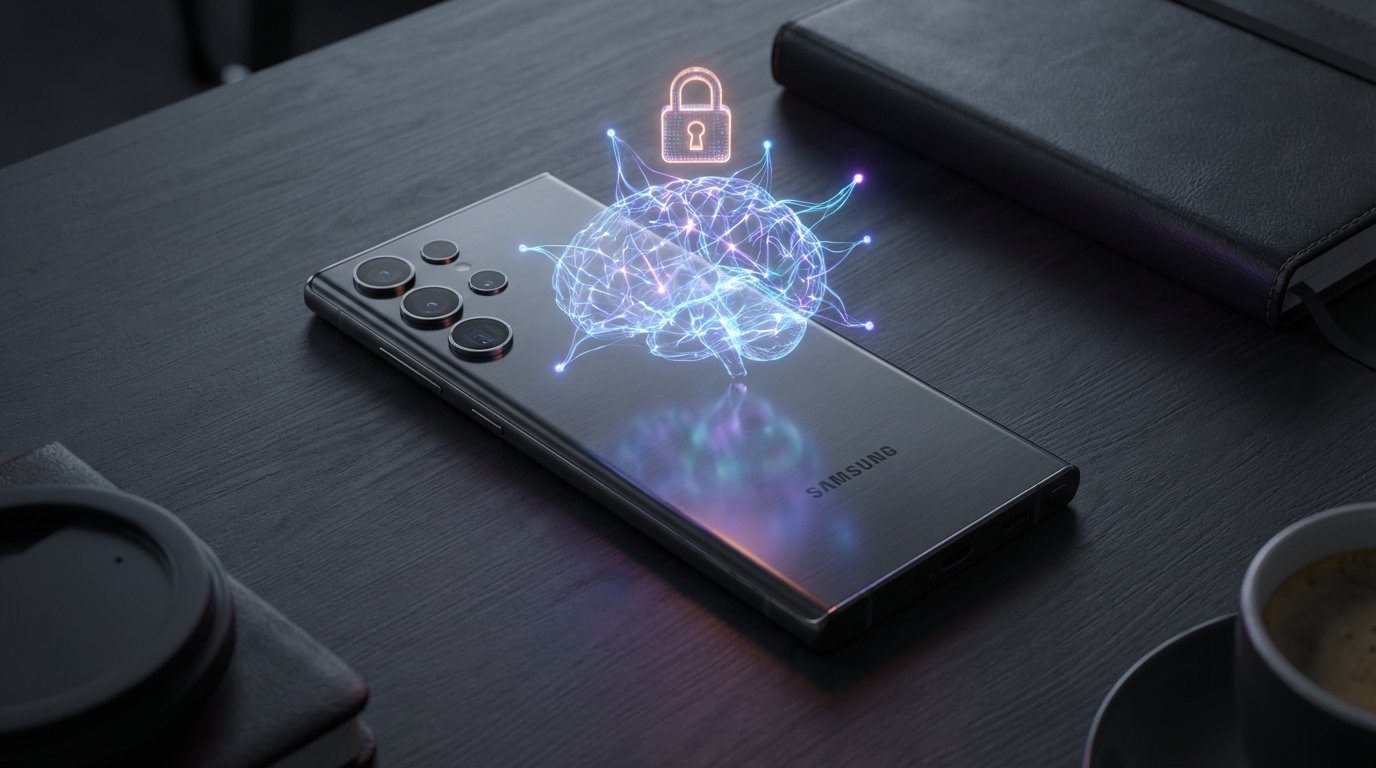
Samsung Galaxy S26 Ultra: The Era of Agentic AI Begins
The smartphone industry has spent the last half-decade bumping into a ceiling of its own making. We have reached a point of diminishing returns where screen resolution is indistinguishable to the human eye, and processors are faster than the software they run. However, as we look toward the launch of the Samsung Galaxy S26 Ultra, the narrative is shifting away from pure hardware specifications toward a fundamental change in how we interact with technology. The era of the passive rectangle is ending; the era of the proactive agent is beginning.
For years, the “Ultra” moniker has signified the pinnacle of Android excessmore cameras, more storage, and more stylus. But the leaks and analysis surrounding the 2026 lineup suggest a pivot. Samsung is no longer just selling a screen; they are selling a surrogate brain. This column investigates the implications of this shift, the hardware required to sustain it, and the privacy price tag that comes attached.
TL;DR
- Agentic AI: The S26 Ultra moves beyond chatbots to AI that autonomously executes multi-step tasks (e.g., booking travel, managing finances).
- Privacy Trade-offs: “Hybrid AI” models will force users to decide how much personal data they are willing to expose for convenience.
- Hardware Leap: Expected transition to 2nm chip architecture for massive efficiency gains and potential camera sensor expansions.
- Monetization Risks: Samsung may face backlash if they continue to integrate intrusive advertising into the core OS experience.
- Release Window: Expected early 2026, following traditional Unpacked schedules.
The Dawn of Agentic AI
The most significant divergence for the Samsung Galaxy S26 Ultra is the move toward “Agentic AI.” While the Galaxy S24 and S25 focused on Generative AIhelping you write an email or edit a photothe S26 aims to be an agent. According to analysis by Forbes, the goal is to create a device that understands context and intent without explicit step-by-step instruction. Instead of asking a chatbot to write a dinner reservation request, the S26 Ultra would theoretically observe your calendar, know your dietary restrictions, find a table, and book it without you opening an app.
This capability requires a massive leap in Neural Processing Unit (NPU) performance. We are looking at the likely integration of next-generation silicon, potentially built on a 2nm process node. This architecture is essential not just for speed, but for thermal management. Running a Large Action Model (LAM) locally on a device generates significant heat. If Samsung wants the S26 Ultra to be a true agent, it must solve the thermal throttling issues that have plagued high-performance mobile silicon in the past.
However, the utility of an agent is bound by the data it can access. For the S26 Ultra to be truly useful, it needs permission to read your emails, scan your messages, track your location, and understand your financial apps. This creates a “glass house” effect where the utility of the phone is directly proportional to the loss of privacy.
Hardware: The Battle for Physical Relevance
While software steals the headlines, the hardware community is growing restless. The physical form factor of the smartphone has remained largely stagnant. Critics and enthusiasts alike are calling for tangible improvements that go beyond a faster processor. As noted in a wishlist by PCMag, users are looking for upgrades that impact daily survivability and usability, such as faster charging speeds that actually rival Chinese competitors, and a departure from the sharp, boxy corners that have made recent Ultra models uncomfortable to hold without a case.
Camera technology remains the primary battleground for the “Ultra” series. Rumors suggest the S26 Ultra could debut a sensor exceeding 300 megapixels, or a radically redesigned 200-megapixel sensor with larger individual pixels for superior low-light performance. But hardware specs are becoming secondary to computational photography. The question is no longer “what did the lens see?” but “what did the AI reconstruct?”
This leads to a philosophical divide in the user base. Purists want optical excellencebetter glass, larger sensors, and natural bokeh. The mass market, however, seems content with AI-generated enhancements. The S26 Ultra sits right on this fault line. If Samsung relies too heavily on AI upscaling to compensate for hardware stagnation, they risk alienating the enthusiast crowd that buys the Ultra specifically for its optical prowess.
The Monetization of the User Interface
A worrying trend that may culminate with the S26 Ultra is the aggressive monetization of the operating system. Samsung has faced criticism for its marketing strategies regarding AI features. As highlighted by Creative Bloq, recent advertising campaigns have been perceived as “shameless,” pushing AI as a gimmick rather than a tool. There is a genuine fear among industry watchers that the advanced Agentic AI features of the S26 Ultra will eventually be paywalled or supported by intrusive ads.
Imagine asking your AI agent to book a flight, and it prioritizes an airline that has a partnership with Samsung Ads. Or imagine generating a wallpaper, only to have a sponsored brand logo subtly integrated. The S26 Ultra risks becoming a billboard in your pocket. High-end hardware commands a premium priceoften exceeding $1,300and users at this tier have zero tolerance for the “ad-subsidized” model often found in budget televisions.
Comparison Table
To understand where the S26 Ultra fits in the market hierarchy, we must compare it against its predecessor and its main competition.
| Option | Best for | Pros | Cons | Pricing/Cost |
|---|---|---|---|---|
| Samsung Galaxy S26 Ultra | Power users & AI enthusiasts | Agentic AI integration, 2nm Chip efficiency, Satellite connectivity | Potential privacy risks, likely price hike, large physical size | Est. $1,399+ |
| Samsung Galaxy S25 Ultra | Upgraders on a budget | Proven camera system, stable software, lower cost after S26 launch | Lacks advanced NPU for Agentic AI, older battery tech | ~$1,100 (Post-launch) |
| iPhone 17 Pro Max | Ecosystem loyalists | iOS optimization, privacy-first marketing, resale value | Slower adoption of generative AI features, closed ecosystem | Est. $1,299+ |
The Privacy Paradox in 2026
The most critical aspect of the Samsung Galaxy S26 Ultra will not be its zoom lens, but its security architecture. Samsung is pushing for “Hybrid AI,” where sensitive tasks are processed on-device, and complex tasks are offloaded to the cloud. However, as the complexity of requests increases, the line between “sensitive” and “complex” blurs.
If the S26 Ultra is to function as a true digital butler, it needs constant access to the user’s digital life. Samsung Knox, the company’s security platform, will need to evolve from a defensive shield into an active gatekeeper. Users will need granular controls to decide exactly what data leaves the phone. If Samsung fails to communicate this transparency, the S26 Ultra could be viewed as a privacy nightmare rather than a productivity tool.
Furthermore, the reliance on cloud processing for high-end AI tasks introduces a dependency on connectivity. While 6G is still in its infancy in 2026, the S26 Ultra will likely push the limits of 5G Advanced and Wi-Fi 7. The device becomes less “smart” the moment it enters a dead zone, turning a $1,400 agent back into a simple calculator.
Pros and Cons
Pros
- Agentic Capabilities: The shift from passive tools to active agents could redefine productivity.
- Silicon Efficiency: The expected move to 2nm architecture should provide significant battery life improvements.
- Display Dominance: Samsung continues to lead in OLED technology, likely introducing higher peak brightness for outdoor visibility.
- Long-term Support: Samsung’s commitment to 7 years of OS updates ensures the hardware won’t become obsolete quickly.
Cons
- Privacy Intrusion: To work effectively, the AI needs deep access to personal data, creating a potential surveillance vector.
- Price Creep: Advanced manufacturing and new sensors will likely push the retail price higher.
- Ergonomics: The “Ultra” form factor remains unwieldy for many users, with sharp corners and significant weight.
- Feature Bloat: There is a risk of Samsung packing too many half-baked AI features that clutter the UI.
FAQ
Q: When is the Samsung Galaxy S26 Ultra release date? A: Based on historical patterns, the device is expected to launch in January or February 2026. Samsung typically holds its “Unpacked” events early in the year to preempt competitors.
Q: Will the S26 Ultra require a subscription for AI features? A: This is a major point of contention. While basic on-device AI will likely be free, rumors suggest that advanced “Agentic” cloud-based processing may eventually require a subscription, similar to models seen in other software sectors.
Q: How does the camera differ from the S25 Ultra? A: The S26 Ultra is rumored to focus on sensor size rather than just megapixel count, improving low-light performance and natural depth of field. However, AI post-processing will play a larger role than ever before.
Q: Is the battery life significantly better? A: Yes, primarily due to the efficiency gains of the new chipset architecture (likely 2nm). While the physical battery size (mAh) may not increase drastically, the power consumption per task should decrease.
Conclusion
The Samsung Galaxy S26 Ultra is shaping up to be a polarizing device. It represents the point where the smartphone stops being a tool we use and starts being a partner that acts on our behalf. For the tech-savvy, this is the future we have been promised for decades. For the privacy-conscious, it is a development to be approached with extreme caution. As Samsung navigates the backlash against “shameless” AI advertising and the demand for meaningful hardware upgrades, the S26 Ultra will ultimately be judged not by how smart it is, but by how much we trust it.
References
- Forbes: Samsung Galaxy S26 Ultra Launch, Agentic AI, Privacy & Specs
- PCMag: 6 Upgrades That Would Make the S26 Unbeatable
- Creative Bloq: Samsung’s Shameless AI Ads Aren’t Going Down Well