
Understanding the Cycle of CRE Refinancing Defaults
Understanding the Cycle of CRE Refinancing Defaults
According to the Commercial Real Estate Debt Maturity: 2026-2028 Outlook, the Federal Reserve’s decision to hold interest rates at 5.25% to 5.50% fundamentally alters the commercial real estate narrative, invalidating the industry’s widespread “survive until 2025” strategy. Over the past few years, lenders systematically granted 12- to 24-month loan extensions. This effectively shifted a massive wave of refinancing needs into the 2026 to 2028 window (Source: Commercial Real Estate Debt Maturity: 2026-2028 Outlook).
This “extend and pretend” approach relied heavily on the assumption that borrowing costs would fall significantly before these new deadlines arrived. With sticky energy inflation forcing the central bank to pause its anticipated easing cycle, this temporary liquidity squeeze has metastasized into a structural solvency crisis. For US investors, the Fed’s higher-for-longer stance signals that the window for deferring distress has firmly closed, paving the way for a historic cycle of CRE Refinancing Defaults. The market is no longer waiting for a macroeconomic bailout; the burden of survival has shifted entirely onto asset-level performance, forcing imminent and painful asset repricing across the broader market.
The Transmission Chain: From Sticky Inflation to Forced Asset Sales
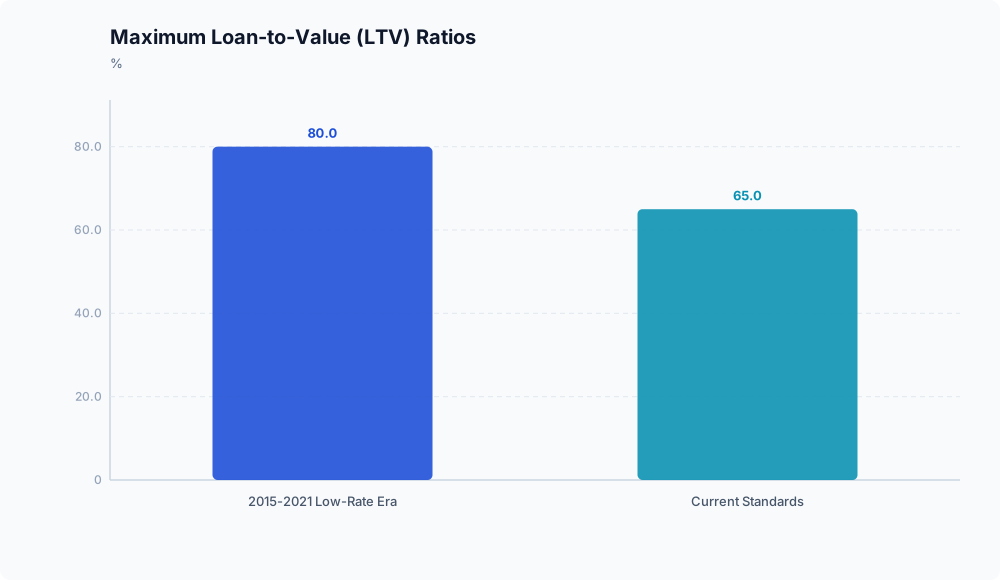
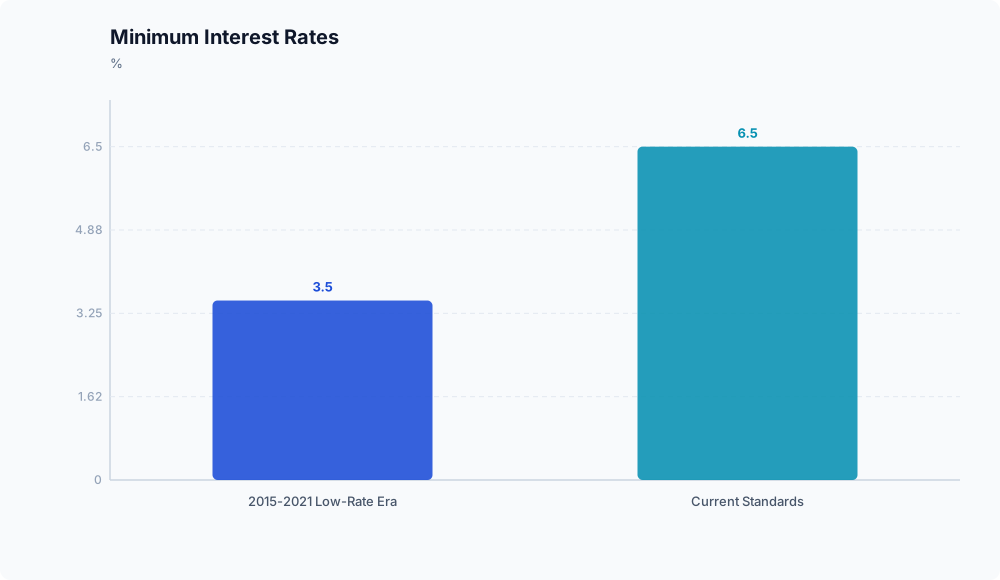
The transmission mechanism from macroeconomic policy to localized defaults is rooted in a severe valuation-yield gap. To understand the magnitude of this refinancing shock, market participants must look at the stark divergence in lending metrics between the previous cycle and today.
During the accommodative low-rate era from 2015 through 2021, commercial borrowers routinely secured financing on terms that fueled aggressive valuations and debt-driven acquisitions. Today, the cost of capital has effectively doubled while permissible leverage has contracted sharply.
| Metric | 2015-2021 Low-Rate Era | Current Underwriting Standards |
|---|---|---|
| Interest Rates | 3.5% to 4.5% | 6.5% to 8.0% |
| LTV Ratios | 70% to 80% | 55% to 65% |
Data Source: Commercial Real Estate Debt Maturity: 2026-2028 Outlook
This drastic reduction in allowable loan-to-value (LTV) ratios means that debt can no longer serve as the primary engine for real estate returns. The most immediate second-order effect of these stricter standards is the creation of a severe “equity gap” for existing property owners. Because new loans will only cover 55% to 65% of a property’s value, sponsors cannot simply roll over their existing debt. For a property originally purchased with 80% leverage, the sponsor must now source fresh capital to cover both the 15% to 25% reduction in LTV and any underlying depreciation in asset value.
Without cheaper capital to bridge this divide, properties cannot generate sufficient net operating income to cover the higher debt service at these lower leverage points. To visualize this structural shift, financial presentations should utilize an image-friendly flowchart mapping the transmission chain:
- Node 1: The concept begins with a box labeled “Sticky Energy Inflation,” representing the macroeconomic catalyst.
- Node 2: This flows directly into “Fed Halts Easing Cycle (Rates hold at 5.25%-5.50%),” neutralizing hopes for a soft landing.
- Node 3: The path branches into “Elevated Borrowing Costs (6.5%-8.0%) & Stricter LTVs (55%-65%).”
- Node 4: This node points to a central bottleneck titled “The Valuation-Yield Gap,” illustrating the mathematical mismatch against legacy 2015-2021 debt parameters and the resulting equity shortfall.
- Node 5: Finally, the chart cascades down into two inevitable outcomes: “Forced Asset Sales” and “Cap Rate Expansion.”
For sponsors unable to secure rescue capital, the consequences will be definitive. Those who cannot bridge the equity gap will be forced to forfeit their assets to lenders. As borrowers surrender properties they cannot recapitalize, the influx of distressed inventory will force cap rate expansion across the broader market, resetting benchmark valuations lower and negatively impacting the net asset values of institutional portfolios.
Highest-Signal Evidence: The 2026 Maturity Wall
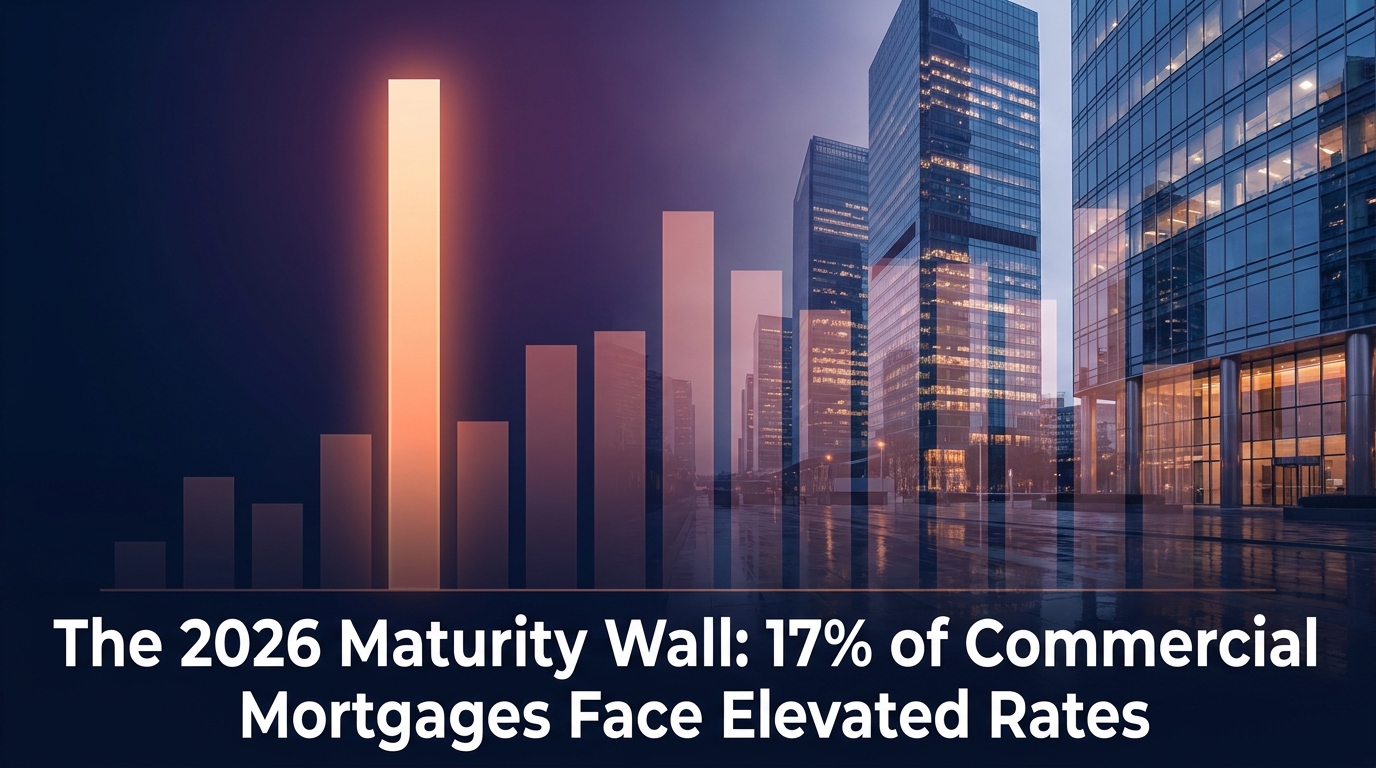
The sheer scale of the incoming maturity wall leaves little room for systemic absorption. According to the Mortgage Bankers Association (MBA), approximately $875 billion in commercial and multifamily mortgage debt is scheduled to mature in 2026. This encompasses roughly 17% of the $5 trillion in outstanding CRE debt (Source: The Debt Maturity Wall and 2026 Wave - Reed Smith LLP). While some industry estimates project this figure could reach up to $936 billion, the verified survey data confirms a massive pipeline of debt colliding with a hostile rate environment.
This $875 billion baseline represents a modest 9% decrease from the estimated $957 billion that matured in 2025 (Source: Loan Maturity Snapshot: How’s 2026 Shaping Up?). However, distinguishing verified survey data from broader market inferences is critical here. While some might view this slight year-over-year reduction as a sign of easing pressure, such an interpretation misses the structural reality of the market. The limiting factor for successful refinancing is no longer just the availability of capital, but asset valuation and debt service coverage. Furthermore, the pressure will not abate quickly, as another $652 billion is already scheduled for 2027 (Source: Loan Maturity Snapshot: How’s 2026 Shaping Up?).
Sector-level data from the MBA survey highlights exactly where refinancing friction will be most acute:
- Hotel and Motel: 30% of outstanding loans mature in 2026.
- Industrial: 23% of outstanding loans mature in 2026.
- Office: 17% of outstanding loans mature in 2026.
- Healthcare: 15% of outstanding loans mature in 2026.
- Multifamily: 13% of outstanding loans mature in 2026.
(Data Source: Loan Maturity Snapshot: How’s 2026 Shaping Up?)
Analytically, hospitality and office debt will serve as the primary catalysts for broader commercial real estate repricing. While the hotel sector faces the highest relative turnover, its revenues can adjust daily to inflation, potentially mitigating some debt service challenges. In contrast, the 17% of maturing office debt represents a much higher risk of default, as that sector suffers from structural declines in post-pandemic tenant demand alongside higher capital costs.
The distribution of these maturities also reveals concentrated risks among specific lender types. Depositories service the largest absolute dollar volume of the 2026 maturities, holding $396 billion, which accounts for 21% of their outstanding commercial mortgage balances (Source: Loan Maturity Snapshot: How’s 2026 Shaping Up?). Another $200 billion is tied up in CMBS, CLOs, or other asset-backed securities, while $163 billion is held by credit companies or in warehouse facilities (Source: Loan Maturity Snapshot: How’s 2026 Shaping Up?). Regional banks historically hold a massive share of these CRE loans, and their willingness to lend will fundamentally shape the pace of refinancing.
Scenario Analysis: Navigating the Liquidity Squeeze
The trajectory of commercial real estate asset values over the next 24 months hinges less on property-level fundamentals and more on the macroeconomic forces governing debt costs. The structural reliance on regional banks introduces a fragile variable into the refinancing equation, requiring investors to underwrite against multiple potential outcomes.
The Base Case: Prolonged Repricing and Steady Deleveraging In the most likely scenario, macroeconomic conditions dictate that interest rates hold steady through the 2026 maturity wave. Under this trajectory, the market will experience a steady stream of defaults and moderate capitalization rate expansion rather than a sudden systemic collapse. Borrowers will struggle to meet current debt service coverage requirements, forcing lenders to demand significant equity infusions. Many sponsors will be unable to provide this capital, leading to structured handovers and distressed sales. For market participants, this implies a prolonged period of repricing. Opportunistic buyers equipped with dry powder will find generational entry points, acquiring assets at reset valuations without facing an overnight market crash.
The Downside Scenario: Systemic Contagion and Credit Freeze A severe downside scenario emerges if inflation unexpectedly accelerates, forcing the Federal Reserve to abandon its pause and implement further rate hikes. This environment would likely trigger systemic contagion, primarily concentrated among the regional bank lenders heavily exposed to commercial real estate debt. It remains highly uncertain whether regional banks will be willing or adequately capitalized to lend sufficiently to cover the massive share of CRE loans they currently hold. If these institutions are forced to retrench simultaneously to preserve capital amid rising defaults, the resulting credit freeze would transform manageable maturity hurdles into immediate liquidity crises. For the broader US financial system, this implies a dangerous negative feedback loop: declining property values impair bank balance sheets, which further restricts the credit necessary to stabilize the asset class.
The Upside Scenario: Rapid Inflation Cooling and Rate Cuts The upside scenario relies on a rapid cooling of energy and broader inflation metrics in late 2025, allowing the Federal Reserve to aggressively resume interest rate cuts. A swift reduction in the cost of capital would serve as a crucial lifeline for marginal properties approaching their 2026 maturity dates. Lower benchmark rates would directly reduce debt service burdens, enabling borderline assets to secure refinancing without requiring dilutive equity injections from existing sponsors. Furthermore, a declining rate environment would halt cap rate expansion, stabilizing net asset values and restoring transaction liquidity to the broader commercial market. Investors positioned in value-add or core-plus strategies would benefit immensely, as the structural pressure on their capital stacks would evaporate.
What to Watch Next: Concrete Indicators for Market Participants
To navigate this complex refinancing landscape, US investors and market participants must shift their focus toward concrete leading indicators that signal impending distress. The viability of refinancing these assets is inextricably linked to broader macroeconomic conditions.
Market participants should monitor the following triggers:
- Monthly CMBS Delinquency Rates: Pay strict attention to the $200 billion tranche of CMBS, CLO, and ABS debt maturing in 2026. Upticks in 30-day and 60-day delinquencies within this specific cohort will serve as an early warning system for broader market capitulation.
- Regional Bank Loan Loss Provisions: Scrutinize regional bank announcements during upcoming quarterly earnings calls. Aggressive provisioning will indicate that depositories are actively preparing for an influx of non-performing commercial loans and are likely tightening their underwriting standards further, accelerating the credit vacuum.
- Energy Sector Inflation Prints: Monitor energy components within the CPI and PCE reports. Because sticky energy inflation forced the Fed’s current pause, these volatile components heavily influence the central bank’s next move. If energy-driven inflation prevents the Fed from cutting rates, the resulting cost of capital will almost certainly trigger the structural default mechanisms currently lying dormant.
Conclusion

The commercial real estate market has reached the functional limit of its deferred maturity strategy. The collision between a historic $875 billion wall of maturing debt and a fundamentally transformed, higher-cost underwriting environment guarantees that the clearing price for commercial assets will be aggressively tested over the next 24 months. Because properties can no longer support the 70% to 80% leverage ratios of the past, a massive equity gap has emerged that cash-poor sponsors simply cannot bridge. This mathematical reality shifts negotiation leverage entirely from legacy borrowers to new capital providers. Ultimately, 2026 represents a structural clearing event that will separate adequately capitalized assets from those reliant on unsustainable leverage, triggering a necessary but painful cycle of CRE Refinancing Defaults. For well-capitalized investors, this systemic dislocation presents a rare opportunity to recapitalize high-quality assets at historically attractive bases, provided they can navigate the tightening grip of regional bank credit constraints.
Disclaimer: This analysis is for informational purposes only and does not constitute investment, financial, real estate, or legal advice. Always consult a licensed financial advisor before making investment decisions.
FAQ
Why are 2026 commercial real estate maturities considered riskier despite being slightly lower in volume than 2025? While the estimated $875 billion maturing in 2026 is a 9% decrease from 2025, it remains historically burdensome. The risk stems from the macroeconomic environment: borrowers are transitioning from the historically low rates of the late 2010s to today’s elevated borrowing costs. The limiting factor for refinancing is now asset valuation and debt service coverage, meaning the slightly lower volume will not prevent severe market distress.
How do current CRE underwriting standards compare to the 2015-2021 low-rate era? During the 2015-2021 low-rate era, borrowers typically secured interest rates of 3.5% to 4.5% with generous loan-to-value (LTV) ratios of 70% to 80%. Current underwriting standards are much stricter, demanding higher interest rates of 6.5% to 8.0% and constrained LTV ratios of 55% to 65%, creating massive equity shortfalls for borrowers attempting to refinance.
What is cap rate expansion, and how does the Fed’s rate pause accelerate it? Cap rate expansion occurs when the required rate of return on a real estate investment increases, which mathematically drives down the property’s underlying valuation. The Fed’s decision to hold rates elevated means borrowing costs remain high, forcing distressed borrowers to sell assets. This influx of distressed inventory establishes new, lower comparable valuations across the market, accelerating cap rate expansion.
Which types of lenders are most exposed to the upcoming wave of commercial mortgage maturities? Depositories (banks) are the most exposed, servicing $396 billion, or 21%, of the outstanding commercial mortgage balances maturing in 2026. Regional banks, in particular, hold a massive share of these CRE loans, making their willingness and capacity to continue lending a critical factor in the market’s ability to absorb the refinancing wave.