
Navigating the Tariff Inventory Whiplash in Q2 Earnings
Navigating the Q2 Earnings Environment: The Mechanics of the Tariff Inventory Whiplash
While macroeconomic headlines overwhelmingly focus on the inflationary consequences of impending April import tariffs, equity investors are overlooking a more immediate structural consideration. The core risk lies in an estimated front-loading of imports during the first quarter as businesses rush to beat the tariff deadline. This artificial pull-forward of demand is currently distorting supply chain metrics and inflating short-term revenues for freight and warehousing operators. We are witnessing the early stages of a classic Tariff Inventory Whiplash, a dynamic that sets up a complex Q2 earnings environment for the logistics, shipping, and consumer goods sectors.
Investors bidding up these equities based on robust Q1 volume are likely mispricing the potential demand air pocket that may follow in the spring. Market participants should recognize that the robust Q1 volume is a pull-forward anomaly rather than a structural economic expansion, requiring a defensive posture toward supply chain and retail equities. Consequently, Q1 earnings beats in logistics and retail are effectively borrowing from Q2 and Q3 revenues. Navigating this environment requires looking past the immediate tariff inflation narrative and preparing for the expected inventory overhang that could pressure consumer sector equities.
The Transmission Chain: From Front-Loading to Order Slashing
The anatomy of this tariff-driven disruption follows a predictable transmission chain, moving from artificial front-loading to fundamental order reductions. Market models suggest this cycle begins with the April tariff announcement acting as the primary catalyst.
This announcement triggers an influx of front-loaded imports as businesses race to secure goods before the new duties take effect, creating an artificial Q1 inventory boom. However, this boom often gives way to a Q2 fundamental contraction characterized by order cancellations and margin compression. While this narrative shapes market expectations, investors should weigh these assumptions against actual macroeconomic reporting. Direct evidence of widespread Q2 cancellations remains thin in current federal data, requiring a deeper look at sector-specific vulnerabilities.
To understand how this dynamic translates into sector risks, we must map the anticipated timeline of the whiplash effect. The artificial boom of the first quarter primarily impacts logistics providers and warehousing operators. These companies experience an initial surge of inbound freight, which eventually leads to utilization bottlenecks.
Conversely, the Q2 contraction shifts the financial burden directly onto retailers. These consumer-facing companies face margin compression if consumer demand softens, forcing them to discount their accumulated stockpiles. The table below outlines this expected transmission chain, separating the initial front-loading phase from the subsequent fundamental correction.
| Phase | Timeline | Catalyst / Mechanism | Primary Market Effect | Most Exposed Sectors |
|---|---|---|---|---|
| Artificial Boom | Q1 | April Tariff Announcement & Front-loaded Imports | Surge in inbound freight and elevated absolute stockpiles | Logistics (Short-term volume gain, long-term volatility) |
| Fundamental Contraction | Q2 | Inventory Glut Realization | Order cancellations and margin compression | Retail (Markdown risk on elevated inventory) |
Moving deeper into the first quarter, early indicators suggest retail inventory ratios remain stable, though risks loom on the horizon. The volume of goods sitting in retail warehouses leaves the sector sensitive to macroeconomic shocks or demand pullbacks. For US investors, if the anticipated Q2 order cancellations materialize, the market may penalize retailers with poor inventory management while rewarding agile operators who successfully navigated the Q1 tariff environment.
High-Signal Evidence: Unpacking the Retail Stockpile
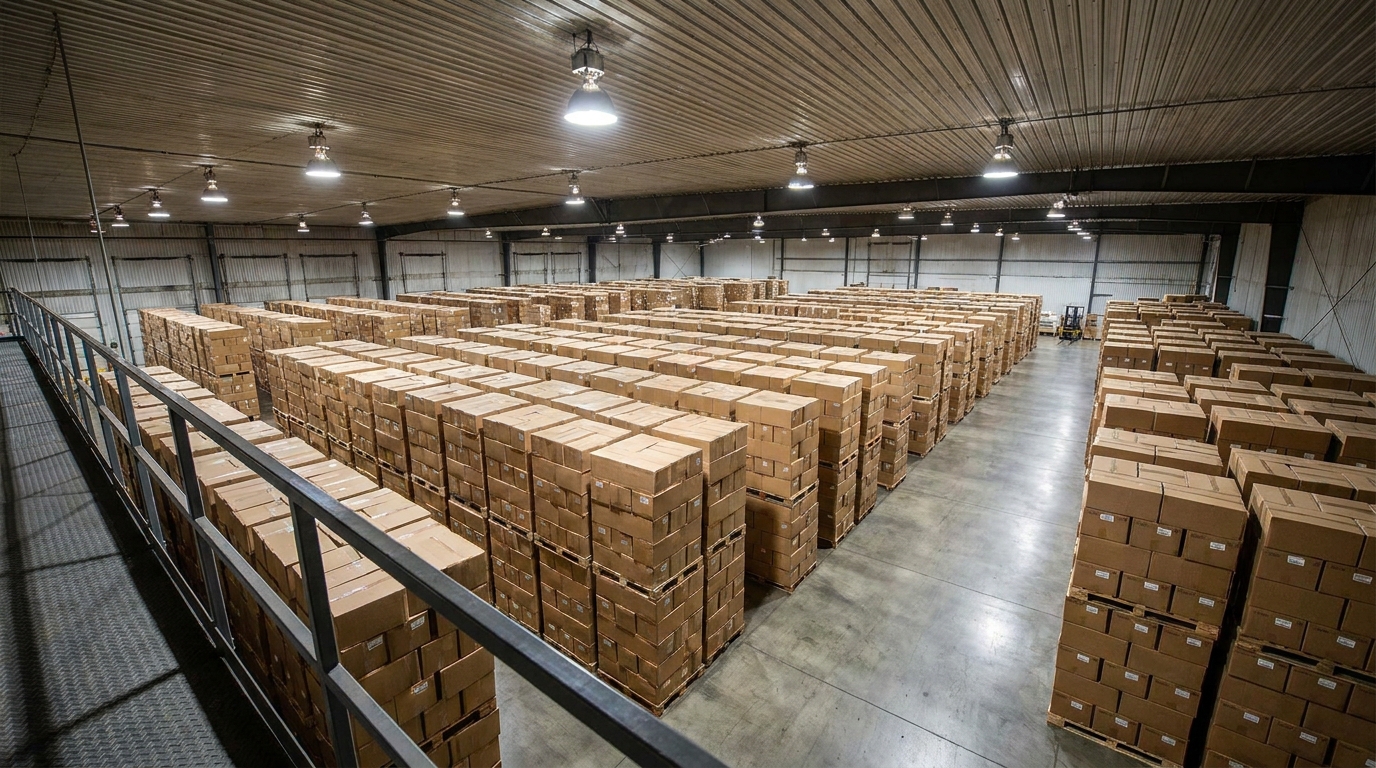
A close examination of recent supply chain data reveals the underlying mechanics of this distortion. The latest data from the US Census Bureau reveals a significant absolute buildup in retail stock as supply chains brace for the upcoming April tariffs.
In recent January data reported by the US Census Bureau, seasonally adjusted retailers’ inventories swelled to an estimated $815.839 billion. This figure significantly eclipses the US Census Bureau’s estimated monthly sales of $634.233 billion. This absolute inventory figure yields a retailers’ inventories-to-sales ratio of 1.29 for the month.
For US investors, this raw tonnage of goods sitting in warehouses represents a front-running strategy by retailers attempting to lock in pre-tariff costs. However, it also introduces substantial carrying costs and ties up working capital. This dynamic shifts financial risk directly onto retail balance sheets before the crucial spring season.
Despite the volume of retail stock, the broader macroeconomic efficiency metric tells a more nuanced story. According to the US Census Bureau, the seasonally adjusted total business inventories-to-sales ratio decreased notably from 1.40 in the prior year to 1.35 in recent January data.
On the surface, a declining ratio typically signals strong consumer demand outpacing stock levels. However, in the context of tariff-driven front-loading, this contraction implies that the “sales” denominatorspecifically business-to-business wholesale and distribution transactionsis running at an artificially accelerated velocity. Supply chains are moving goods quickly to warehouse them domestically before April, temporarily suppressing the aggregate ratio.
The actual bottleneck becomes apparent when isolating the retail sector’s absolute stockpile. While goods are clearing the wholesale and logistics channels rapidly, they pile up heavily on retail balance sheets. Retailers are taking on carrying costs to secure inventory ahead of the tariff implementation, effectively borrowing from their future procurement budgets.
By recent February data, the retailers’ inventory-to-sales ratio only marginally compressed to 1.28, according to Macrotrends. Market participants should interpret this divergence carefully. While retail-specific stockpiling is aggressive ahead of the tariff deadline, the wider supply chain remains relatively lean. Consequently, second-order effects may manifest as localized bottlenecks rather than a systemic, economy-wide inventory glut.
To fully grasp these supply chain shifts, analysts must look beyond aggregate national figures and examine regional baseline data. Initiatives like the NCR-Stat data collection effort, developed by the North Central Regional Center for Rural Development and hosted by Purdue Agriculture, provide essential granularity.
By establishing representative baseline data across the North Central Region, tools like NCR-Stat allow economists to track how inventory pressures and agricultural supply chains interact at the local level. For investors, this localized data is crucial because national averages often mask regional warehousing constraints or transportation bottlenecks. Understanding these geographic disparities helps identify which specific transportation and logistics real estate investment trusts (REITs) might benefit most from localized inventory overflows.
Scenario Analysis: The Q2 Earnings Crucible
The current macroeconomic backdrop reveals a complex inventory environment as businesses digest goods front-loaded to avoid anticipated tariffs. The elevated stockpile sets the stage for a volatile Q2 earnings environment where corporate profitability relies on inventory rationalization.
The second-order effects of this inventory glut will likely materialize as a destocking cycle beginning in the second quarter. Once the April tariffs take effect and the front-loading wave subsides, retailers holding over $815 billion in stock may reduce new orders.
The Base Case: Destocking and Logistics Contraction

In the base case scenario, retailers will reduce Q2 inbound orders to burn off the tariff-driven inventory glut. Because absolute retail inventories remain elevated at over $815 billion, according to the US Census Bureau, supply chain managers will likely pause new shipments until storage levels normalize.
This sudden pause in order flow implies a second-order effect for the transportation sector, triggering a revenue contraction for freight and logistics providers. Investors allocated to trucking, rail, and ocean freight equities should prepare for downward earnings revisions as volume growth stalls. The analytical implication is that logistics margins will compress well before retail margins do, making transport stocks the immediate leading indicator of the destocking cycle.
The Downside Scenario: Consumer Pullback and Margin Collapse
The downside scenario materializes if consumer demand falters simultaneously during this critical destocking phase. There is currently uncertainty regarding Q2 consumer resilience, and macroeconomic pressures could suppress discretionary spending just as warehouses reach capacity.
If shoppers pull back while retailers are still holding elevated inventories, companies will be forced into markdowns to clear aging merchandise. This dynamic would trigger margin contraction across consumer goods equities, effectively reducing the profitability of the goods that were front-loaded to save on tariff costs. In this environment, defensive positioning becomes critical. Retailers burdened with high inventory-to-sales ratios will be forced to increase promotional discounting to clear warehouses, directly eroding profitability.
The Upside Scenario: Consumer Resilience and Margin Expansion
Conversely, the upside scenario relies on consumer spending remaining robust enough to absorb the front-loaded stock without requiring deep discounting. Early in the year, recent January retail sales reached a healthy $634.2 billion, according to the US Census Bureau.
If this steady sales pace persists into Q2, retailers could successfully sell through their stockpiles at full or near-full price. This outcome would validate management teams’ strategic decisions to front-load inventory and ultimately expand gross margins by successfully bypassing the new tariff costs. Retailers would effectively transform a supply chain bottleneck into a competitive advantage over peers who failed to secure inventory pre-tariff.
Ultimately, navigating this environment requires investors to closely monitor the trajectory of the retailers’ inventory-to-sales ratio. Because historical data lags real-time consumer behavior, the true level of Q2 consumer resilience remains the critical unknown variable in all three scenarios. Analysts must explicitly acknowledge this uncertainty when forecasting near-term retail profitability.
What to Watch Next: High-Frequency Indicators
As the import front-loading cycle unwinds, market participants must closely evaluate the pace at which businesses are absorbing excess stock. While the year-over-year decrease in the total business ratio suggests that aggregate sales have outpaced inventory accumulation, the specific macroeconomic drivers behind this contraction remain uncertain.
Navigating the remainder of this cycle requires a disciplined focus on a specific set of high-frequency and structural indicators. Investors should maintain a strict checklist to anticipate the magnitude of the Q2 whiplash.
First, monitor upcoming monthly retail sales data revisions from the US Census Bureau. Downward adjustments to the estimated $634.233 billion in sales would immediately pressure the current 1.29 retail inventory-to-sales ratio.
Second, track freight rate indices like the Baltic Dry Index for real-time signals of upstream shipping demand and raw material movement. If retailers are successfully burning off front-loaded inventory and preparing to reorder, freight rates should stabilize or climb. Conversely, a sustained drop in these freight indices would signal that the inventory overhang is paralyzing new orders and stalling global shipping networks.
Third, scrutinize upcoming logistics company earnings guidance. Look for explicit mentions of order deferrals, capacity reductions, or shifting peak season expectations to gauge whether the destocking phase is nearing completion or if cancellations are accelerating.
Finally, follow regional supply chain survey updates, such as Purdue Agriculture’s NCR-Stat. Monitoring these regional data collection efforts allows analysts to detect localized inventory bottlenecks or demand deterioration before they appear in broader federal reports. Localized slowdowns often serve as the first warning sign of a broader macroeconomic stall.
Conclusion: Synthesizing the Threat
The data confirms that retailers have successfully pulled forward inventory to front-run April tariffs, but it remains uncertain whether consumer demand will remain robust enough to clear these stockpiles at full margin. For equity investors, the analytical takeaway is clear: top-line revenue beats in Q1 for logistics and retail sectors are heavily influenced by pulled-forward demand rather than organic growth.
The underlying reality is a retail sector burdened with over $815 billion in absolute inventory, carrying holding costs, and dependent on unproven Q2 consumer resilience. If consumer spending falters, the resulting destocking cycle will transmit a shock upstream, reducing logistics volumes and forcing retail margin contraction.
Market participants should consider a barbell approach, hedging downside risk in freight and highly levered retail names while maintaining exposure to quality consumer brands with strong pricing power. The coming earnings season will likely be defined not by top-line revenue growth, but by how management teams navigate the cash flow implications of their balance sheets. Ultimately, surviving the Tariff Inventory Whiplash requires looking past the immediate tariff inflation narrative and preparing for the expected inventory overhang.
Disclaimer: This analysis is for informational purposes only and does not constitute investment, financial, real estate, or legal advice. Always consult a licensed financial advisor before making investment decisions.
FAQ
What is the ‘Tariff Inventory Whiplash’ and how does it affect stock prices? The Tariff Inventory Whiplash is a supply chain cycle where businesses artificially front-load imports to beat upcoming April tariffs, creating a temporary Q1 boom. This is followed by a potential Q2 contraction where retailers, burdened with excess stock, halt new orders and discount goods. This cycle artificially inflates Q1 stock prices for logistics and retail companies, setting up a challenging environment for investors when Q2 earnings reveal margin compression and stalled volume growth.
Which market sectors are most vulnerable to the Q1 inventory glut? The logistics and retail sectors are the most vulnerable. Logistics providers, freight operators, and warehousing companies face a sudden demand void and a revenue contraction in Q2 once the front-loading ceases. Retailers are vulnerable because they are holding absolute stockpiles (over $815 billion), exposing them to margin contraction if consumer demand softens and forces them into promotional discounting.
How does the recent January inventory-to-sales ratio compare to historical averages? In recent January data, the seasonally adjusted total business inventories-to-sales ratio decreased to 1.35, down from 1.40 in the prior year, suggesting that overall supply chains moved goods rapidly. However, the retail-specific inventories-to-sales ratio remained elevated at 1.29 in January (and 1.28 in February), indicating that while goods cleared wholesale channels quickly, they piled up heavily on retail balance sheets ahead of the tariff deadline.