
How U.S. Tariffs Are Repricing Equity Markets Ahead of 2026
The Supply Chain Premium: How Markets Are Repricing Equities Ahead of U.S. Tariffs and the 2026 Protectionist Pivot
The market’s anticipation of broad U.S. tariffs scheduled for April 2026 is forcing an immediate repricing of domestic equities. Investors are not waiting for policy implementation. Capital is rotating out of import-heavy retail sectors and into domestic producers poised to gain a pricing advantage. This rotation reflects a fundamental shift in how markets evaluate supply chain vulnerability. While broad U.S. equity indices are forecast to generate total returns between 8% and 10% in 2026, the composition of those returns is fracturing. Aggregate index performance now masks deep, policy-driven sector bifurcations.
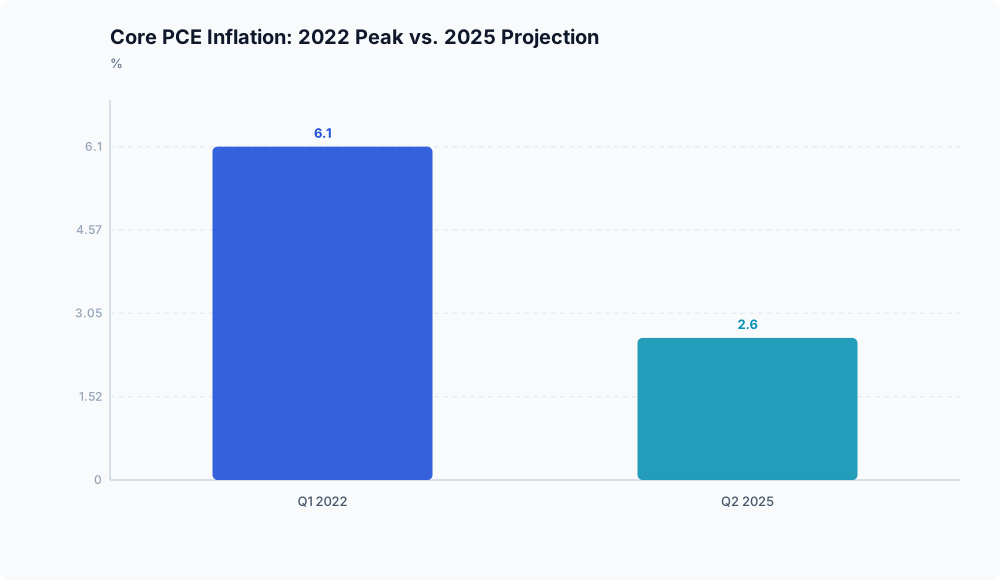
The macroeconomic environment presents a delicate balancing act. Trade policy threatens to disrupt recent disinflationary progress. Core Personal Consumption Expenditures (PCE) inflation is projected to ease to 2.6% by the second quarter of 2025. This is a significant normalization from the 6.1% peak in the first quarter of 2022, according to the Indiana Business Research Center. However, aggressive U.S. import taxes risk reigniting structural, supply-side price pressures.
These trade barriers increase producer costs, forcing a difficult choice: suppress consumer demand through higher retail prices or absorb the costs internally. This dynamic shifts the primary risk from broad monetary inflation to targeted, sector-specific cost inflation. The baseline scenario for 2026 presents a tug-of-war between monetary easing and trade policy disruptions. Investors must focus on the underlying mechanics of corporate profitability to navigate the expected volatility.
The Transmission Chain: From Policy Shock to Market Volatility
To understand how a regulatory deadline transforms into equity volatility, investors must map the policy’s transmission chain. The April 2026 deadline is expected to trigger a defensive scramble across the U.S. retail sector, altering standard procurement cycles. The primary defense mechanism will likely be massive Q1 import front-loading. Supply chain managers will race to pull forward inventory before the deadline.
Phase 1: The Defensive Inventory Bullwhip
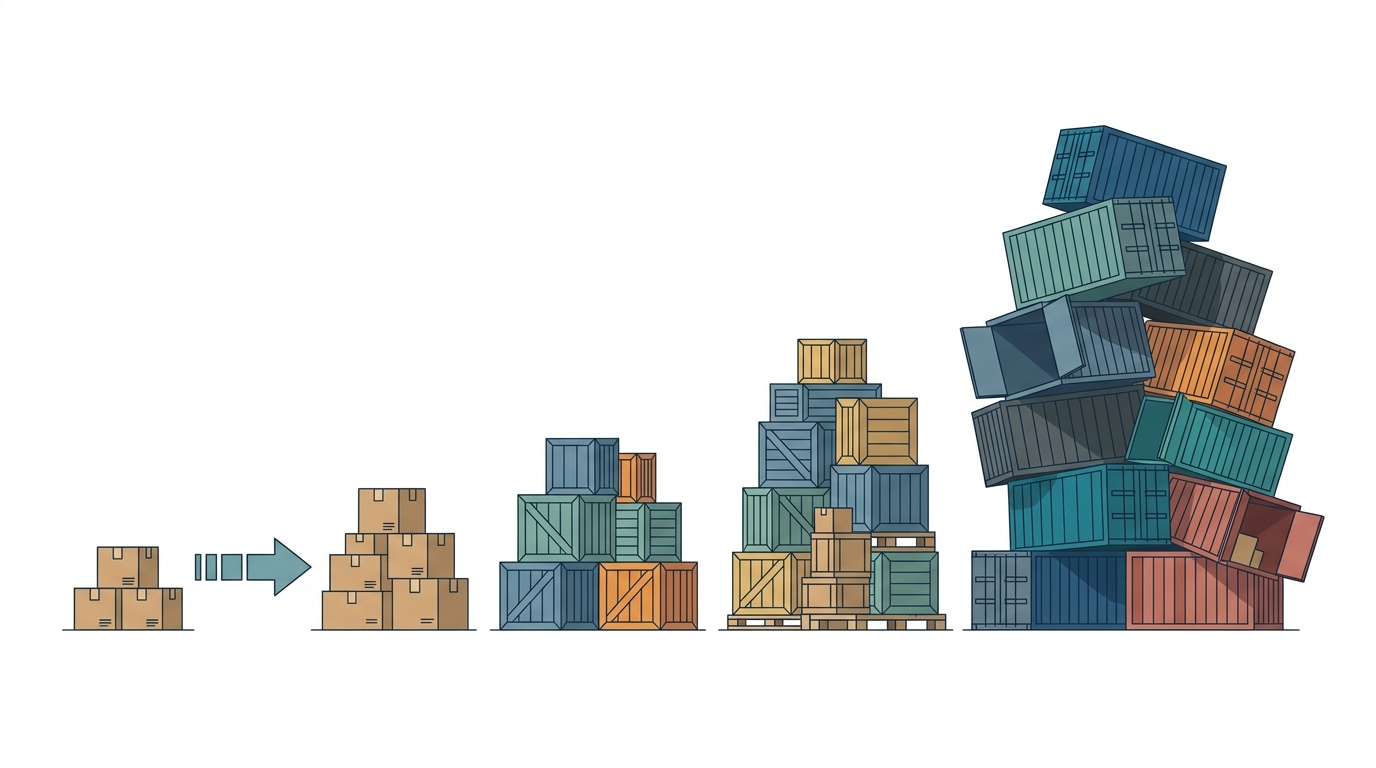
Retailers are highly motivated to avoid earnings damage. The threat of margin destruction serves as a powerful catalyst for preemptive action. The anticipated effect is a classic inventory bullwhip, where a regulatory shock artificially amplifies upstream order volumes. Supply chain managers are projected to order based on beating a tax deadline rather than consumer demand. This creates a surge in manufacturing and shipping entirely disconnected from end-user consumption.
Phase 2: Working Capital Strain and Logistical Bottlenecks
This race to secure goods introduces severe strain on corporate working capital and warehousing capacity. As companies stockpile imported goods in Q1, they must absorb immediate cash outflows while hunting for scarce storage space. The rising overhead costs of carrying bloated inventory will likely offset a meaningful portion of the anticipated tax savings. Companies are effectively trading a future border tax for immediate carrying costs.
Phase 3: The Earnings Distortion Trap
The most insidious consequence of this Q1 inventory buildup is the distortion of Q2 earnings reports and forward guidance. As retailers process front-loaded stock, standard inventory-to-sales ratios will decouple from actual consumer demand. Investors risk confusing this evasion-driven supply surge with a genuine acceleration in consumption. This trap is dangerous given that the International Monetary Fund (IMF) projects upgraded global growth for 2025 and 2026, as noted by Digital Commerce 360. Market participants might mistakenly view bloated Q2 inventory through the lens of macroeconomic optimism.
Phase 4: The Promotional Unwind
This bullwhip effect threatens to trap retailers between rising carrying costs and constrained pricing power. If major retailers absorb these costs, the unwinding of Q1 inventory will likely trigger aggressive promotional environments later in the year to clear excess stock. U.S. investors should prepare for downward margin revisions in Q2 and Q3 as the hidden logistical costs of trade evasion materialize.
Highest-Signal Evidence: Margin Compression and Supply Chain Agility
The earliest signals of trade-induced stress are expected in retail sector gross margins, serving as a leading indicator for broader corporate earnings. Fiscal 2026 forecasts suggest many major retail brands may choose to absorb these costs, resulting in gross profit margin compression. Importers may sacrifice profitability to maintain market share rather than passing the full cost to consumers.
The Casualties of Rigid Sourcing
Digital Commerce 360 projects that Under Armour could suffer a fiscal Q3 gross margin decline of 310 basis points to 44.4%, primarily due to higher import levies. The apparel giant is also projected to face a full-year margin decline of approximately 190 basis points. These forecasted reports act as a canary in the coal mine. Companies lacking domestic sourcing will be forced to absorb higher costs directly. This margin compression will likely reduce future capital expenditures and operational reinvestment.
The Premium on Supply Chain Agility
Despite aggregate margin compression, forecasts reveal disparities in how retailers might mitigate these taxes. Cosmetics brand e.l.f. Beauty is projected to see a year-over-year gross margin decrease of roughly 30 basis points to 71%, driven by these burdens. However, e.l.f. Beauty could aggressively reduce its effective rate from 170% down to 45% by February 2026, according to Digital Commerce 360.
This implies aggressive supply chain rerouting or strategic product reclassification. Moving forward, a retailer’s equity premium will be heavily dictated by its supply chain agility and capacity to dynamically shift manufacturing footprints.
The Illusion of Flat Pricing
Projections suggest companies will struggle to pass costs onto consumers. Best Buy is forecast to maintain essentially flat enterprise-level average selling prices year-over-year despite an anticipated effective rate in the mid-teens, per Digital Commerce 360. If retailers absorb these hits, consumers will avoid the sticker shock required to trigger a broad pullback in household spending. The anticipated suppression of consumer demand remains a deferred risk for now.
| Market Cohort | Margin Impact / Pricing Dynamic | Key Evidence / Metric |
|---|---|---|
| Apparel Importers | Severe margin compression | Under Armour: Projected 310 bps Q3 gross margin decline |
| Cosmetics Importers | Moderate margin compression | e.l.f. Beauty: Projected 30 bps Q3 gross margin decline |
| Electronics Retailers | Absorbed costs, flat pricing | Best Buy: Expected mid-teens effective rate, flat YoY selling prices |
| Domestic Producers | Relative pricing advantage | Insulated from border taxes; gain competitive pricing umbrella |
The Domestic Pricing Umbrella
This margin degradation among importers creates a distinct advantage for domestic producers. Insulated from specific border taxes, domestic manufacturers gain a pricing umbrella. This allows them to undercut foreign-sourced competitors or selectively raise prices to expand margins. Supply chain localization becomes a tangible financial asset. This dynamic effectively transfers enterprise value from heavily offshored retail brands to domestically anchored producers.
2026 Market Scenarios: Navigating the Bifurcation
Navigating these divergent scenarios requires U.S. investors to shift from broad index accumulation to rigorous, bottom-up fundamental analysis. Bifurcation in corporate performance will be defined by supply-chain elasticity and pricing power.
The Base Case: Volatile Growth and Sector Rotation
The baseline scenario for 2026 presents a tug-of-war between monetary easing and trade disruptions. Broad U.S. equity indices are projected to generate total returns between 8% and 10% for the year, according to the Indiana Business Research Center. However, investors should prepare for material volatility, with interim drawdowns of 10% to 20% driven by unpredictable trade rhetoric.
The Federal Reserve is projected to lower the federal funds rate to a targeted range of 3.0% to 3.5% by the end of 2026, per the Indiana Business Research Center. This easing, supported by core PCE inflation cooling to 2.6% by mid-2025, should provide a floor for equity valuations. Timing entries during trade-induced drawdowns will be critical for maximizing returns.
The Upside Scenario: The Agility Premium and Global Resilience
Agile domestic producers and adaptable importers could capture outsized market share without triggering severe consumer inflation. Counterbalancing domestic risks is a resilient international macroeconomic picture. The International Monetary Fund (IMF) indicates global growth for 2025 and 2026 is expected to be stronger than its previous October 2024 projections, according to Digital Commerce 360.
Stronger global demand could allow U.S. corporations to offset domestic margin compression through higher international sales. Robust global growth facilitates smoother supply chain pivots. If U.S. corporations replicate the supply chain agility of brands like e.l.f. Beauty, equity markets could trend toward the upper bound of the 8% to 10% return forecast.
The Downside Scenario: The Stagflationary Trap
The downside scenario envisions policies coalescing into stagflationary headwinds. Broadly applied border taxes increase producer costs, suppress consumer demand, and inject fresh inflationary pressures, as noted by the Indiana Business Research Center.
If retailers begin passing elevated costs to the consumer, the resulting inflation spike could force the Federal Reserve to pause its rate-cutting cycle. A rebound in Core PCE would introduce a higher-for-longer rate environment colliding with weakening consumer demand. This macroeconomic deterioration would likely trigger deeper 20% index drawdowns, punishing consumer durables and discretionary sectors.
What to Watch Next: Concrete Indicators for Investors
To navigate margin compression, inflation risks, and shifting global growth, investors must monitor specific data releases. Market participants should utilize a strict checklist to gauge the severity of a potential bullwhip effect.
- Q1 Inventory-to-Sales Ratios: Track retail metrics closely. Sudden spikes indicate consumer demand is failing to absorb pre-deadline inventory. Expect margin-destroying promotional discounting if levels remain bloated into Q2.
- Q2 Forward Guidance Revisions: Scrutinize earnings calls for management citing trade-driven margin compression. The tipping point occurs when companies explicitly state they can no longer absorb costs.
- Shifts in Core PCE Inflation Trends: Watch monthly PCE data. An upward reversal from the 2.6% baseline signals retailers are passing costs to consumers, threatening the Fed’s projected rate cuts.
- IMF Global Growth Projection Updates: Upcoming IMF updates will dictate if international markets remain a viable hedge. Upward revisions support multinational equities; downgrades remove a critical shock absorber.
Conclusion

The impending April 2026 implementation of U.S. tariffs represents a watershed moment for domestic equity markets. It forces a transition away from the frictionless globalization that defined previous decades of retail expansion. Forecasts point to a fracturing market. While broad indices may grind 8% to 10% higher, companies will be locked in a brutal battle for margin preservation. Projections for brands like Under Armour, e.l.f. Beauty, and Best Buy suggest the primary casualty of the 2026 protectionist pivot will be corporate profitability. Retailers will absorb massive costs to prevent consumer demand destruction.
Capital allocation strategies must aggressively discount companies with rigid import dependencies while paying a premium for domestic production capacity. The ability to dynamically reroute sourcing and defend margins is the fundamental driver of equity valuation in this new era. As the Federal Reserve attempts to balance rate cuts against the threat of supply-side inflation, market participants must remain vigilant. Relying on aggregate index performance leaves portfolios exposed to the hidden logistical costs of trade evasion. Success in 2026 belongs to those who can identify companies with the pricing power and agility to survive the margin squeeze.
Disclaimer: This analysis is for informational purposes only and does not constitute investment, financial, real estate, or legal advice. Always consult a licensed financial advisor before making investment decisions.
FAQ
How will the April 2026 tariffs specifically impact retail sector gross profit margins? They are expected to cause severe margin compression as retailers choose to absorb costs rather than pass them to consumers. For example, forecasts indicate Under Armour could face a fiscal Q3 gross margin decline of 310 basis points to 44.4%, and e.l.f. Beauty may see a 30-basis-point decrease, both primarily driven by these anticipated trade burdens.
What is the inventory bullwhip effect, and why are companies front-loading imports in Q1? The inventory bullwhip effect occurs when a regulatory shock artificially amplifies upstream order volumes beyond actual consumer demand. Companies are expected to front-load imports in Q1 to pull forward as much inventory as possible before the April 2026 deadline, attempting to evade the new taxes. This is projected to lead to bloated inventory, strained working capital, and a decoupling of standard inventory-to-sales ratios.
Which U.S. equity sectors are positioned to benefit from the new tariff policies? Domestic producers and domestically anchored industrial goods manufacturers are positioned to benefit. By avoiding direct border penalties, they gain a “pricing umbrella” that allows them to either undercut foreign-sourced competitors to capture market share or selectively raise prices to expand their own profit margins.
Will the upcoming tariffs reverse the recent easing of Core PCE inflation? There is a significant risk that they could. While Core PCE inflation is projected to ease to 2.6% by the second quarter of 2025, broadly applied import taxes increase producer costs. If retailers abandon strategies of absorbing these costs and begin passing them onto consumers, it could trigger a rebound in Core PCE inflation, potentially forcing the Federal Reserve to pause its planned rate cuts.