The Impact of AI on Data Centers and Commercial Real Estate
The Impact of AI on Data Centers and Commercial Real Estate
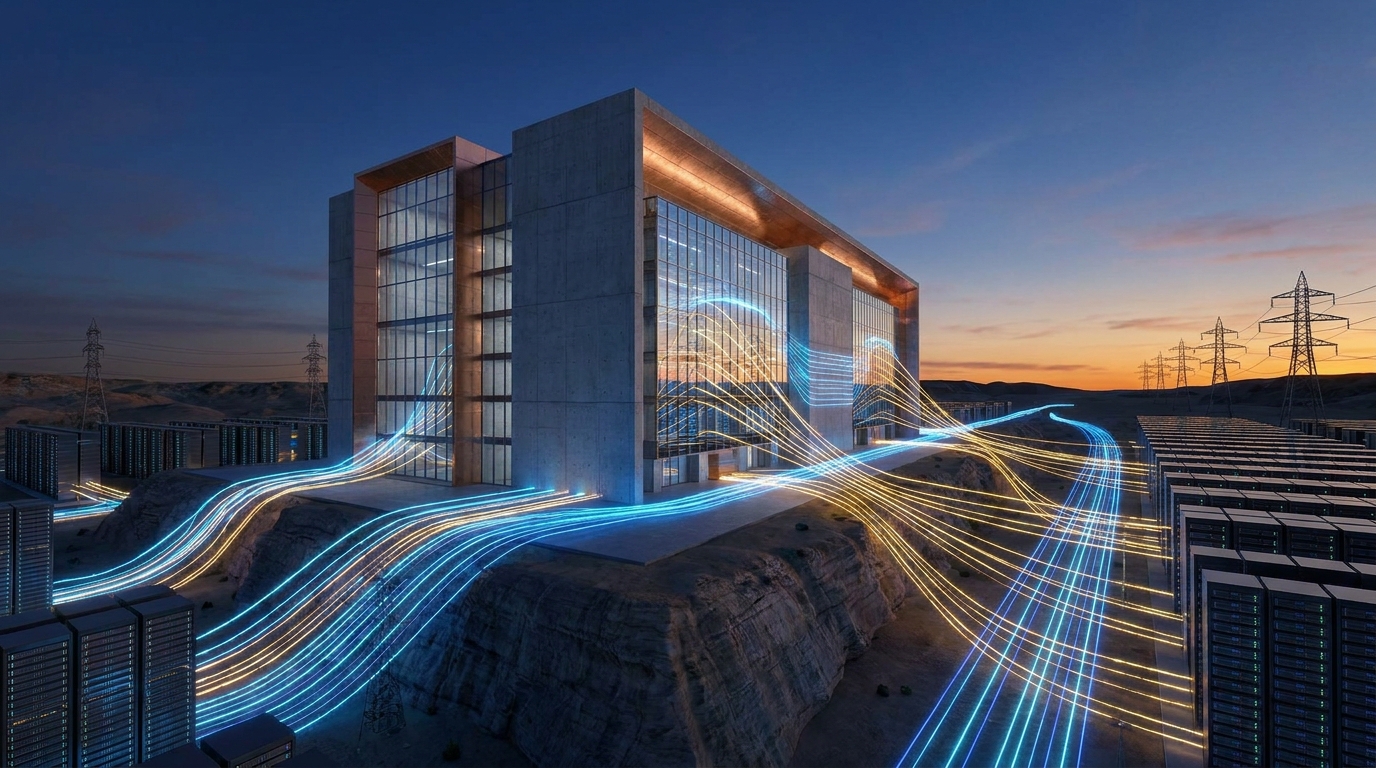
The massive capital influx into artificial intelligence infrastructure is fundamentally altering the landscape of commercial real estate. For decades, the ultimate premium in commercial property was dictated by geographic location, foot traffic, and proximity to urban commuter hubs. Today, the astronomical power requirements of AI have shifted this paradigm entirely toward grid access. Industrial sites with robust, immediate power availability are experiencing a localized boom, transforming into Data Centers that represent the most coveted assets in the broader real estate market.
For U.S. investors, the third quarter of 2023 served as a definitive inflection point. It signaled a structural rotation within commercial real estate, where secured utility infrastructure now acts as the primary economic moat for asset valuation. Capital is aggressively fleeing the obsolescence risk of traditional commercial real estateplagued by remote work and shifting consumer habitsand seeking refuge in the guaranteed cash flows of power-constrained digital infrastructure.
This transition represents more than a mere increase in server volume. It is a fundamental redefinition of core real estate holdings, where digital infrastructure is rapidly becoming the foundational manufacturing plant for the modern AI economy.
The Transmission Chain: From AI Demand to Real Estate Scarcity
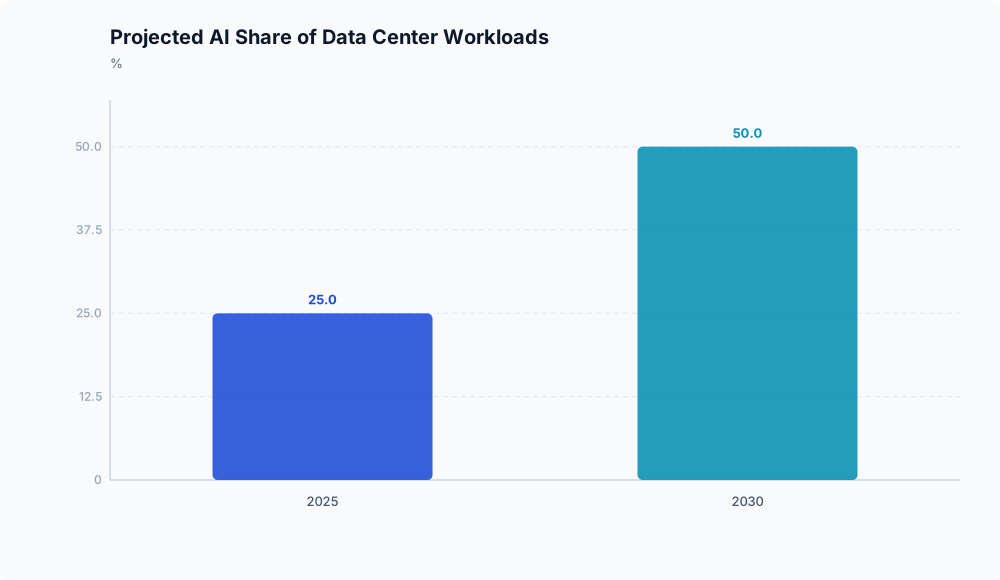
The catalyst for this real estate transformation is the staggering projected growth in AI-specific computational demand. According to JLL Research, AI is expected to account for half of all data center workloads by 2030, doubling from approximately 25% in 2025. Furthermore, Aranca projects that generative AI alone will drive approximately 40% of all data center growth through the end of the decade.
This explosive demand, however, is colliding with severe physical constraints. The transmission chain from technological innovation to real estate valuation follows a clear, albeit restrictive, path:
- The Shift to High-Density Computing: AI workloads require exponentially more electricity per square foot than traditional enterprise cloud storage.
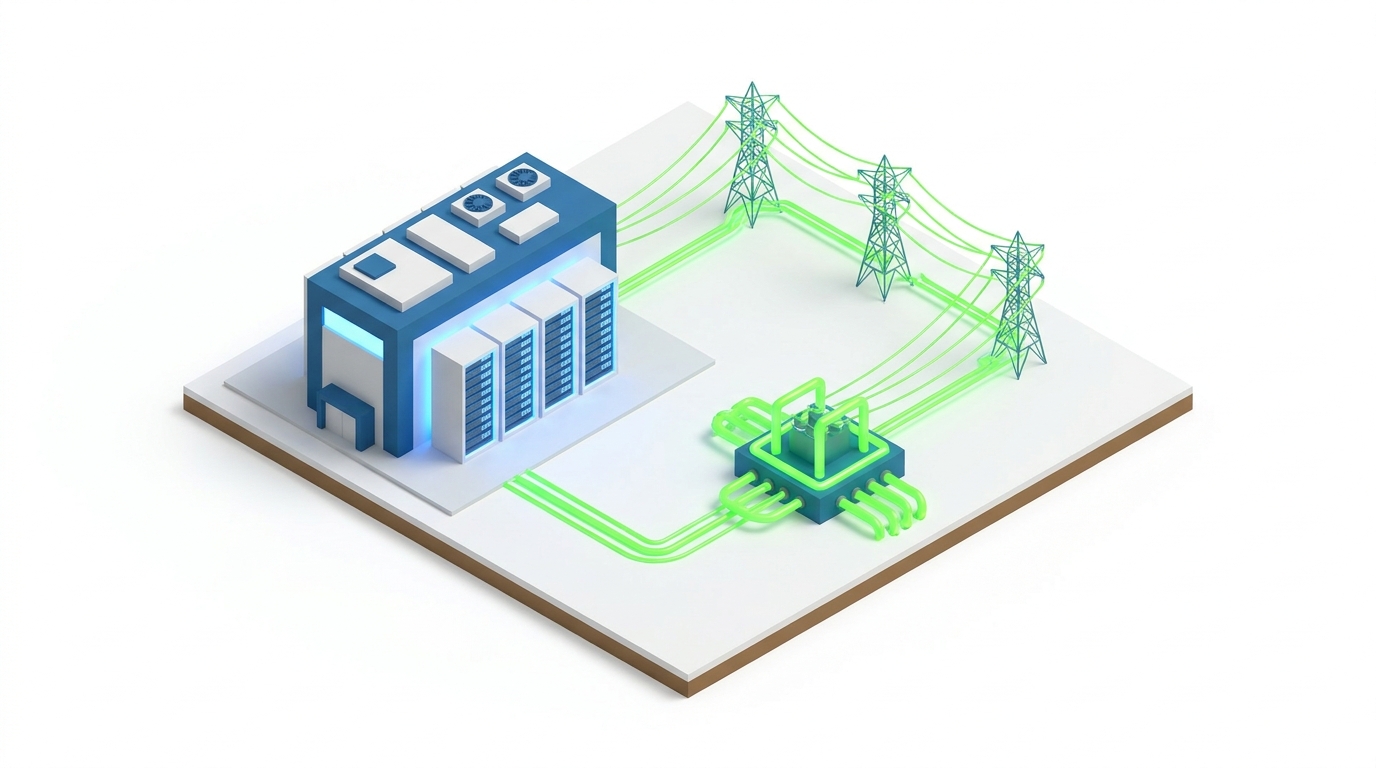
- The Infrastructure Bottleneck: This surging demand for power has collided with the physical realities of legacy energy infrastructure. Local power grids have transformed into the industry’s most critical bottleneck.
- The Temporal Mismatch: While software scales instantaneously, utility upgrades take half a decade. The average wait time for a power grid connection in primary data center markets now exceeds four years, as noted by JLL Research.
- Supply Stagnation and Incumbent Pricing Power: Because new supply is effectively gated by these multi-year utility timelines, existing facilities are operating at near-maximum capacity.
This extreme supply-demand imbalance implies that pricing power has firmly consolidated in the hands of landlords who already possess energized assets. Until alternative solutions prove viable at a commercial scale, operators with secured grid access will continue to dictate market rents, effectively locking out newer or undercapitalized entrants.
Highest-Signal Evidence: Q3 2023 Market Dynamics
The third quarter of 2023 highlighted a robust expansion phase for data center Real Estate Investment Trusts (REITs), characterized by exceptional fundamental growth alongside escalating capital requirements. Market data reveals a stark divergence between the booming demand for digital infrastructure and the rising costs required to build it.
A review of the highest-signal evidence from the quarter illustrates the underlying dynamics driving sector valuations:
| Metric | Q3 2023 / Current Value | Historical / Comparison Context | Source |
|---|---|---|---|
| Data Center REIT FFO Growth | 21% YoY | Outpaces broader real estate sectors | Aranca |
| Infrastructure Market Growth | 18% YoY | Driven by AI and cloud demand | Aranca |
| Global Construction Costs | $10.7 million per MW | Up from $7.7 million per MW in 2020 | JLL Research |
| Active Fund Positioning | ~2.5% Overweight | Drives cap rate compression | Aranca |
The verified growth metrics from Q3 2023 demonstrate undeniable operational momentum. Specialized data center REITs maintained exceptionally high occupancy rates. For example, Aranca reports that Keppel DC REIT operated with an occupancy rate of approximately 98%, while Digital Core REIT maintained roughly 95% occupancy across its assets.
However, these figures mask an underlying tension between rising valuations and escalating development costs. JLL Research notes that global data center construction costs have increased at a 7% compound annual growth rate, climbing from $7.7 million per megawatt in 2020 to $10.7 million in 2023. Furthermore, JLL Research forecasts these capital requirements to rise an additional 6% to $11.3 million per megawatt in 2026.
For market participants, this persistent cost inflation implies that future yield generation will rely heavily on maintaining aggressive rental rate hikes rather than achieving development efficiencies. The 21% year-over-year Funds From Operations (FFO) growth recorded in Q3 2023 by Aranca may represent a cyclical peak for development-heavy REITs if tenant resistance to higher lease rates materializes.
The Cap Rate Divergence: Second-Order Effects
The commercial real estate landscape is experiencing a severe structural bifurcation. In Q3 2023, actively managed funds were approximately 2.5% overweight in U.S. data center REITs. According to Aranca, this capital rotation directly drove cap rate compression for digital assets while office and retail properties faced continued valuation pressure.
This pronounced divergence is triggering significant second-order effects across the broader commercial real estate development landscape. Facing stagnant demand in legacy sectors, traditional commercial developers are increasingly pivoting toward digital infrastructure to salvage portfolio returns.
This shift is creating a massive valuation gap between powered industrial sites, which command steep premiums, and stranded assets like aging suburban office parks that lack the physical characteristics to be retrofitted. Market participants must carefully distinguish the verified reality of Q3 fundamental growth from the more speculative inference that this institutional overweighting will sustain long-term cap rate compression.
If construction costs continue their upward trajectory and grid connections require expensive behind-the-meter generation solutions, the premium paid for these assets could become difficult to justify. Land banking strategies must now heavily discount sites without existing or guaranteed high-capacity utility connections, as unpowered land is rapidly becoming a liability rather than an asset.
Forward Scenarios: Navigating the $7 Trillion Uncertainty
To accommodate the surge in AI demand, the global data center sector is projected to add nearly 100 gigawatts of new capacity between 2026 and 2030, expanding at a 14% compound annual growth rate based on data from JLL Research. However, industry projections regarding the total capital required by 2030 remain highly fractured. Estimates range from JLL Research’s $3 trillion to support 100 GW of new supply to as high as $7 trillion in global capital expenditures according to Aranca.
This vast discrepancy highlights the profound uncertainty surrounding future hardware efficiencies, construction costs, and the ultimate trajectory of AI adoption. For U.S. investors, navigating this landscape requires evaluating three distinct forward scenarios:
Base Case: Sustained pricing power and steady FFO growth emerge as grid constraints keep supply artificially tight. Energy infrastructure limitations remain critical bottlenecks. The four-year wait time for grid connections keeps supply artificially constrained, directly supporting the exceptionally high occupancy rates currently maintained by specialized REITs. Existing operators possess immense pricing power, and institutional capital continues to recognize this moat. Existing assets with secured power agreements continue to command significant valuation premiums over standard commercial real estate.
Upside Scenario: Breakthroughs in localized power generation accelerate development, expanding the REIT boom. If operators can successfully bypass prolonged grid connection wait times, the sector could fully realize the upper bounds of the projected $7 trillion capital expenditure forecast. JLL Research notes that data center providers are increasingly exploring behind-the-meter power arrangements and colocated battery storage. Should these integrated energy solutions prove sufficient to sustain facility operations independently, the reliance on legacy utility timelines would rapidly diminish. This would allow developers to expand infrastructure footprints beyond heavily congested primary markets into secondary regions with cheaper land, shifting the competitive advantage to agile developers.
Downside Scenario: Escalating construction costs outpace rental premiums, squeezing developer margins. While demand is robust, the capital intensity of building digital infrastructure is compounding rapidly. If escalating capital expendituresprojected to hit $11.3 million per megawatt in 2026begin to outpace the rental premiums operators can charge, development yields will compress significantly. Furthermore, if severe power grid regulations or local moratoriums halt new developments entirely, operators without a pipeline of pre-approved projects will face stagnant growth. Highly leveraged developers could experience severe margin contraction, forcing a broader market recalibration of digital infrastructure valuations.
What to Watch Next: Concrete Indicators for Market Participants
To navigate the evolving digital infrastructure landscape, investors must monitor specific leading indicators that will dictate the future balance of market supply and tenant demand:
- Regional Utility Grid Approval Timelines: Currently exceeding four years in primary markets according to JLL Research, this timeline is the primary governor of new supply. If these timelines begin to compress, it would signal a potential easing of supply constraints, which could eventually dilute incumbent pricing power. Conversely, further elongation will necessitate aggressive, costly pivots toward alternative power strategies.
- Institutional Fund Weightings: Tracking the current ~2.5% overweight position in U.S. data center REITs reported by Aranca is essential. A reversion to equal-weight or underweight positioning would likely trigger immediate valuation corrections, providing an early warning system for changing sentiment regarding sector premiums.
- Construction Cost per Megawatt (MW): Monitoring when and where the cost per MW stabilizes is crucial for modeling long-term return on invested capital. With costs forecast by JLL Research to reach $11.3 million per MW in 2026, a plateau in these capital expenditures would signal a healthier, more predictable environment for funding future capacity.
- Reconciliation of Capex Projections: Investors must track how industry-wide capital expenditure projections reconcile as the market matures. The gap between the $3 trillion and $7 trillion estimates will narrow as technological efficiencies and true hardware costs become clearer over the next 24 months.
Conclusion
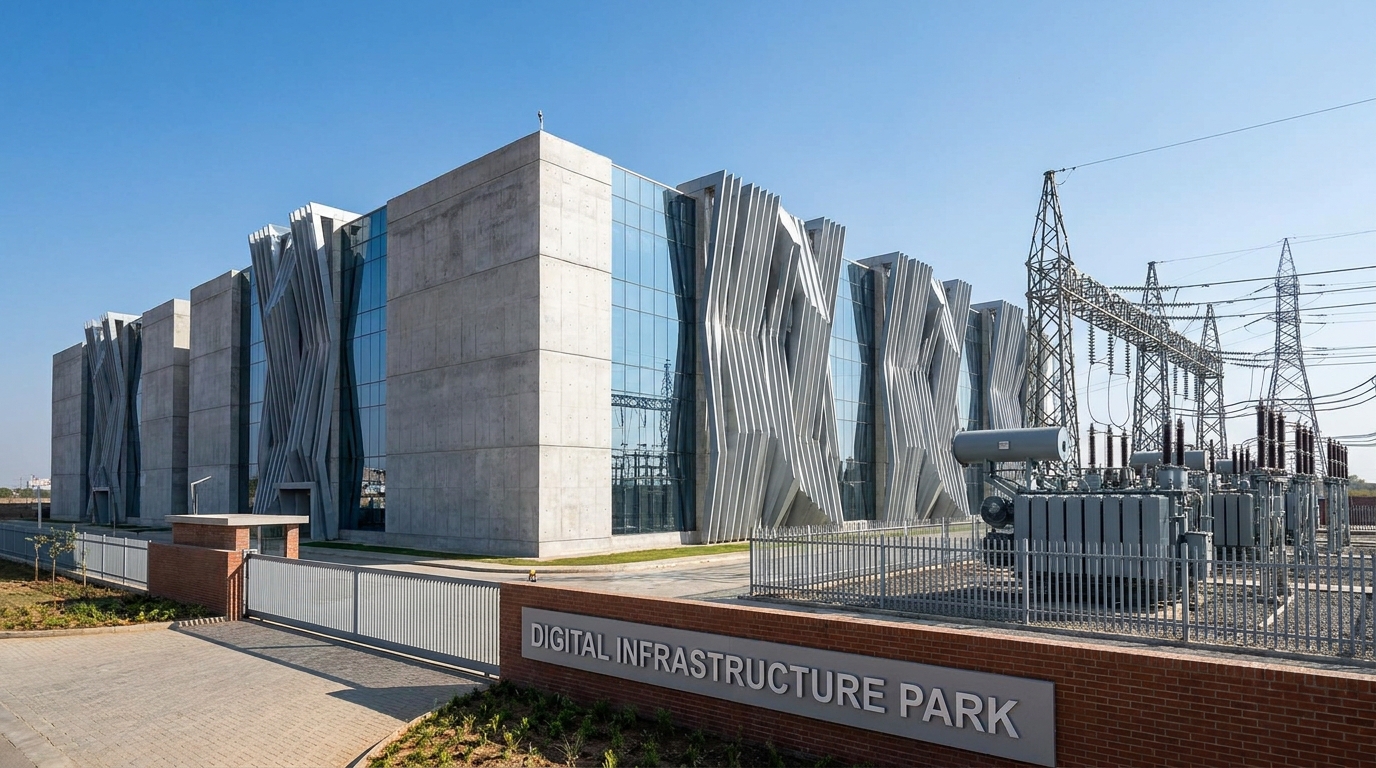
The structural shift toward artificial intelligence is fundamentally rewriting the economics of commercial real estate. As generative AI drives an unprecedented need for high-density computing, the primary constraint on digital expansion has shifted abruptly from physical real estate availability to raw power procurement. The resulting grid bottlenecks have created a formidable economic moat for existing, energized assets, granting operators unprecedented pricing power and driving exceptional FFO growth.
However, analytical synthesis of the current evidence suggests that the sector is entering a bifurcated phase. The value of in-place infrastructure currently vastly outweighs the appeal of new development due to skyrocketing construction costs and multi-year utility delays. For market participants, the highest-quality Data Centers will be those operated by entities that can leverage their existing, highly occupied portfolios to fund complex future power solutions without diluting shareholder returns. Ultimately, while the cap rate divergence clearly favors digital assets today, long-term outperformance will depend entirely on an operator’s ability to secure reliable, cost-effective power in an increasingly constrained grid environment.
Disclaimer: This analysis is for informational purposes only and does not constitute investment, financial, real estate, or legal advice. Always consult a licensed financial advisor before making investment decisions.
FAQ
Why are data center construction costs rising so quickly, and how does it impact REITs? Construction costs are escalating rapidly due to the transition to high-density computing required for AI workloads, which demands specialized, expensive infrastructure. Global construction costs have increased at a 7% compound annual growth rate, rising from $7.7 million per megawatt in 2020 to $10.7 million in 2023, and are forecast to reach $11.3 million in 2026. For REITs, this persistent cost inflation means future yield generation relies heavily on maintaining aggressive rental rate hikes to offset development expenses; otherwise, profit margins will compress.
How exactly do power grid limitations drive up the valuation of existing data centers? Power grid limitations act as a severe bottleneck on new supply. With the average wait time for a grid connection in primary markets exceeding four years, new development is effectively stalled. This temporal mismatch creates an extreme supply-demand imbalance, allowing existing facilities to operate at near-maximum capacity (often 95% to 98% occupancy). This scarcity grants incumbent operators unprecedented pricing power over tenants, directly driving up the valuation and revenue resilience of currently energized assets.
Why are actively managed funds currently overweight in data center REITs compared to office or retail real estate? Actively managed funds positioned themselves approximately 2.5% overweight in U.S. data center REITs because the sector offers robust, defensive growth driven by secular AI demand, effectively insulating it from the remote-work and e-commerce headwinds plaguing traditional real estate. This preference is backed by strong financial performance, such as the sector’s 21% year-over-year growth in Funds From Operations (FFO) in Q3 2023, making digital infrastructure a highly attractive yield-generation engine compared to struggling office and retail assets.
What specific characteristics make an industrial land parcel suitable for AI data center conversion? The definition of prime digital real estate has shifted away from geographic proximity to population centers or foot traffic. Today, the most critical characteristic making an industrial parcel suitable for AI conversion is immediate, robust high-voltage grid access. Because raw power procurement is the primary constraint on digital expansion, sites with existing or guaranteed utility connections command massive valuation premiums over unpowered land.