Multifamily Rent Growth Deceleration Pressures Landlords
How multifamily rent growth deceleration is squeezing residential landlords
Recent corporate disclosures show that elevated apartment completions have limited landlords’ pricing leverage. Major operators face low-single-digit revenue gains alongside rising operating expenses. Consequently, landlords are relying on anticipated construction slowdowns to restore operational momentum.
From decades of asset expansion to delivery-driven headwinds
Between 1990 and 2021, public U.S. REIT equity market capitalization compounded at an annual rate of 17.6%, expanding from $9 billion to $1.75 trillion, with total REIT dividend distributions reaching an estimated $92.3 billion in 2021, according to industry benchmarks compiled by DoorLoop.
That period of capital appreciation and post-pandemic cash distributions set a high baseline for property revenues. Since then, incoming supply has shifted the balance between supply and demand.
In an investor presentation, Equity Residential projected that an anticipated 35% decrease in new apartment supply across its markets would drive improved operating results in the second half of 2026. Because the forecast relies on fewer deliveries to lift revenue, completions appear to have capped pricing flexibility.
Thin NOI buffers and profitability pressures
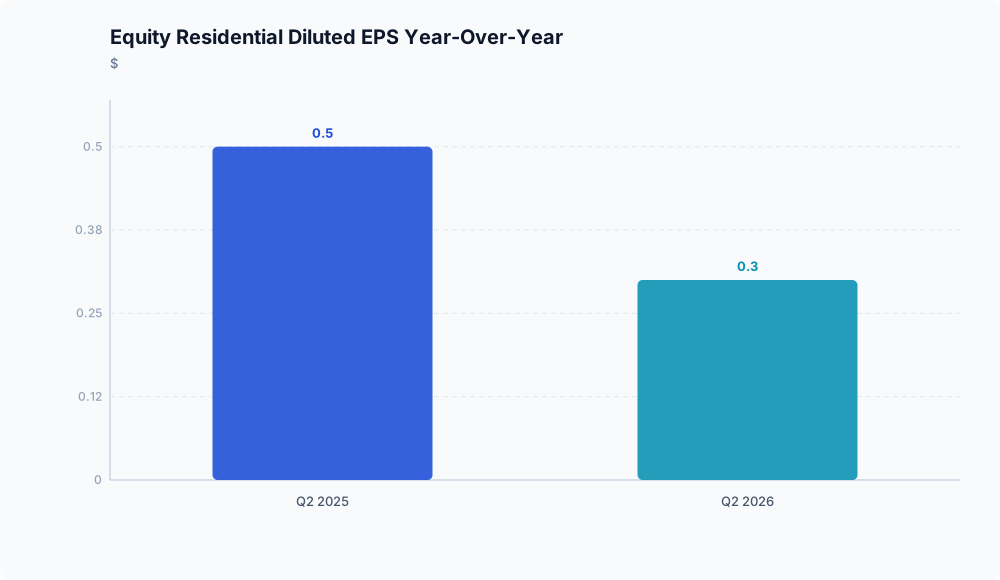
Second-quarter 2026 operational results show the financial impact of slower revenue growth. According to Equity Residential Reports Second Quarter 2026 Results, the REIT’s diluted earnings per share (EPS) fell by 40.0% ($0.20) year-over-year to $0.30, down from $0.50 in the quarter ended June 30, 2025. This decrease in EPS was primarily due to lower property sale gains Equity Residential Reports Second Quarter 2026 Results.
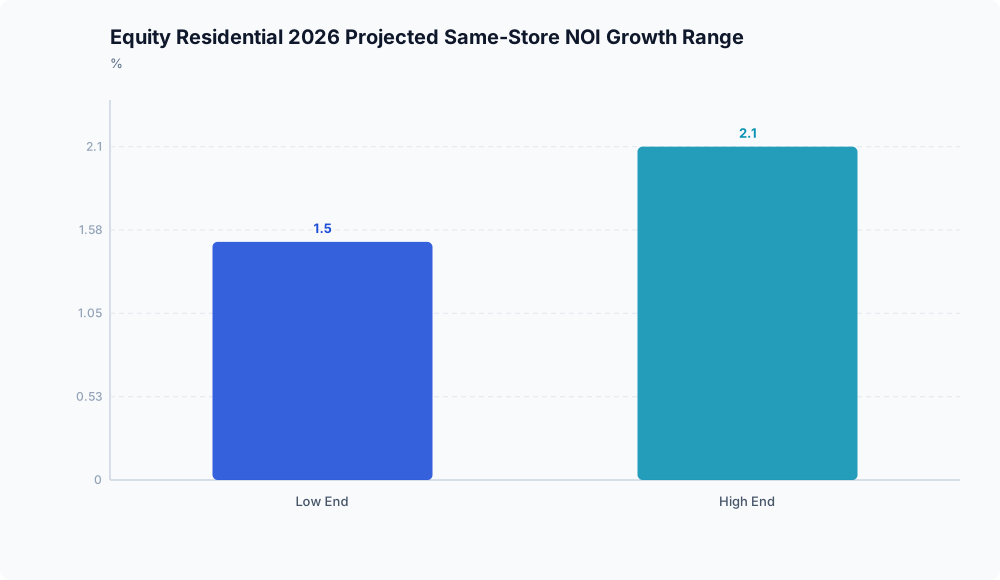
Property-level cash-flow growth has also moderated. For the full year 2026, Equity Residential Reports Second Quarter 2026 Results projected same-store net operating income (NOI) growth of 1.5% to 2.1%.
With same-store NOI projected in that range, property owners operate with thin financial margins. Across full-year 2026 guidance, Equity Residential Reports Second Quarter 2026 Results expects same-store expense growth of 3.0% to 4.0% to outpace same-store revenue growth of 2.1% to 2.7%.
Capital allocation and market limitations

With organic growth slowing, operators have turned to balance-sheet moves. As disclosed in its Equity Residential Investor Update, the company deployed excess 2025 disposition proceeds to repurchase approximately $220 million of stock year-to-date through late February 2026 at a weighted average price of $63.42 per share.
At the same time, full-year visibility into broader financing conditions remains limited. Equity Residential Reports Second Quarter 2026 Results withdrew its full-year 2026 guidance for EPS, Funds from Operations (FFO) per share, Normalized FFO per share, and related items like interest expense because of a pending merger. As a result, the ongoing impact of debt refinancing and interest rates cannot be assessed from guidance until post-merger disclosures are released.
These figures come from single-operator disclosures. While they reflect conditions across Equity Residential’s portfolio, broader nationwide tenant absorption and housing inflation metrics fall outside the scope of these filings.
With same-store NOI growth projected between 1.5% and 2.1%, residential landlords are operating with narrow buffers. Organic revenue gains are likely to remain tied to construction delivery volumes until surplus capacity clears.
Disclaimer: This analysis is for informational purposes only and does not constitute investment, financial, real estate, or legal advice. Always consult a licensed financial advisor before making investment decisions.