U.S. Housing Affordability and Rate Risk as Supply Grows
Builder backlogs and rising supply: navigating U.S. housing affordability and rate risk
Homebuilders are responding to weakening sales absorption by pausing projects in the planning phase instead of committing capital to groundbreakings. While existing home valuations have retained modest positive momentum, expanding inventory in the new-construction market is reducing seller pricing power.
New home sales pull back as months of supply climbs
Sales of newly built homes in the U.S. slowed heading into mid-2026. Sales of new single-family houses dropped to a seasonally adjusted annual rate (SAAR) of 607,000 in July 2026, according to the U.S. Census Bureau.
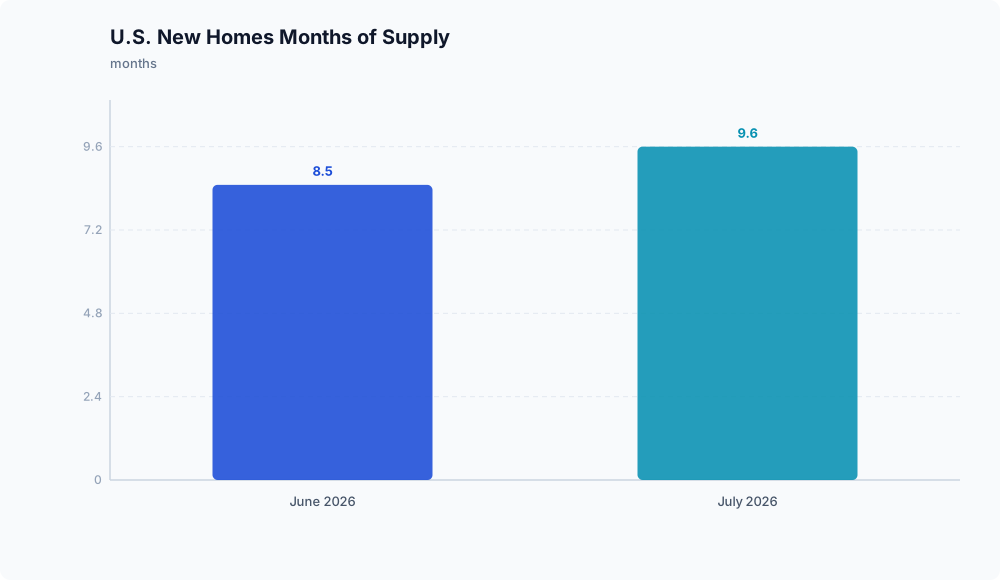
This slower absorption rate caused available inventory to accumulate. Data tracked by CalculatedRisk shows that the months of supply for new homes rose from 8.5 months in June 2026 to 9.6 months in July. Supply approaching double digits indicates conditions well outside recent historical averages, leaving builders with elevated inventory relative to current sales.
A record backlog of unstarted projects
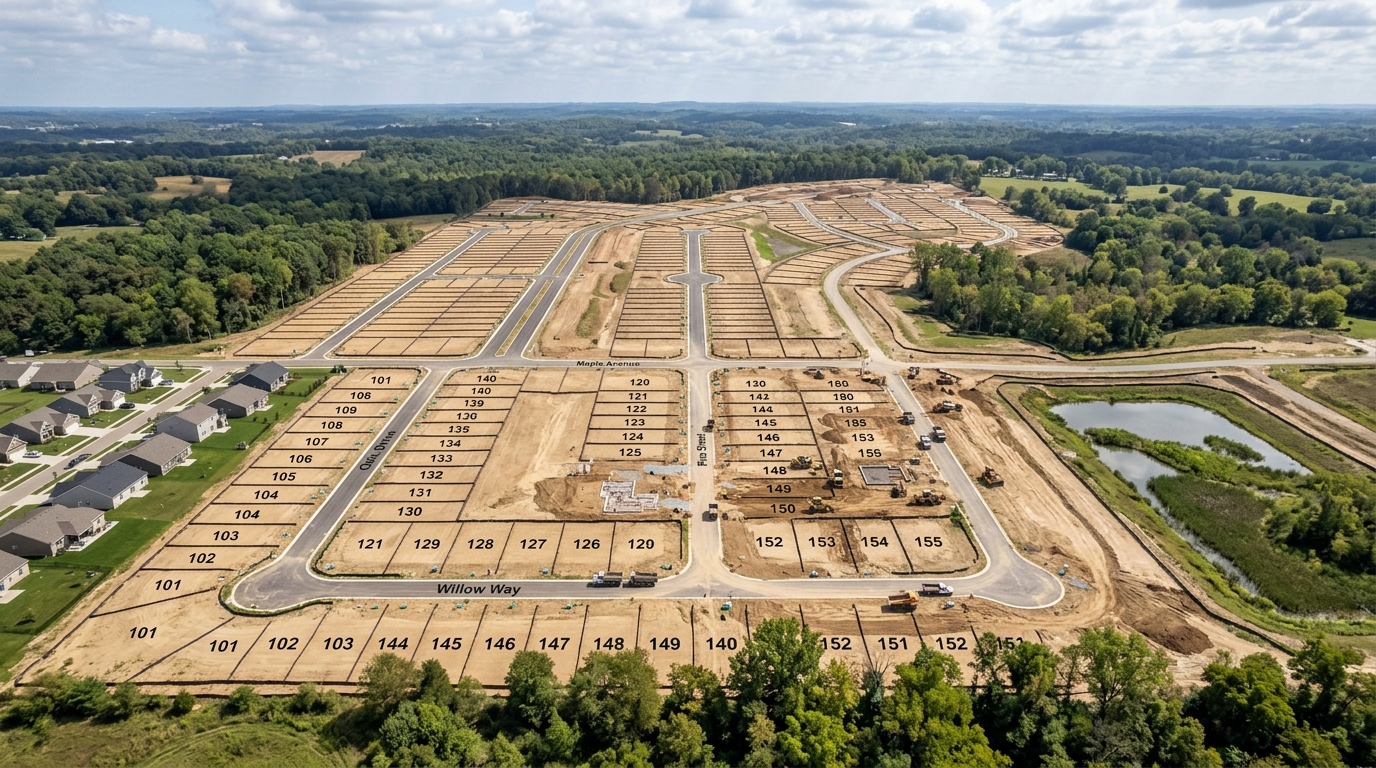
Builders are adjusting operational exposure by slowing construction starts. The inventory of new homes categorized as “not started” climbed to 115,000 units in July 2026, an all-time high reported by CalculatedRisk.
Holding projects in the permitted, unstarted stage limits carry-cost exposure during periods of high supply. Delaying groundbreakings preserves capital while letting builders keep their pipeline open until demand stabilizes, avoiding large commitments to materials and labor.
Price index resilience versus forward builder pricing pressure

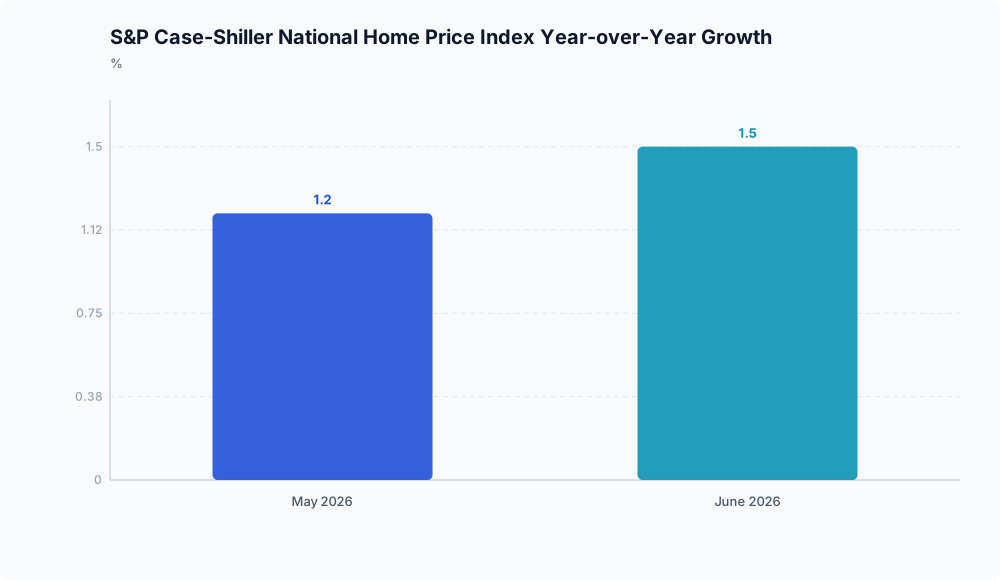
The slowdown in new home sales contrasts with broader national price indices. According to Clearstead, the S&P Cotality Case-Shiller US National Home Price Index rose 1.5% year-over-year in June 2026, up from 1.2% year-over-year growth in May.
This acceleration indicates that resale valuations remained supported through early summer by tight existing-home supply. Assessing broader macroeconomic channels, such as specific Federal Reserve policy decisions, labor market shifts, or regional purchasing power variations, remains outside confirmed figures here, as empirical labor and central bank datasets are not included. Even so, the sector divergence is clear: while national price indices show modest annual gains, new construction inventory continues to build up.
Market implications
The combination of 9.6 months of new home supply and 115,000 unstarted homes reported by CalculatedRisk points to cooling demand in the new-home segment.
With months of supply near double digits, homebuilders are likely to face tighter margins or offer larger concessions to move completed inventory. At the same time, the high volume of unstarted homes suggests that future physical completions could slow, preventing overbuilding while delaying development timelines. If financing conditions continue to limit purchasing capacity, builders will face pressure to discount or revise unit configurations to convert their backlog into closed sales.
Disclaimer: This analysis is for informational purposes only and does not constitute investment, financial, real estate, or legal advice. Always consult a licensed financial advisor before making investment decisions.