
Multifamily Rent Disinflation and Cap Rates: Impact on Yields
Multifamily rent disinflation and cap rates: what stalled yields mean for operators
How does the plateau in capitalization rates affect multifamily owners facing moderating rent growth and higher debt costs?
When apartment capitalization rates hold flat while rent growth decelerates, property values depend entirely on sustaining property-level net operating income (NOI). In this environment, property owners lose the top-line revenue cushion required to absorb operational cost pressures, and refinancing at prevailing borrowing costs introduces negative leverage that directly reduces net cash flows.
National valuation equilibrium amid slower rent growth
At the national level, multifamily transaction pricing established a steady yield profile throughout 2025. Capitalization rates for U.S. apartment transactions averaged 5.7% in 2025, remaining unchanged from 2024 levels, according to MSCI Real Capital Analytics data reported by Arbor Realty Trust. Total full-year apartment investment volume reached $165.5 billion across the country (Arbor Realty Trust).
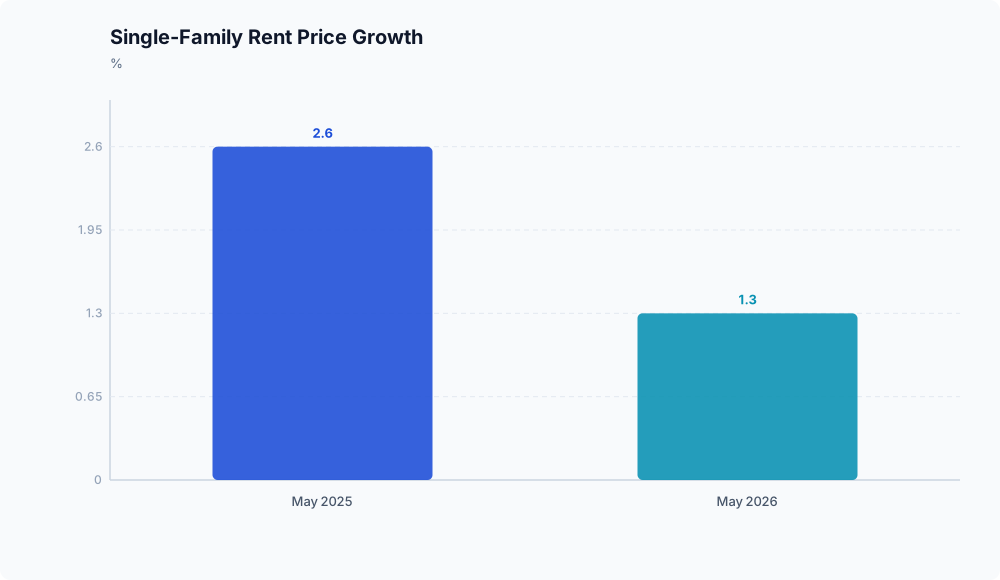
This combination of flat cap rates and steady transaction activity points to market equilibrium: buyers and sellers transacted without broad repricing or aggressive bidding down of initial yields. When top-line rent growth moderates toward historical baselines, however, flat initial property yields prevent operators from relying on valuation expansion to compensate for muted revenue.
Regional adjustments and operational margins
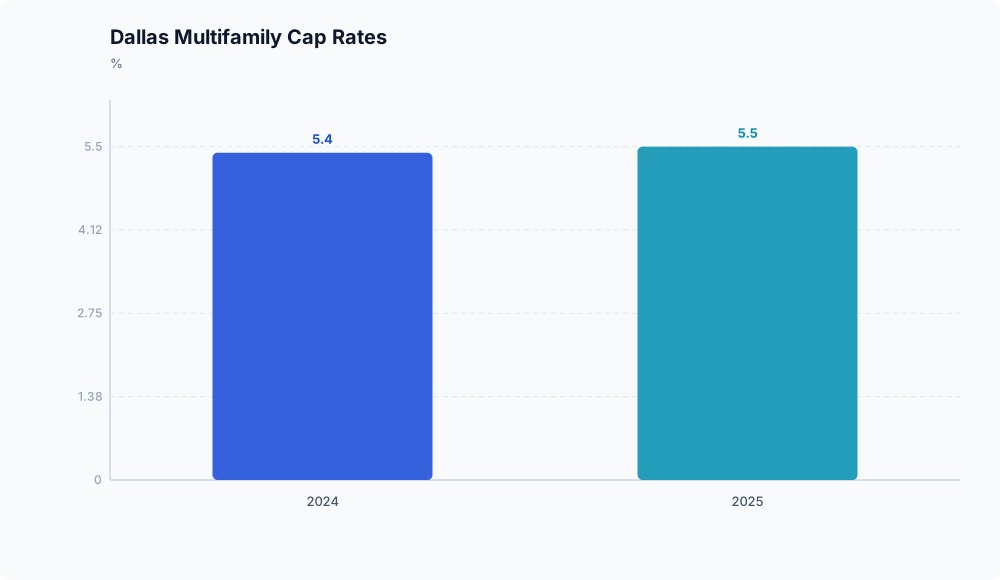
Beneath national yield stability, regional markets revealed subtle pricing distinctions. In Dallas, apartment cap rates averaged 5.5% in 2025, drifting up 10 basis points from 5.4% in 2024, as documented by Arbor Realty Trust. While pricing in Dallas remained tighter than the 5.7% national average, this slight upward movement reflects localized investor selectivity across metros.
From an operational perspective, holding asset yields in the mid-5% range increases the burden on property-level performance. Without rapid revenue growth, persistent day-to-day outlays compress operating margins. The exact degree of this margin compression across portfolios remains difficult to quantify, however, because the aggregate transaction dataset reported by Arbor Realty Trust does not include itemized measurements for operating expenses such as insurance premiums, real estate taxes, or on-site labor.
Negative leverage and refinancing constraints

The combination of flat yields and higher interest rates poses specific balance-sheet challenges. When asset yields sit in the mid-5% range, including the 5.7% national benchmark or 5.5% in Dallas, refinancing maturing debt at higher interest rates introduces negative leverage (Arbor Realty Trust). Multifamily owners and residential real estate investment trusts (REITs) replacing lower-rate legacy debt with financing at or above their property’s cap rate face compressed debt-service coverage ratios (DSCR) and lower distributable cash flow.
While flat cap rates define the pricing environment under which refinancings occur, aggregate figures do not reveal widespread forced dispositions. The available data from Arbor Realty Trust does not track specific debt maturity schedules, submarket distress volumes, or the proportion of transactions driven by distressed sales. Consequently, while negative leverage strains refinancing margins, the precise operational severity and volume of mandatory recapitalizations cannot be confirmed without property-level debt and cash flow records.
Analytical takeaway

The 2025 transaction data shows apartment cap rates settling into a floor in the mid-5% range without widening to offset higher borrowing costs. For operators and investors, this pricing plateau means returns depend primarily on operational efficiency and NOI preservation instead of yield compression or sharp rent increases.
Disclaimer: This analysis is for informational purposes only and does not constitute investment, financial, real estate, or legal advice. Always consult a licensed financial advisor before making investment decisions.