Shelter Inflation Deceleration and Multifamily NOI Trends
Can targeted capital improvements protect real estate cash flows amid margin and refinancing pressures?
Targeted unit renovations can deliver strong standalone returns when organic market rent growth slows, giving operators a practical way to lift property yield. Even so, asset-level capital spending cannot fully protect property cash flows from rising operating overhead, tenant credit stress, or debt refinancing limits when debt service coverage ratios tighten.
Shelter inflation theory vs. operational reality
In macroeconomic discussions, slowing housing service inflation, such as a deceleration toward a 3.0% rate, is often assumed to weaken organic pricing power and increase concession rates. Direct macroeconomic data has not verified a 3.0% shelter inflation print or measured aggregate, sector-wide concession trends. Linking multifamily margin contraction directly to specific shelter disinflation figures remains an analytical hypothesis without broad empirical confirmation.
Property-level performance in early 2026 shows operators adjusting capital spending to counter muted rent momentum. Instead of relying on lease-over-lease rent increases, landlords are funding interior renovation programs to secure yield premiums.
Public real estate investment trust (REIT) filings show how this strategy functions in practice. During the first quarter of 2026, Independence Realty Trust, Inc. completed renovations across 426 units within its multifamily portfolio, achieving a weighted average return on investment (ROI) of 15.4%.
A 15.4% ROI confirms that selective unit upgrades can support net operating income (NOI) at an individual property. Because these figures come from a single operator’s portfolio, however, it remains unverified whether double-digit renovation yields can be replicated across different regional markets, property types, and construction cost environments.
Cash flow volatility and capital structure headwinds

Protecting yields through capital spending becomes difficult when revenues face credit disruptions or expense shocks.
When collections drop, NOI contracts and debt service coverage ratios (DSCR) narrow. In the commercial REIT sector, tenant problems have cut directly into revenue stability. According to Sure Dividend, Innovative Industrial Properties recorded a 3.8% year-over-year decline in first-quarter 2026 revenue to $69.0 million, driven by $6.9 million in tenant defaults. When credit events reduce baseline collections, borrowing capacity falls because lenders size loans against sustained cash flows.
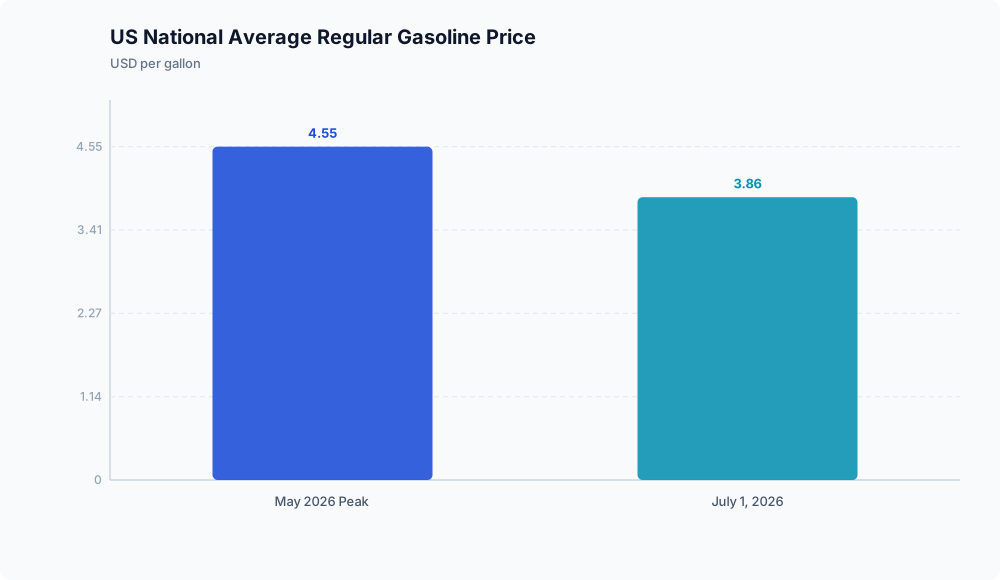
Operating overhead also remains vulnerable to price swings. Retail fuel costs provided brief relief when the U.S. national average price of regular gasoline fell to $3.86 per gallon as of July 1, 2026, down from a May peak of $4.55. Macroeconomic energy balances point toward persistent cost pressures, according to markashryock.substack.com. The U.S. Energy Information Administration (EIA) estimated that global oil inventories shrank by an average of 6.3 million barrels per day in the second quarter of 2026, with the EIA projecting OECD inventories will slide below 2.3 billion barrels (50 days of cover) by December 2026, as cited by markashryock.substack.com. Tight energy supplies threaten to keep utility and building maintenance expenses high, slowing operating margin recoveries.
Implications for valuations and bridge debt exits

These operational pressures feed directly into real estate capital structures. A squeeze on operating cash flows explains why capitalization rates can resist compression even when monetary policy shifts toward rate cuts.
Asset valuations depend on the stability and scale of property NOI alongside benchmark interest rates. When revenues fall short or expenses rise, takeout lenders trim loan proceeds to preserve required DSCR floors. Borrowers who used short-term bridge debt to fund acquisitions or value-add programs then face a financing gap at maturity, because potential central bank rate cuts cannot compensate for lower property-level earnings.
While the exact sector-wide scale of commercial bridge maturities, covenant breaches, and cap rate expansion remains unquantified due to a lack of aggregate default data, the underlying dynamic is clear. Internal value-add strategies offer meaningful incremental returns, but capital-intensive repositioning faces strict underwriting as refinancing tests borrower liquidity.
Disclaimer: This analysis is for informational purposes only and does not constitute investment, financial, real estate, or legal advice. Always consult a licensed financial advisor before making investment decisions.