Fed 4.1% Projected Rate Floor: Real Estate Impact Explained
How the Fed’s projected 4.1% rate floor reshapes real estate
The Federal Reserve’s projected 4.1% policy rate floor removes expectations for a rapid return to cheap debt. It forces commercial real estate borrowers to confront maturing loans without central bank relief and keeps residential borrowing costs elevated through at least 2027.
Monetary policy forecasts published in the Federal Reserve Summary of Economic Projections signal an extended horizon of high borrowing costs. The median projection for the federal funds rate is 4.1% across both 2026 and 2027, before easing to 3.9% in 2028, 3.6% in 2029, and 3.2% over the longer run.
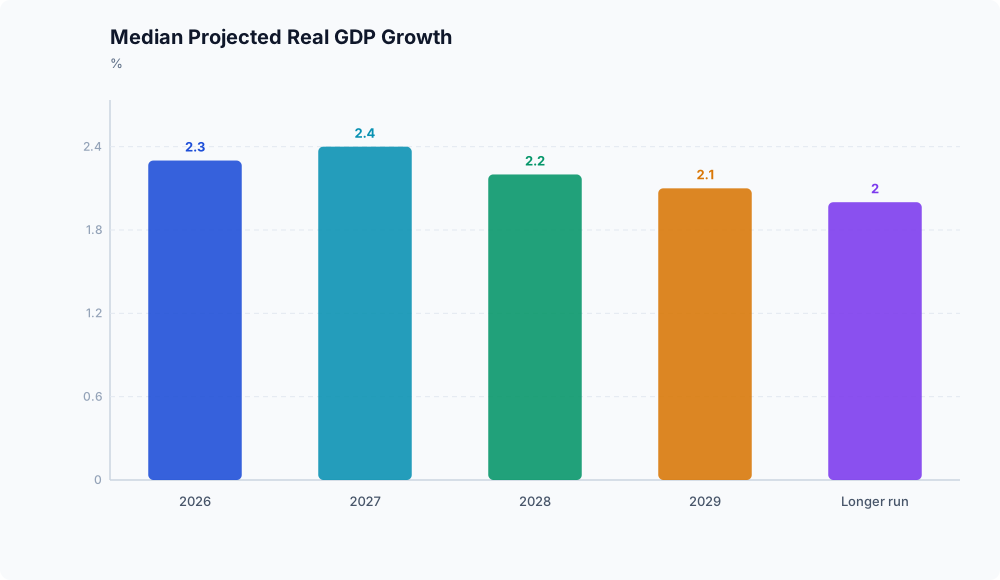
Alongside these benchmark rates, policymakers anticipate steady expansion. According to the Federal Reserve Summary of Economic Projections, median projections for real GDP growth are 2.3% in 2026, 2.4% in 2027, 2.2% in 2028, 2.1% in 2029, and 2.0% in the longer run. With growth projected to remain at or above 2.0%, the macroeconomic rationale for emergency rate cuts is absent. For real estate markets, debt refinancing and acquisition underwriting must adapt to base borrowing rates near 4.1% through 2027.
Commercial real estate: the $1.5 trillion maturity wall
This rate environment coincides with an aggressive commercial debt schedule. According to PBMares, the U.S. commercial real estate sector faces more than $1.5 trillion in loans maturing by the end of 2026, with nearly $1 trillion scheduled to mature in 2025 alone.
When commercial loans originated during prior low-rate cycles mature into an environment where the federal funds rate remains at 4.1% through 2027, as projected in the Federal Reserve Summary of Economic Projections, debt service costs increase substantially upon refinancing. This limit restricts simple loan extensions. Higher interest burdens lower the debt volume that existing net operating income can support, putting upward pressure on capitalization rates and downward pressure on property valuations. Consequently, borrowers facing maturing loans encounter equity shortfalls that require sponsors to inject fresh capital to reduce principal or satisfy debt coverage metrics.
Residential housing: persistent lock-in and builder concessions
The Fed’s benchmark rate expectations also point to ongoing friction in residential housing. The Federal Reserve Summary of Economic Projections tracks macroeconomic variables rather than direct housing metrics like mortgage spreads or builder financials, making housing deductions conditional editorial assessments rather than historical certainty.
To the extent that retail mortgage rates track short-term risk-free rates, a 4.1% policy rate through 2027 maintains a floor under home financing costs. This sustains the “lock-in effect,” where homeowners holding legacy low-rate mortgages choose not to list their properties, keeping existing inventory tight. In turn, homebuilders operating in an economy projected by the Federal Reserve Summary of Economic Projections to grow at 2.1% to 2.4% must rely on financial concessions, such as mortgage rate buydowns, to sustain sales velocity. Absorbing these buydown costs will likely place downward pressure on homebuilder margins until debt conditions ease.
Strategic synthesis
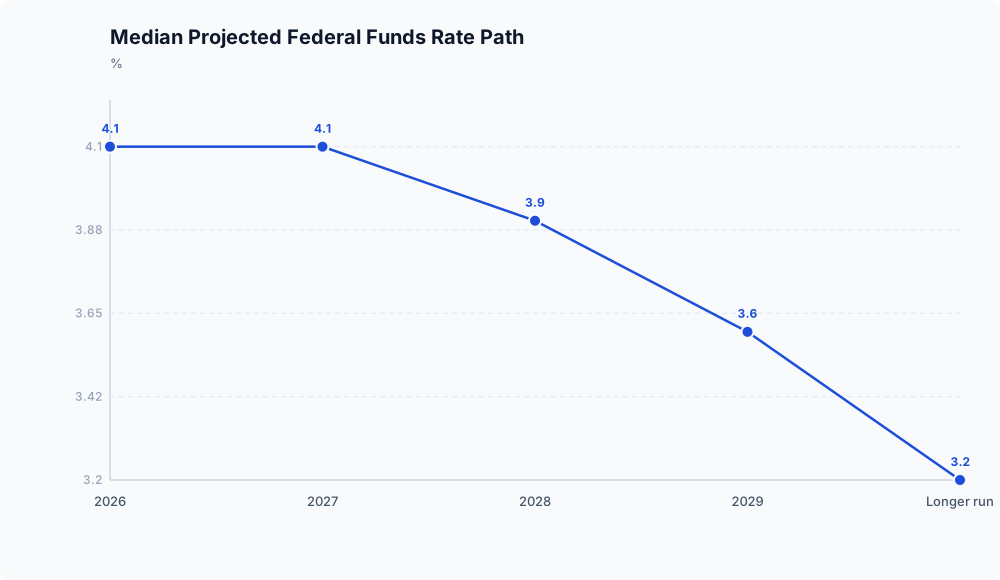
The Fed’s economic projections show steady growth alongside restrictive policy rates, without indications of an imminent rescue cycle. For property owners and developers, waiting for significant rate relief to resolve balance sheet pressure carries high risk. With the federal funds rate projected in the Federal Reserve Summary of Economic Projections to stay at or above 3.9% through 2028, real estate capitalization will increasingly favor asset recapitalization, operational efficiency, and realistic equity contributions over debt-driven leverage.
Disclaimer: This analysis is for informational purposes only and does not constitute investment, financial, real estate, or legal advice. Always consult a licensed financial advisor before making investment decisions.
Frequently asked questions
How does a higher federal funds rate floor prevent commercial borrowers from extending existing loans?
A 4.1% policy floor keeps debt service costs elevated when legacy loans mature. Because lenders must underwrite refinancings to current debt service coverage ratios and higher capitalization rates, properties often cannot support their original loan balances without substantial equity paydowns, ruling out simple loan extensions.

Why does sustained rate pressure affect homebuilder margins differently than existing home sales?
Sustained rates suppress existing home inventory because current owners remain locked into low fixed rates. To compete and attract buyers facing high borrowing costs, homebuilders frequently subsidize financing through rate buydowns, absorbing these concessions directly against gross margins.