
10-Year Treasury Yield Real Estate Impact on Borrowing Costs
How the rise in the 10-year Treasury yield impacts real estate borrowing and valuation
Higher intermediate sovereign yields elevate baseline debt costs across residential and commercial property markets, dampening home sales and putting downward pressure on commercial valuations. Because long-term real estate financing and investment hurdle rates track the 10-year Treasury yield rather than the overnight federal funds rate, yields sustained above 5% widen the gap between buyer underwriting and seller pricing expectations, reducing overall transaction volume.
The yield environment and macroeconomic drivers
Through the first half of 2026, the Federal Open Market Committee (FOMC) maintained the target range for the federal funds rate at 3-1/2 to 3-3/4 percent, as detailed in the Monetary Policy Report - July 2026. At its September meeting, the central bank raised the policy target by 25 basis points to a range of 3.75% to 4.0%, as reported by Enterprise Bank & Trust. Following the increase, the benchmark 10-year Treasury yield closed above 5% for two consecutive trading sessions (Enterprise Bank & Trust).
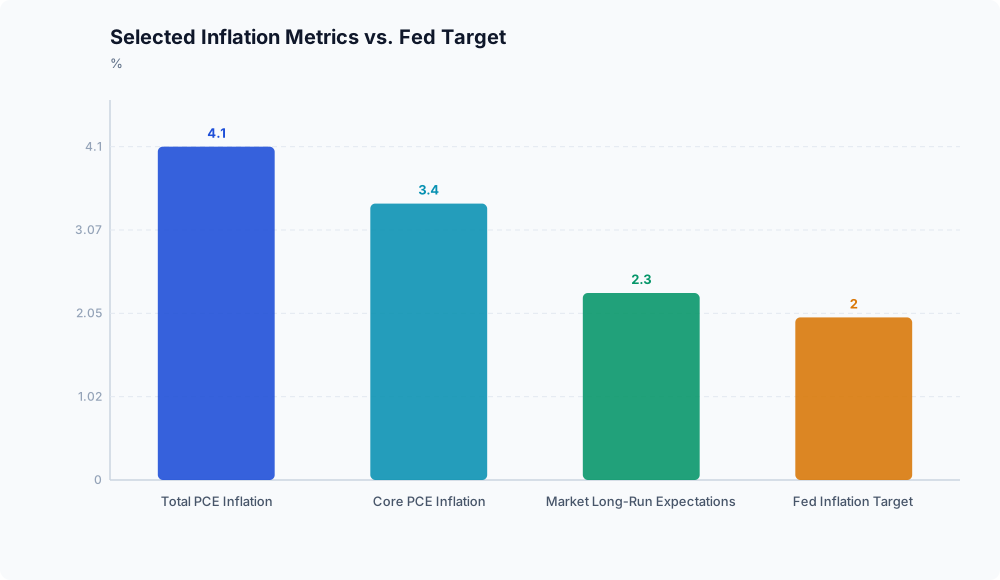
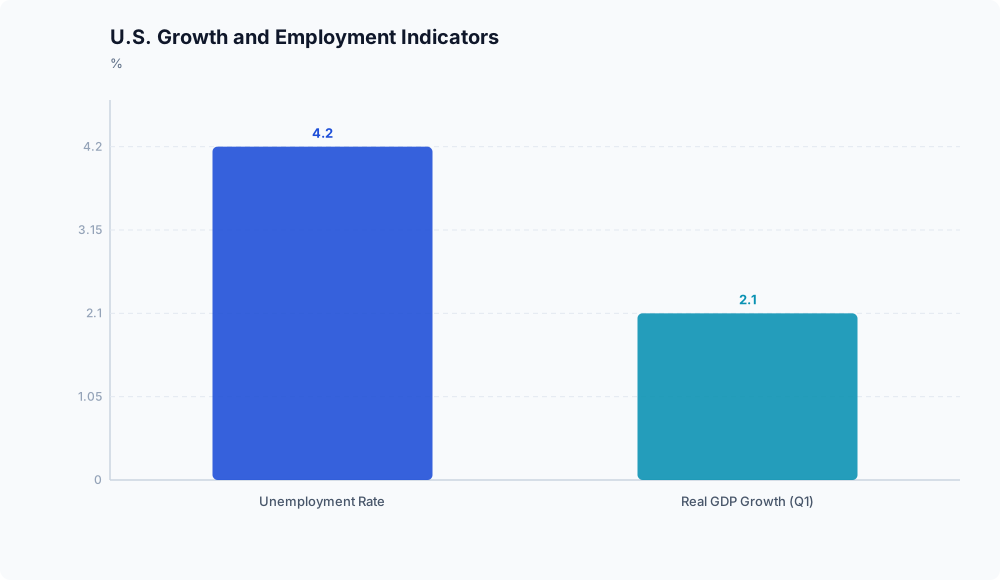
This rise in intermediate borrowing costs reflects persistent inflation paired with steady economic growth. Total personal consumption expenditures (PCE) inflation rose 4.1% over the 12 months ending in May 2026, while core PCE, which excludes food and energy, rose 3.4%, according to the Board of Governors of the Federal Reserve System. At the same time, real GDP expanded at an annualized rate of 2.1% in the first quarter of 2026, and the unemployment rate stood at 4.2% in June (Board of Governors of the Federal Reserve System).
Because economic growth has remained durable, long-term bond yields reflect ongoing inflation risk and expectations of an extended restrictive policy stance. According to Enterprise Bank & Trust, Federal Reserve projections indicate that core PCE inflation is not expected to fall near its 2.0% target until 2029, even as market-based long-run inflation expectations remain at 2.3%. Forward projections anticipate one additional rate hike in 2026, unchanged policy settings throughout 2027, and rate cuts delayed until 2028 (Enterprise Bank & Trust).
Transmission to residential and commercial lending
Monetary policy transmits to real estate primarily through intermediate and long-term sovereign benchmarks instead of the overnight rate. Residential mortgage pricing is structured as a spread over the 10-year Treasury yield to account for prepayment variability, credit risk, and bank funding costs, as tracked through series such as MORTGAGE30US and WGS10YR on FRED.
When the 10-year Treasury yield passed 5%, the 30-year fixed mortgage rate climbed to 7.28% in mid-September 2026, as documented by HousingWire. This higher cost of debt added friction to residential sales, which the Board of Governors of the Federal Reserve System noted had already stagnated during the first half of the year.
Commercial real estate debt faces a similar adjustment. Commercial loans are typically structured with 5- to 10-year maturities, so a 10-year Treasury yield above 5% raises the baseline borrowing rate for refinancing existing debt and underwriting new acquisitions. Available datasets track residential mortgage rates, but specific figures for commercial mortgage spreads and total origination volumes are not provided.
Underwriting shifts and commercial valuations

A risk-free benchmark above 5% resets hurdle rates for real estate equity and debt. Investors require an equity risk premium over sovereign debt to account for illiquidity, lease turnover, and property operations. As baseline yields increase, capitalization rates decompress. Higher cap rates reduce property valuations unless properties generate enough net operating income growth to offset the higher cost of capital.
This pricing adjustment widens the gap between buyers and sellers. Prospective buyers must lower purchase offers to satisfy higher return requirements and maintain required debt-service coverage ratios. Meanwhile, existing property owners often postpone sales or hold out on price cuts if their current debt does not mature in the near term.
While specific data on transaction cap rates and aggregate commercial sales volumes are not detailed in current reports, capital market dynamics indicate deal activity will remain limited until buyer and seller valuations realign with these higher baseline yields.
Synthesis

The move above 5% on the 10-year Treasury yield shows how long-term real estate financing responds to persistent inflation and shifting rate expectations rather than small changes in short-term policy rates. With central bank projections deferring rate cuts to 2028 and core inflation projected above target through 2029 (Enterprise Bank & Trust), capital costs appear set to stay elevated. For both home buyers and commercial property owners, future market liquidity will depend on whether property yields adjust to match higher sovereign benchmarks or whether shifts in term premiums lower underlying borrowing rates.
Disclaimer: This analysis is for informational purposes only and does not constitute investment, financial, real estate, or legal advice. Always consult a licensed financial advisor before making investment decisions.