
Fed Pause Odds and Housing Demand: What Lies Ahead?
Will an impending Fed pause revive housing demand?
Federal Reserve projections suggest that interest rate increases may soon pause, but borrowing relief is unlikely to follow quickly. Restrictive credit and persistent inflation remain in place, keeping mortgage affordability constrained.
The policy turn: resumed tightening and the 2026 baseline
On September 16, 2026, the Federal Open Market Committee (FOMC) raised the federal funds target range by 25 basis points to 3.75%–4.00%, its first rate increase since July 2023, while inflation remained above the 2% target (Plus500).
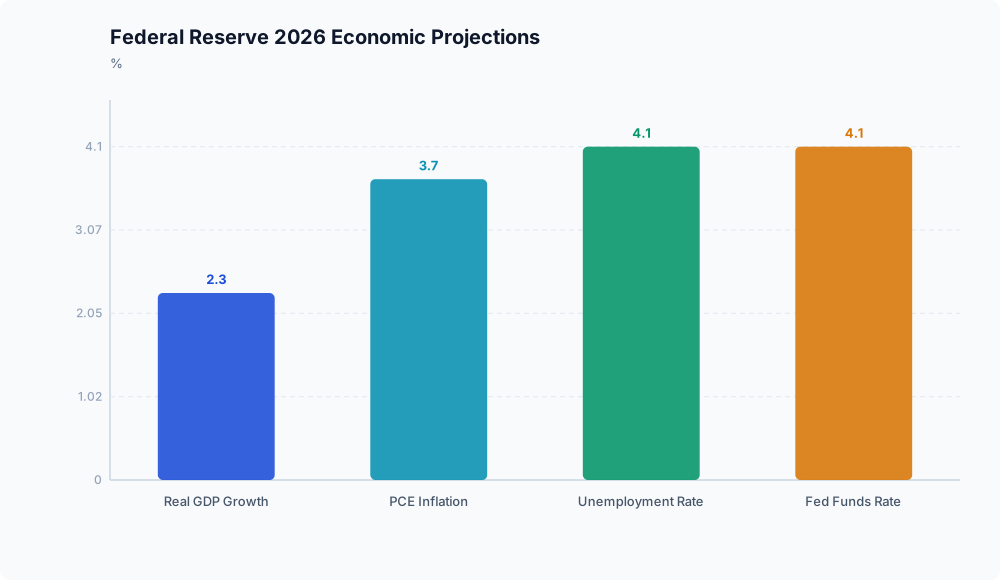
Along with the rate hike, the Fed released macroeconomic projections for 2026 showing steady output alongside persistent price pressures. Policymakers projected 2.3% real GDP growth, 3.7% PCE inflation, an unemployment rate of 4.1%, and a median federal funds rate of 4.1% by the end of 2026 (Plus500).
What is driving expectations of a pause?
Expectations of a central bank pause stem from both policy projections and recent labor market releases. With the funds rate target at 3.75%–4.00%, the Fed’s median dot plot projection of 4.1% leaves room for at most one additional 25-basis-point increase before year-end (Plus500).
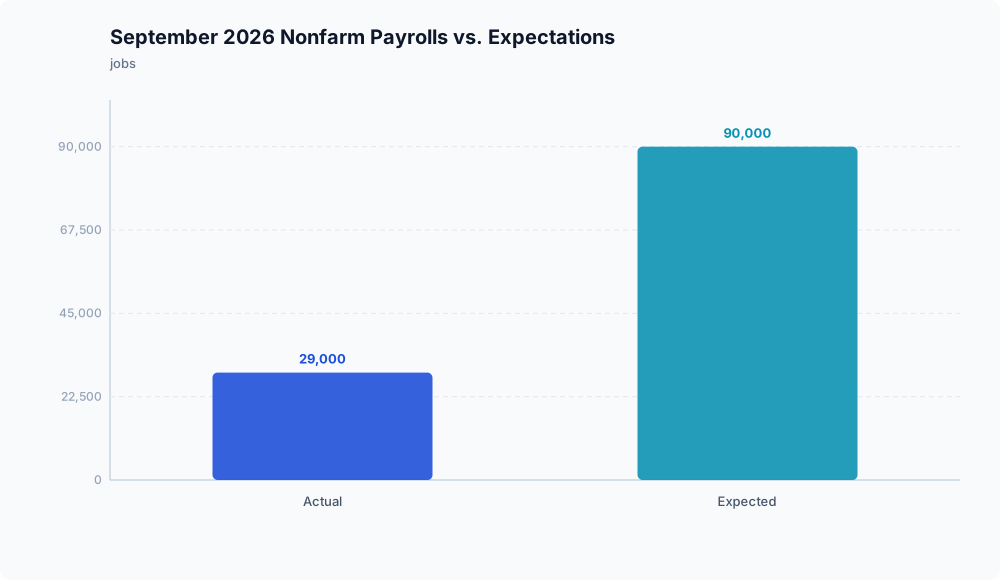
While policymakers projected a 4.1% unemployment rate under relatively resilient labor conditions (Plus500), subsequent monthly data pointed to cooling employment. Bureau of Labor Statistics figures showed nonfarm payroll additions dropping to 29,000 in September against a 90,000 consensus estimate, while the unemployment rate rose to 4.20% (Raisin). Softer hiring reduces the economic pressure on the Fed to continue hiking, bolstering expectations of a policy pause (Raisin).
Transmission to housing: why affordability stays pressured
A plateau in policy rates does not automatically revive housing demand. High policy rates continue to affect broader credit markets, keeping benchmark yields and consumer borrowing costs elevated.
Household budgets face dual pressures. While projected 2.3% GDP growth points to stable aggregate activity, 3.7% PCE inflation reflects ongoing cost-of-living increases (Plus500). Those price increases cut into disposable household income while financing costs remain high.
The available records do not track mortgage yield benchmarks, home prices, or buyer sentiment indexes. Without evidence that mortgage rates are decoupling to the downside, monetary tightening remains the operating baseline, and holding rates near 4.1% preserves restrictive borrowing conditions (Plus500).
Conclusion: what the evidence means for buyers

For homebuyers and real estate participants, the central bank’s stance indicates that rates will stay high. Even if the Fed pauses after one further adjustment, holding at a 4.1% benchmark maintains elevated capital costs (Plus500). Borrowers will face a restrictive financing baseline until inflation cools enough to justify rate cuts, or until independent mortgage yields drop.
Disclaimer: This analysis is for informational purposes only and does not constitute investment, financial, real estate, or legal advice. Always consult a licensed financial advisor before making investment decisions.
Frequently asked questions

Does a Federal Reserve pause automatically lead to lower fixed mortgage rates?
No. A policy pause halts increases to short-term benchmark rates without lowering them. Fixed mortgage rates track broader bond yields, inflation expectations, and economic risk premiums, none of which automatically decline when the Fed stops hiking.
Why can cooling employment numbers depress housing transactions even when borrowing costs decline?
Housing transactions depend on borrowing capacity and consumer confidence. If borrowing costs drop because of worsening job security or rising unemployment, households often postpone taking on long-term debt despite lower financing costs.