Multifamily Rent Deceleration: Impact on Property Cash Flows
How Multifamily Rent Deceleration Is Reshaping Property Cash Flows and Debt Coverage
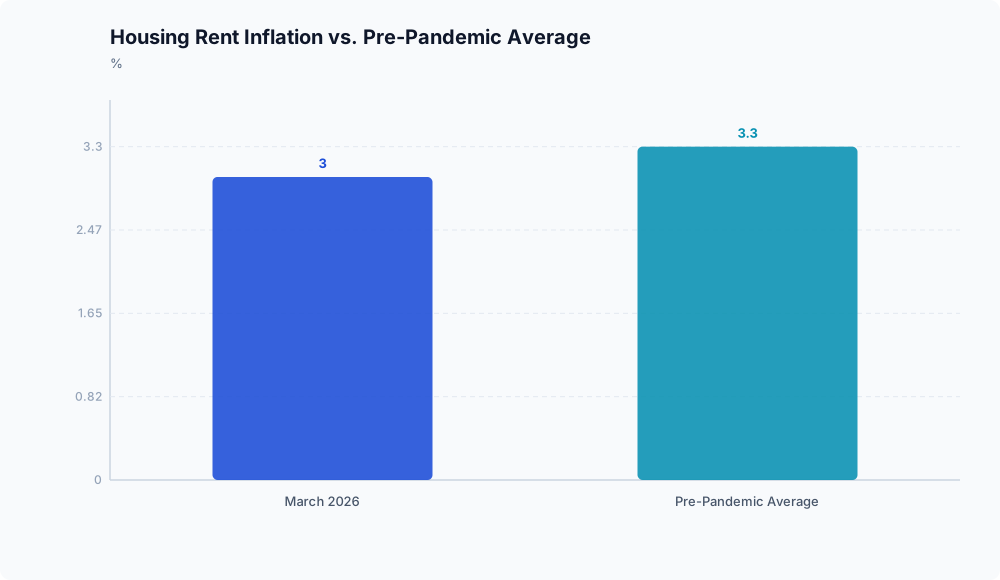
Over the twelve months through March 2026, housing rent inflation slowed to 3.0%, falling below its pre-pandemic average of 3.3%, according to the U.S. Department of the Treasury. While this cooling has helped ease broader consumer inflation, it narrows net operating income (NOI) growth for residential rental operators. With revenue growth slowing in an elevated interest-rate environment, properties facing debt maturities or tight debt covenants face reduced refinancing capacity, often requiring fresh equity injections despite the absence of a wider macroeconomic recession.
Cooling shelter inflation in an expanding economy
The cooling of rental inflation marks a clear shift from the elevated price increases recorded between May 2023 and 2024. According to the U.S. Department of the Treasury, rent of housing inflation slowed to 3.0% over the twelve months through March 2026, its lowest pace since September 2021 and below the 3.3% pre-pandemic benchmark.
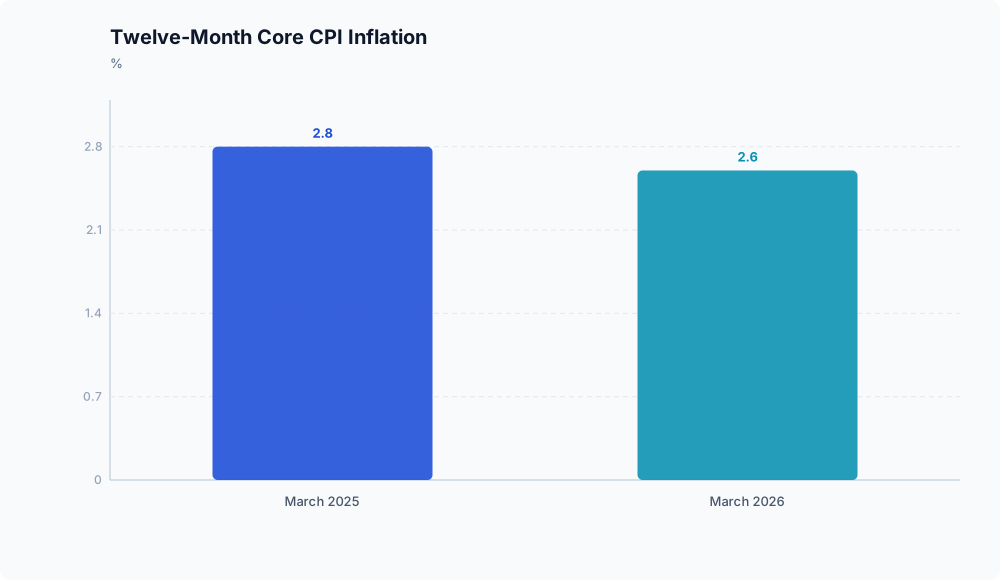
Because housing accounts for a substantial share of consumer price indices, this deceleration lowered broader price pressures. Twelve-month core Consumer Price Index (CPI) inflation, which excludes volatile food and energy costs, moderated to 2.6% through March 2026, down from 2.8% for the year ending March 2025, according to the U.S. Department of the Treasury.
This moderation occurred alongside steady economic growth. Data from the U.S. Department of the Treasury shows that real GDP growth accelerated to an annual rate of 2.0% in the first quarter of 2026, rebounding from 0.5% in the fourth quarter of 2025. This pickup was driven by stronger business fixed investment, recovery from a fourth-quarter federal government shutdown, and a slower drawdown in private inventories. The divergence between rising GDP and sub-historical rent growth indicates that rent moderation is sector-specific, even though official reporting does not isolate the microeconomic drivers, such as multifamily completion volumes or local vacancy rates, behind the decline.
The squeeze on operating margins and debt covenants
When top-line rent growth slows to 3.0%, as recorded by the U.S. Department of the Treasury, it curtails property-level revenue growth. In real estate underwriting, rent increases that were historically underwritten at 3% to 5% annually have flattened across multiple markets, with 2026 forecasts trailing long-term averages, according to Foxen. When top-line expansion falls below those underwriting assumptions, net operating income faces downward pressure.
At the same time, property operating expenses continue to climb. According to Foxen, operators are contending with rising insurance premiums, wage inflation, persistent general inflation, and elevated borrowing costs. A 2024 National Apartment Association survey cited by Foxen revealed that 74% of owners rank operational efficiency as their top challenge, while 62% prioritize maximizing revenue and profits.
This combination of moderating revenue and rising costs pressures property debt structures:
- Operating cash flows narrow relative to debt service requirements, especially for loans originally underwritten on expectations of stronger top-line growth.
- Slower cash flow growth in an elevated interest-rate environment creates refinancing shortfalls as loans reach maturity.
- Addressing these funding shortfalls requires owners to inject additional equity to recapitalize properties and bridge financing gaps.
While tighter cash flows heighten balance-sheet pressure, available macroeconomic reports do not track sector-wide default rates or universal covenant breach frequencies. The risk remains a balance-sheet challenge rather than an observed wave of liquidations.
Operational countermeasures and emerging divergences

In response to decelerating base rents, operators have turned to non-rental revenue streams to defend NOI. According to Foxen, multifamily clients generated over $13 million in ancillary income across waiver and rent reporting platforms in 2024. While ancillary income provides higher-margin incremental revenue, its ability to offset debt service shortfalls depends on asset scale and operational leverage.
At the same time, rental performance varies across portfolios and timeframes. Mid-America Apartment Communities reported that by May 2026, its new lease pricing growth had improved by 210 basis points and blended pricing growth rose 140 basis points relative to the first quarter of 2026. On the investment side, Mid-America Apartment Communities noted plans to sustain a 2026 development pipeline of approximately $1 billion, targeting stabilized NOI yields between 6.0% and 6.5%.
Analytical takeaway
With rent inflation settling below pre-pandemic rates, residential rental housing can no longer rely on broad top-line expansion to absorb elevated borrowing costs. Because this deceleration is occurring alongside steady GDP growth, the operational pressure points center on balance sheets and cost structures rather than broad tenant demand.
For owners with maturing debt, meeting debt service obligations will require active margin management through ancillary revenue and operating expense discipline, alongside selective equity recapitalizations.
Disclaimer: This analysis is for informational purposes only and does not constitute investment, financial, real estate, or legal advice. Always consult a licensed financial advisor before making investment decisions.