
US Labor Slowdown Shifts Fed Rate Expectations for 2026
What the September 2026 labor slowdown means for Fed policy and equity markets
How is the sudden downshift in U.S. hiring altering expectations for Federal Reserve policy, and what does it mean for corporate fundamentals?
The sharp deceleration in September 2026 job growth has curtailed market expectations for an imminent Federal Reserve interest rate hike, giving the central bank room to pause. For financial markets, softer wage gains and hiring ease immediate discount-rate pressure on equity valuations, but they also threaten consumer spending and corporate revenue growth.
Labor indicators point to cooling demand
The U.S. labor market lost momentum at the end of the third quarter. According to Oppenheimer, nonfarm payroll growth slowed to an addition of 29,000 jobs in September 2026, alongside subdued month-over-month average hourly earnings growth of 0.1%.
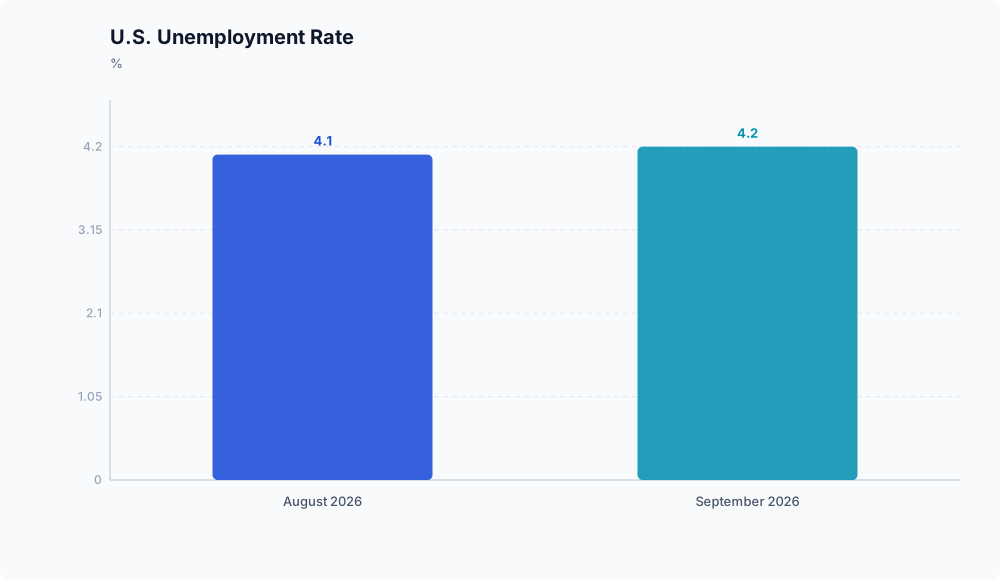
Broader unemployment also rose. The national unemployment rate climbed to 4.2% in September from 4.1% in August, as reported by QUE.com. Combined with minimal net payroll gains and modest wage growth, the higher unemployment rate points to softening labor demand across the economy.
Recalibrating Fed rate expectations
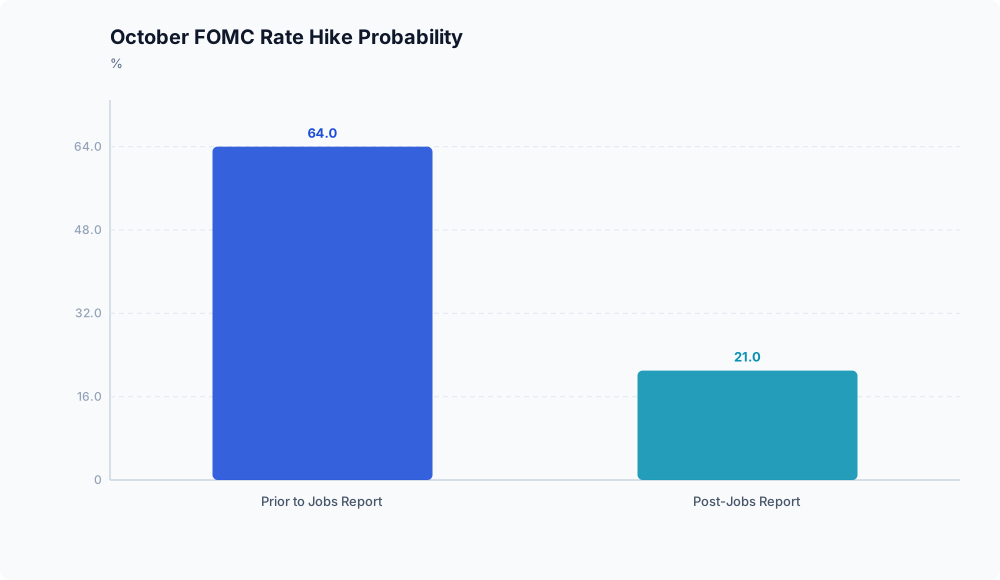
This slowdown quickly shifted derivative pricing for near-term monetary policy. As tracked by QUE.com, CME Group FedWatch pricing for an interest rate hike at the late October FOMC meeting dropped from 64% prior to the jobs report to below 21% shortly after.
Strategists at Oppenheimer noted that the weak employment figures reinforced a “wait and see” posture among central bank officials, allowing policymakers to pause rate increases instead of tightening into a slowing labor market. These market-implied probabilities reflect derivative pricing and shifting investor sentiment rather than formal guidance from the Federal Reserve; future rate decisions remain contingent on incoming inflation and output data.
The valuation trade-off: discount rates vs. earnings
The policy implications of the labor report create an analytical tension for equity markets. Slower hiring and contained wage gains help limit wage-push inflation, relieving upward pressure on borrowing costs and policy rates. That moderation provides room for valuation multiples that typically compress during monetary tightening cycles.
The trade-off centers on consumer fundamentals. When payroll gains slow to 29,000 and monthly wage growth remains at 0.1%, as documented by Oppenheimer, household income growth slows down. That deceleration can weaken discretionary consumer spending and weigh on corporate revenue growth.
Backward-looking indicators still show underlying resilience. U.S. Q2 2026 GDP growth was revised upward from 1.5% to 2.2%, according to Oppenheimer, but past output strength does not guarantee that corporate revenues will remain protected if labor market slack continues to build.
Analytical outlook

The September 2026 data indicates that the lagged effects of monetary policy are surfacing in hiring. While the repricing of rate-hike odds removes an immediate headwind for equity valuation multiples, investors now have to weigh lower discount rates against the risk of cyclical earnings compression.
Disclaimer: This analysis is for informational purposes only and does not constitute investment, financial, real estate, or legal advice. Always consult a licensed financial advisor before making investment decisions.