
Energy Stagflation Margin Squeeze and Fed Rate Policy
How the 2026 energy shock is squeezing margins and complicating monetary policy
How does the early 2026 surge in energy costs affect corporate margins and Federal Reserve interest rate policy?
Higher energy costs in early 2026 have opened a gap between headline and core inflation, tightening margins in fuel-dependent industries while removing any near-term case for Federal Reserve interest rate cuts. According to the U.S. Department of the Treasury, U.S. economic output rebounded to 2.0% annualized growth in the first quarter of 2026, while core inflation slowed to 2.6%. This indicates that the shock is hitting corporate operating costs directly without causing an economy-wide contraction.
The inflation divergence: headline surge vs. core cooling
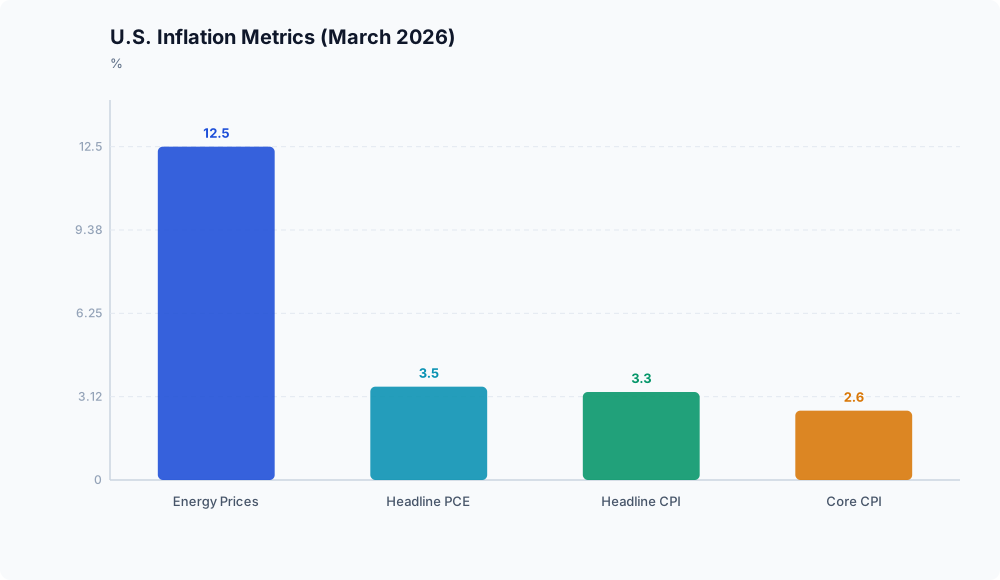
The inflation data from late 2025 into early 2026 shows a split driven largely by commodity markets. According to the U.S. Department of the Treasury, twelve-month headline Consumer Price Index (CPI) inflation rose to 3.3% as of March 2026, up from 2.4% over the twelve months through March 2025. Over the same period, twelve-month headline Personal Consumption Expenditures (PCE) inflation climbed from 2.4% to 3.5%, moving further above the Federal Reserve’s 2.0% target.
Underlying domestic price pressures, however, softened over the year. The U.S. Department of the Treasury reported that twelve-month core CPI, which excludes volatile food and energy costs, declined from 2.8% in March 2025 to 2.6% in March 2026.
| Metric (12-Month Change) | March 2025 | March 2026 | Direction / Gap |
|---|---|---|---|
| Headline CPI | 2.4% | 3.3% | +0.9% |
| Core CPI (ex-food & energy) | 2.8% | 2.6% | -0.2% |
| Headline PCE | 2.4% | 3.5% | +1.1% |
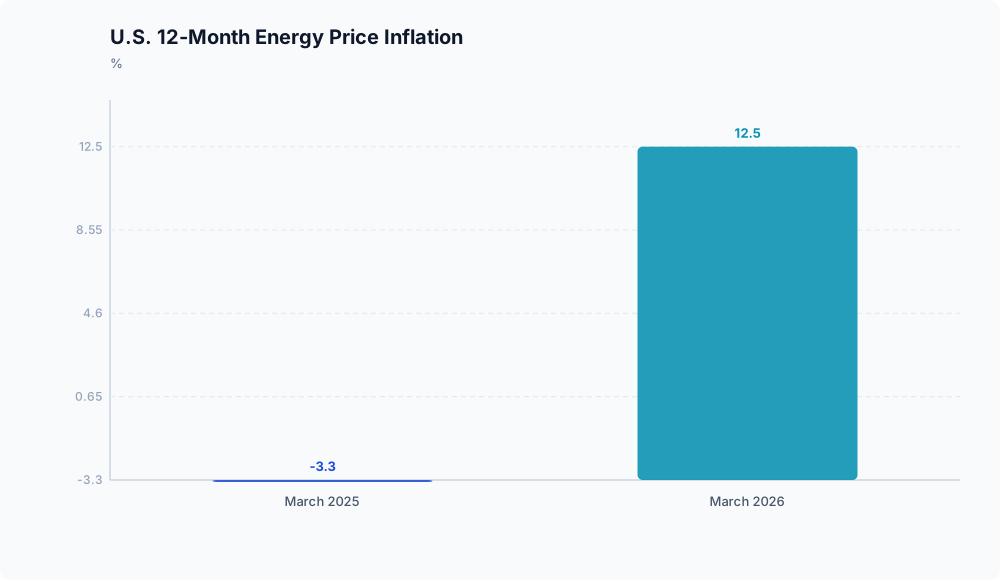
| Energy Price Inflation | -3.3% | 12.5% | +15.8% |
Data source: U.S. Department of the Treasury.
This widening 0.7 percentage point gap between headline and core CPI reflects direct cost pressures from energy. Twelve-month energy price inflation accelerated to 12.5% through March 2026, reversing a 3.3% contraction recorded a year prior, according to the U.S. Department of the Treasury.
Resilient growth diminishes the case for Fed rate cuts
Despite higher fuel and power costs, broader economic activity expanded. Real GDP growth accelerated to an annualized rate of 2.0% in the first quarter of 2026, up from 0.5% in late 2025, as reported by the U.S. Department of the Treasury. Corporate capital spending supported this expansion, with U.S. business investment climbing by over 10% in 1Q26, led by outlays for equipment and intellectual property.
The rebound indicates that aggregate demand and productive capacity remain solid under current financial conditions. With headline PCE inflation at 3.5%, well above central bank targets, and domestic output expanding at a 2.0% pace according to the U.S. Department of the Treasury, the Federal Reserve has little macroeconomic justification to ease monetary policy. Cutting interest rates during a period of elevated headline numbers and durable capital spending could entrench price pressures before energy markets stabilize.
Sector-level evidence: transport bears the margin shock
While aggregate GDP data indicates overall stability, higher input expenses directly strain industries with substantial energy requirements.
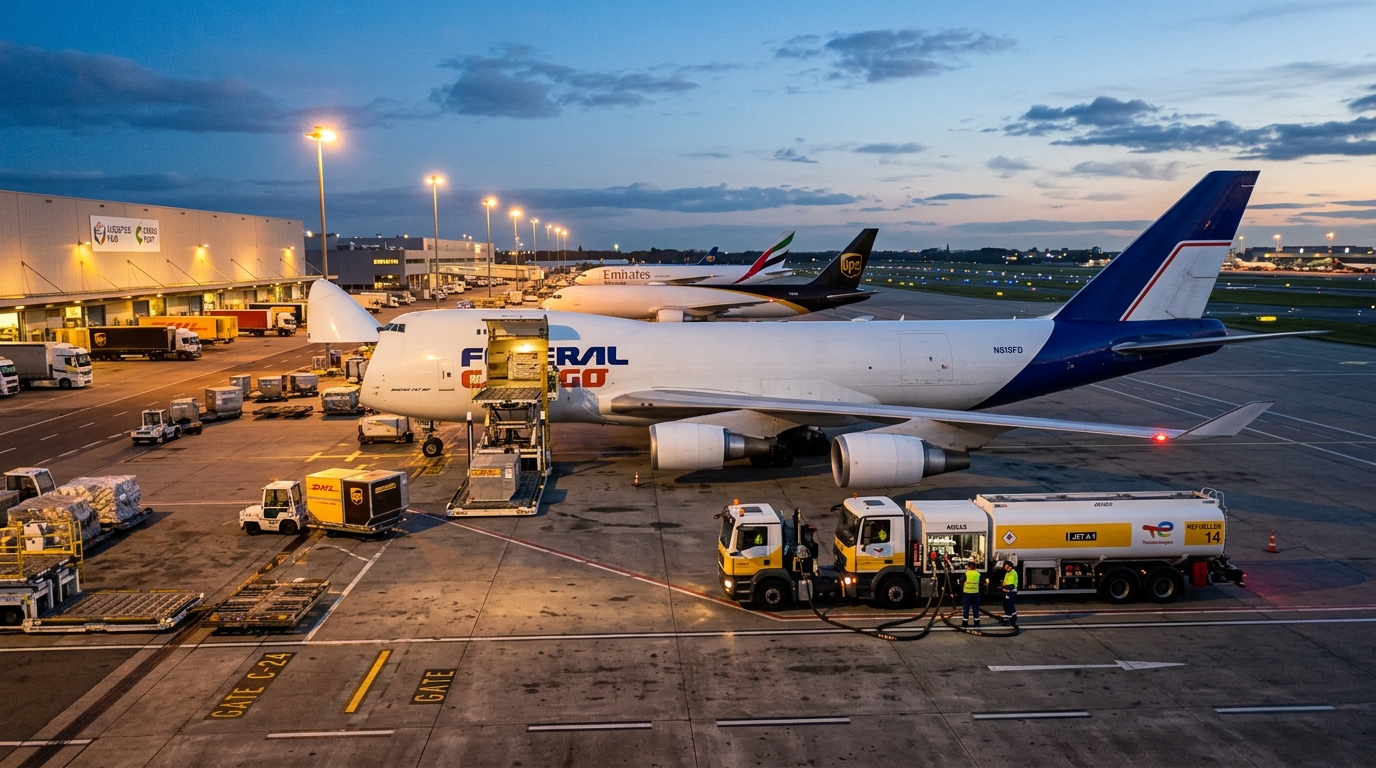
Commercial aviation shows the immediate impact of this cost increase. Forecasts from the International Air Transport Association (IATA) project that global airline fuel expenses will rise from $252 billion in 2025 to $350 billion in 2026. This $98 billion cost increase is projected to reduce global airline net profit margins to 2.0% in 2026, illustrating how unhedged, fuel-intensive businesses see earnings fall when fuel prices climb.
Limits of the available data
While transport figures show clear margin pressure, the available economic data does not support broad conclusions across every business sector:
- Upstream energy earnings: Although a 12.5% twelve-month jump in energy prices, as reported by the U.S. Department of the Treasury, typically reallocates cash flow toward oil and gas producers, aggregate operating margins and free cash flow performance for upstream suppliers remain unmeasured in current government releases.
- Manufacturing and consumer discretionary margins: Sustained equipment and IP expenditures indicate that industrial activity continues, but broad national accounts do not isolate corporate margin compression in factories or retail chains.
- Secondary price pass-through: Whether higher fuel costs will eventually spread into broader goods and service pricing through freight surcharges and operating expenses remains an open question that headline figures cannot yet confirm.
Outlook and implications
The early 2026 data reflects a concentrated commodity shock rather than broad economic stagflation. Resilient 2.0% GDP growth, double-digit business investment, and moderating core inflation at 2.6%, reported by the U.S. Department of the Treasury, indicate that underlying domestic demand has not broken down.
Still, with headline PCE inflation holding at 3.5% as reported by the U.S. Department of the Treasury, businesses are unlikely to see near-term rate cuts from the Federal Reserve. For transport operators and other energy-intensive businesses, managing direct fuel and power expenses will matter much more for near-term profitability than any potential shift in monetary policy.
Disclaimer: This analysis is for informational purposes only and does not constitute investment, financial, real estate, or legal advice. Always consult a licensed financial advisor before making investment decisions.
Frequently asked questions
Why does a divergence between headline and core CPI complicate Federal Reserve interest rate decisions?
A widening gap between headline and core inflation creates conflicting signals for policy. When headline inflation reaches 3.3% as of March 2026 on higher energy costs, as reported by the U.S. Department of the Treasury, central bankers risk stoking inflation expectations if they cut interest rates. At the same time, because twelve-month core inflation slowed to 2.6% per the U.S. Department of the Treasury, underlying domestic demand is not running hot, so aggressive rate increases could unnecessarily weaken non-energy parts of the economy.
Which operating expenses make transport and other fuel-dependent sectors vulnerable to sudden energy price increases?
Commercial transport depends heavily on liquid fuels, so price spikes hit operating budgets immediately. Global airline fuel bills, for example, are projected by the International Air Transport Association (IATA) to jump by $98 billion in 2026. Without adequate hedging against rising fuel or refining margins, higher fuel costs compress operating margins unless they can be passed along to customers.