
Fed Rate Hike: CRE Debt and Mortgage Rates Explained
How the Fed’s September 2026 Rate Hike Impacts CRE Debt and Mortgage Rates
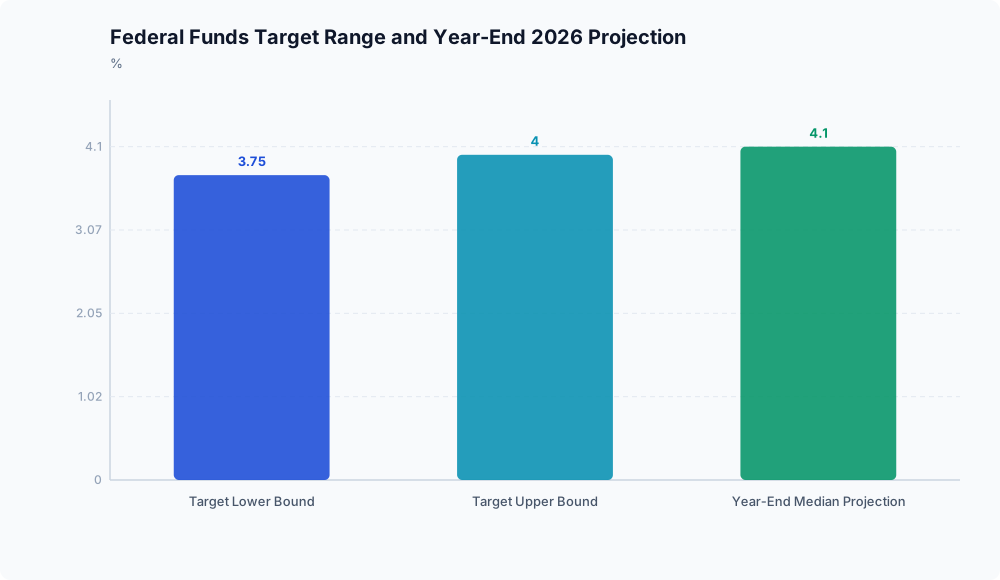
The Federal Reserve’s decision to lift the federal funds target range to 3.75% to 4.00%, reported by Crestwood Advisors, pushes up base borrowing benchmarks across the economy. For commercial real estate (CRE), higher rates raise financing costs relative to property yields, creating risks of negative leverage and complicating refinancing. In the residential market, the policy shift pushes 30-year mortgage rates above 7%, according to ABC News, raising monthly payment barriers and reinforcing an inventory “lock-in effect.”
Economic catalysts behind the rate hike
On September 16, 2026, the Federal Open Market Committee (FOMC) voted 12 to 0 to increase the federal funds target range to 3.75% to 4.00%, ending an extended holding pattern, according to Crestwood Advisors.
Monetary tightening followed stronger-than-expected labor market data alongside persistent inflation:
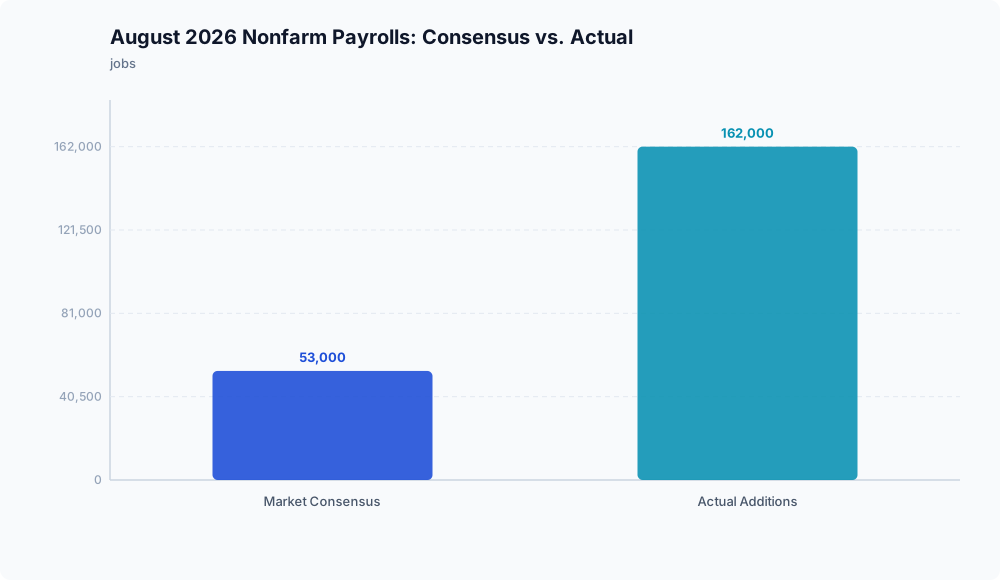
- U.S. nonfarm payrolls grew by 162,000 in August 2026, surpassing the market consensus estimate of 53,000, while the national unemployment rate held steady at 4.1%, as reported by Crestwood Advisors.
- Headline Consumer Price Index (CPI) inflation rose 0.4% month-over-month and 3.4% year-over-year, according to Crestwood Advisors.
This resilience indicated that underlying economic demand was firm enough to absorb higher borrowing costs, freeing policymakers to focus on controlling inflation. Policymakers also signaled that this adjustment might not be the last: the median year-end 2026 projection for the federal funds rate stood at 4.1%, with 16 of 18 participating committee members projecting at least one additional rate increase before the close of the year, according to Crestwood Advisors.
Commercial debt underwriting and negative leverage
Sustained increases in benchmark policy rates filter directly into commercial real estate debt underwriting. When base financing rates and lender credit spreads rise faster than property capitalization rates adjust upward, the annual cost of debt can exceed the unlevered property yield.
This condition, known as negative leverage, means that taking on debt reduces equity returns rather than increasing them. For property owners holding maturing loans originally secured during low-rate regimes, refinancing at current debt yields requires higher net operating income (NOI) or substantial cash-in equity injections to satisfy lender debt-service coverage ratio (DSCR) constraints.
The underlying empirical data does not report specific commercial property capitalization rates, private debt spreads, or maturing loan volumes. While macroeconomic indicators show clear upward pressure on base rates, the exact scale and severity of negative leverage across specific property types and local markets cannot be measured from these figures alone.
Transmission to residential mortgages: the 7% threshold
The upward pressure on policy rates and bond yields quickly passed through to consumer housing finance:
- According to Mortgage Bankers Association data cited by Trading Economics, the average 30-year fixed mortgage rate reached 7.49% for the week ended October 2, 2026.
- While global macro models and analyst expectations from Trading Economics project the 30-year fixed rate to moderate to 6.91% by the end of the quarter, current financing costs remain elevated compared to recent historical baselines.
Borrowing costs near 7.5% generate a pronounced “lock-in effect.” Existing homeowners who secured mortgages at lower rates face a substantial monthly payment penalty if they sell and originate a new loan at prevailing rates. This dynamic strongly disincentivizes relocations and constrains active resale supply.
The reported data does not track formal home sales turnover figures or transaction volume counts. Although economic logic points toward restricted liquidity and suppressed market activity, the degree to which 7.49% mortgage rates contract total closed sales remains an analytical deduction rather than a directly measured outcome in this dataset.
Market outlook

The Federal Reserve’s unanimous move to a 3.75% to 4.00% target range, with projections pointing toward 4.1% by year-end, according to Crestwood Advisors, indicates that borrowing costs will remain higher for longer. For commercial sponsors, this tightens refinancing hurdles and elevates the importance of asset cash flow over financial engineering. For residential real estate, elevated mortgage rates continue to freeze existing inventory, meaning transaction velocity will likely remain constrained until financing costs adjust or property valuations realign.
Disclaimer: This analysis is for informational purposes only and does not constitute investment, financial, real estate, or legal advice. Always consult a licensed financial advisor before making investment decisions.
Frequently asked questions
What is negative leverage in commercial real estate?
Negative leverage occurs when the cost of borrowing (interest rates plus lender spreads) exceeds the property’s unlevered capitalization rate or yield. Under negative leverage, debt reduces the investor’s overall return on equity rather than magnifying it, requiring higher net operating income or extra equity contributions during refinancings.
How does the mortgage rate lock-in effect constrain housing inventory?
The lock-in effect occurs when current mortgage rates, such as the 7.49% reported by Trading Economics, significantly exceed the rates on existing mortgages held by homeowners. Because moving requires financing a new property at substantially higher borrowing costs, homeowners choose to stay put, reducing the overall pool of existing homes listed for sale.