
Fed Policy Tightening, Equity Discount Rates, and Valuations
How Fed Policy Tightening Reshapes Corporate Hurdle Rates and Equity Valuations
How does the Federal Reserve’s September 2026 rate hike impact corporate capital costs and market valuations?
In short, the Federal Reserve’s decision to resume interest rate increases elevates benchmark yields across the economy, raising the weighted average cost of capital (WACC) for businesses. This shift directly lifts corporate hurdle rates and increases equity discount rates. For investors and corporate treasurers, higher discount rates disproportionately compress the present value of distant cash flows—most acutely in long-duration growth sectors—while simultaneously increasing debt service costs on floating-rate and maturing corporate debt.
Here is an analysis of the economic triggers behind this policy shift, the Federal Open Market Committee’s (FOMC) projected path, and the financial transmission mechanisms affecting corporate balance sheets.
The Catalyst: Resilient Growth and Persistent Inflation
On September 16, 2026, the FOMC concluded an extended pause of more than two years by voting 12–0 to raise the target range for the federal funds rate by 25 basis points to 3.75%–4%, according to Crestwood Advisors. The move marked the central bank’s first policy rate increase since July 2023. The committee’s unanimous vote underscored a broad consensus that monetary tightening needed to resume.
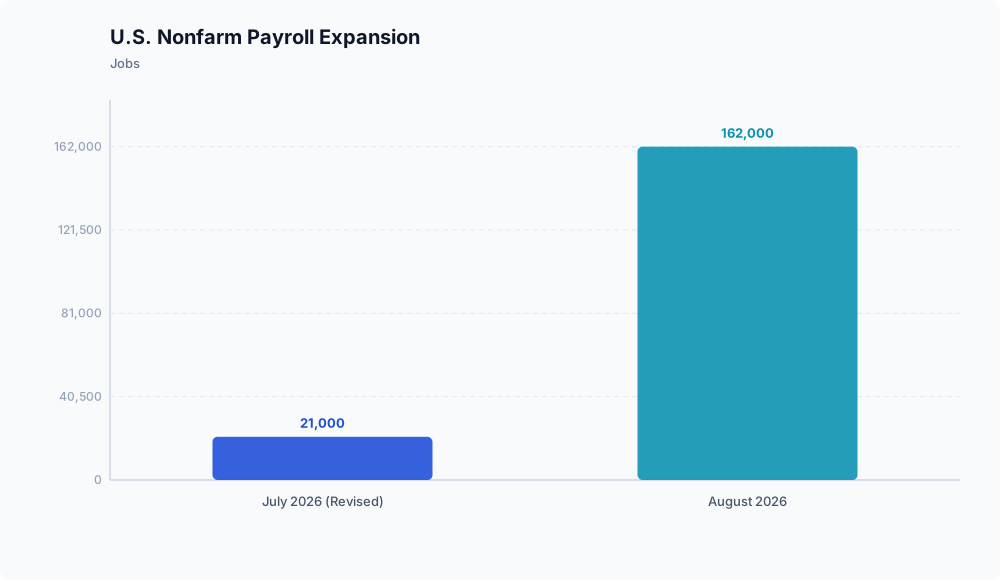
The decision was driven by domestic economic data that proved more resilient than previously anticipated alongside stubborn inflation. According to Crestwood Advisors, U.S. nonfarm payrolls expanded by 162,000 in August 2026, while July figures were revised upward from an initially reported decline of 23,000 to a gain of 21,000. Over the same period, U.S. headline Consumer Price Index (CPI) inflation rose 0.4% month-over-month and 3.4% year-over-year.
Analytically, the reversal from an initial contraction in July hiring to solid expansion in August confirmed that the labor market remained durable enough to absorb higher borrowing costs. With economic activity holding up and consumer price growth remaining well above target levels, policymakers moved to curb upside price risks.
The Policy Trajectory: Summary of Economic Projections
Rather than treating the September action as a one-time adjustment, policymakers signaled an extended period of restrictive monetary conditions. The Federal Reserve’s September 2026 Summary of Economic Projections established a median year-end 2026 federal funds rate projection of 4.1%, as reported by Crestwood Advisors.
Within that projection, 16 of the 18 participating policymakers anticipated at least one additional rate increase before the end of the year, according to Crestwood Advisors. A median year-end target of 4.1% suggests an additional 25-basis-point increase remains the baseline expectation among participants.
It is important to note that these dot plot projections represent participant economic expectations rather than binding policy commitments. The committee’s actual moves will depend on incoming labor and inflation data over the remainder of the year.
Transmission to Corporate Hurdle Rates and Equity Valuations

The resumption of central bank tightening alters capital allocation primarily through the discount rate mechanism:
- Higher Cost of Capital (WACC): As risk-free benchmark yields climb, the required return on both debt and equity rises across corporate balance sheets.
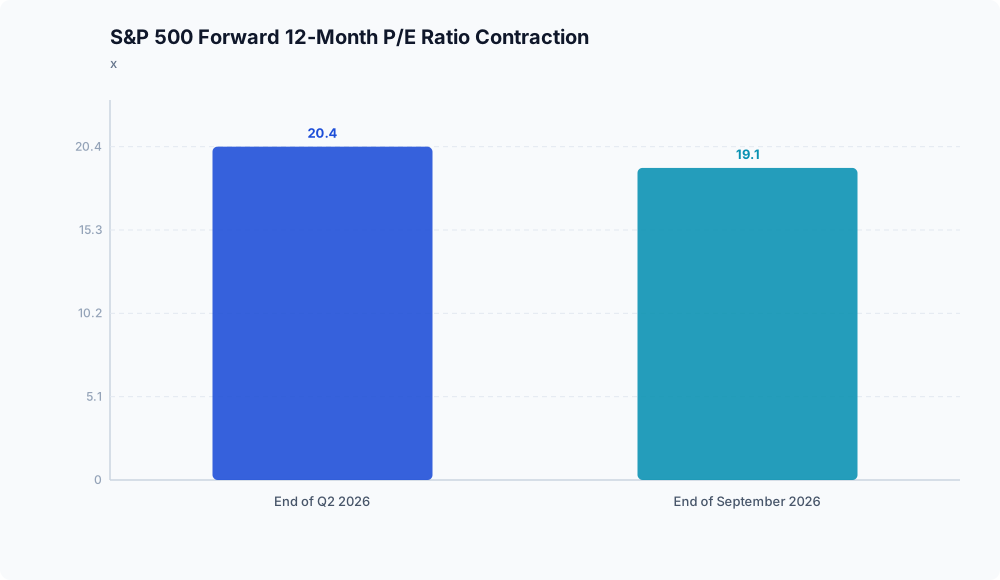
- Equity Multiple Compression: In equity valuation models, higher discount rates reduce the net present value (NPV) of projected future cash flows. This effect is mathematically most pronounced for long-duration equities—predominantly high-growth technology companies whose earnings are concentrated far in the future.
- Debt Refinancing Pressures: Mid-cap enterprises that rely on floating-rate credit facilities or face near-term debt maturities must issue or refinance obligations at higher yields. This expansion in borrowing expenses reduces free cash flow and compresses interest coverage ratios.
While these theoretical transmission channels are established corporate finance principles, the available reporting does not provide conclusive figures on the empirical magnitude of equity multiple compression or credit spread widening across specific mid-cap debt markets. The confirmed facts establish the policy increase and forward projections, but sector-specific valuation drawdowns and default rates remain dependent on ongoing market pricing.
Key Analytical Takeaways

The Federal Reserve’s exit from a two-year holding pattern marks a fundamental pivot: capital is becoming more expensive, not less. For corporate executives, internal hurdle rates for new capital expenditures will need upward revisions to account for elevated financing costs. For investors, the combination of a 3.75%–4% policy rate and expectations for further firming implies that equity valuations can no longer lean on an assumed pivot toward monetary easing. Future asset returns will rely increasingly on tangible near-term earnings growth rather than multiple expansion.
Disclaimer: This analysis is for informational purposes only and does not constitute investment, financial, real estate, or legal advice. Always consult a licensed financial advisor before making investment decisions.